

How to Add Real Shoe Storage to a Narrow Entryway Without Tripping Over a Pile
The shoe pile at the front door is one of those things that bothers you every single day but never gets fixed because it feels like a big project. It's not. Most narrow entryways have more usable space than people realize, and a dedicated shoe storage piece — even a small bench with hidden storage — eliminates the pile entirely and makes the entryway feel like an actual designed space rather than a dumping zone.
The problem is that most people either buy something too large (a shoe cabinet that blocks the door swing), too small (a shoe rack that tips over with three pairs on it), or skip it entirely because they don't think their space can accommodate anything. Here's how to solve the actual problems.
Problem: The Shoe Pile Is on the Floor Because There's Nowhere Else to Put Them
This is the core problem for most entryways. Without a designated landing zone, shoes end up wherever they come off — which is usually wherever you're standing when you take them off. The solution isn't discipline, it's giving everyone an easy place to put shoes that's more convenient than the floor.
A slim shoe bench with hidden storage solves this because it gives you a place to sit while removing shoes AND stores the shoes underneath simultaneously. The act of sitting to remove your shoes naturally results in shoes going into storage rather than onto the floor.
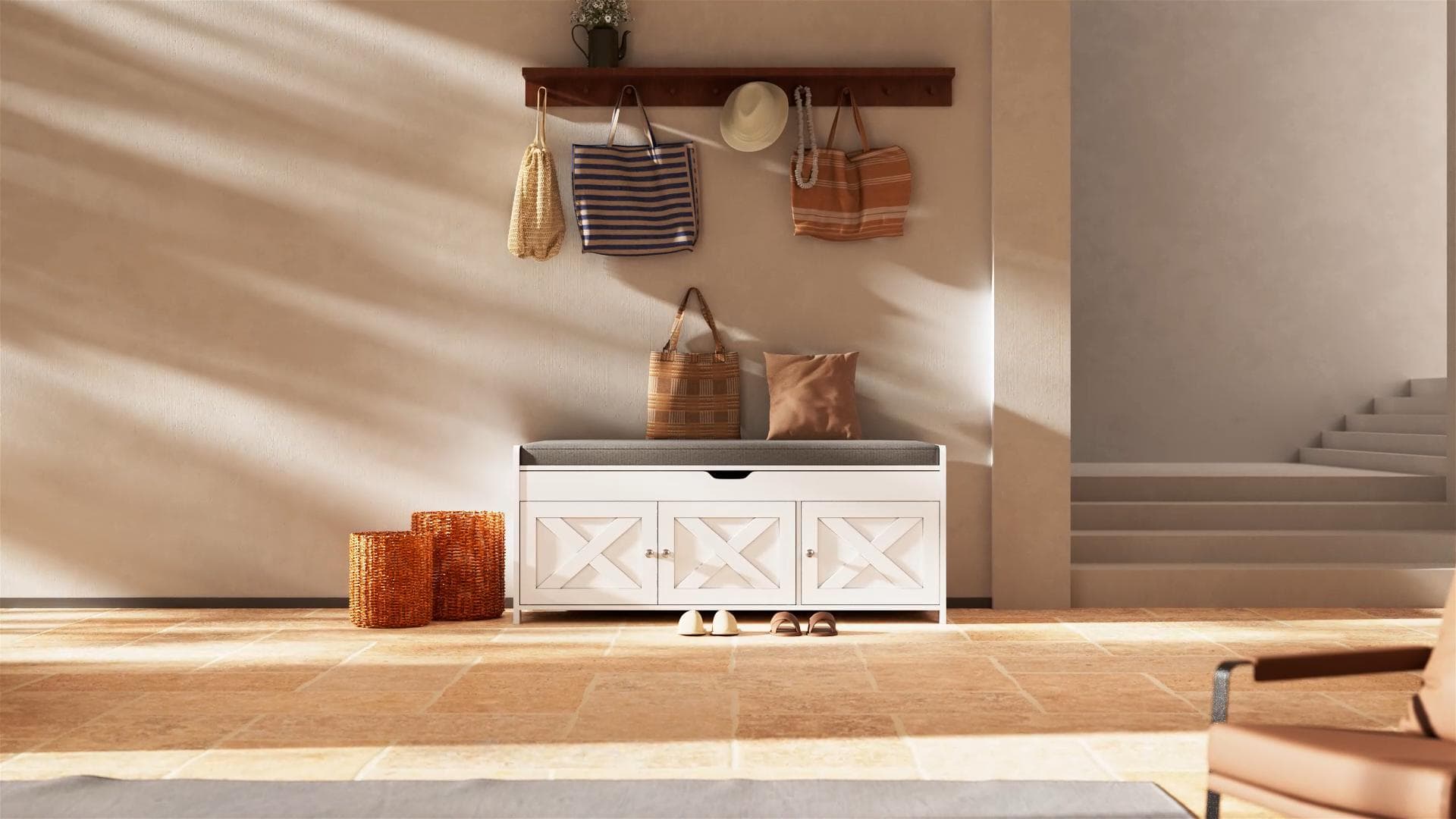
Entryway Shoe Bench Storage
$89
Entryway storage bench with 3-tier shoe rack underneath. 41.3 inches wide, 11.8 inches deep. Holds up to 12 pairs. Weight capacity 330 lbs. Assembly required.
Modern Shoe Bench Hidden
$94
Flip-top shoe bench with hidden storage compartment. Padded seat, 40 inches wide. Holds up to 8 pairs inside. Clean exterior looks like a regular entryway bench.
Measure your entryway width and depth before ordering. The depth is usually the constraint in narrow entryways — anything over 14 inches of depth will encroach into the walkway. Most shoe benches run 11 to 13 inches deep, which keeps the path clear.
Problem: The Entryway Is Too Narrow for a Bench
Not every entryway can fit a bench. A standard hallway is 36 to 42 inches wide — enough for a bench. But some apartment entryways are 28 to 32 inches, where a bench creates a bottleneck. In that case, you need a wall-mounted or over-door solution that uses vertical space instead of floor space.
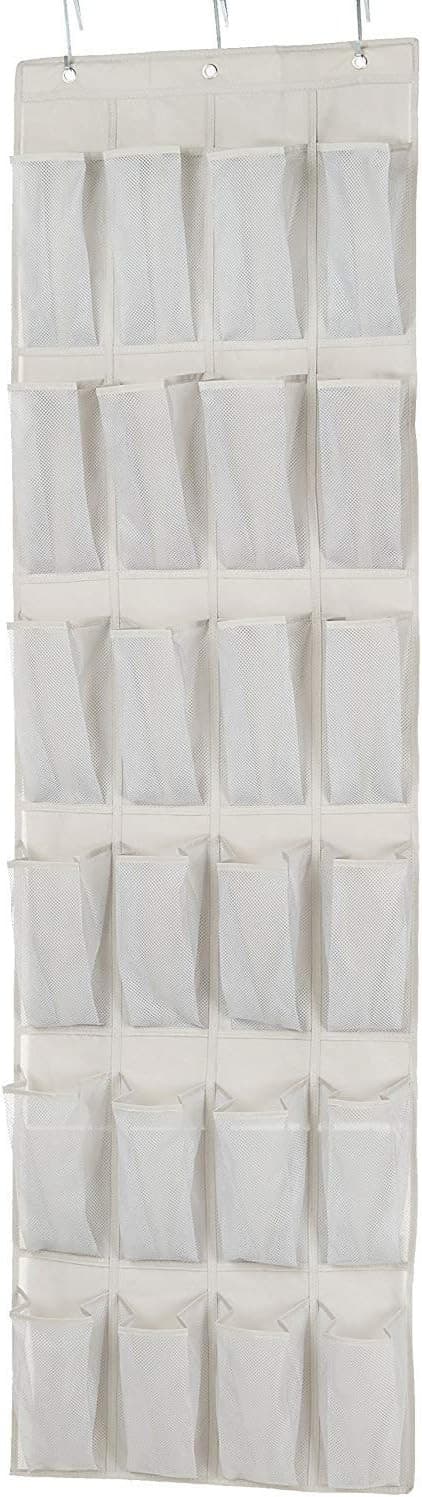
Over Door Shoe Organizer 24 Pocket
$22
24-pocket over-door shoe organizer. Holds 12 pairs. Fits standard and hollow-core doors. Reinforced pockets hold up to 3 lbs each. 64 inches tall.

Stackable Shoe Rack Covered
$38
Stackable shoe rack with dust cover. Each tier holds 3 pairs. Stack up to 4 units high. 24 inches wide, 12 inches deep. Keeps shoes dust-free and organized.
The over-door organizer works best for flats, sneakers, and sandals — anything slim. Boots and bulky shoes are better in a floor rack. Use the over-door option for everyday rotation shoes and keep off-season or occasional shoes in a closet or under-bed storage.
Problem: You Have Boots That Won't Fit Anywhere
Standard shoe benches and racks are sized for sneakers and dress shoes — typically 12 to 13 inches long and 4 to 5 inches tall. Ankle and knee boots don't fit in most standard slots, which means they end up back on the floor anyway even after you buy storage.
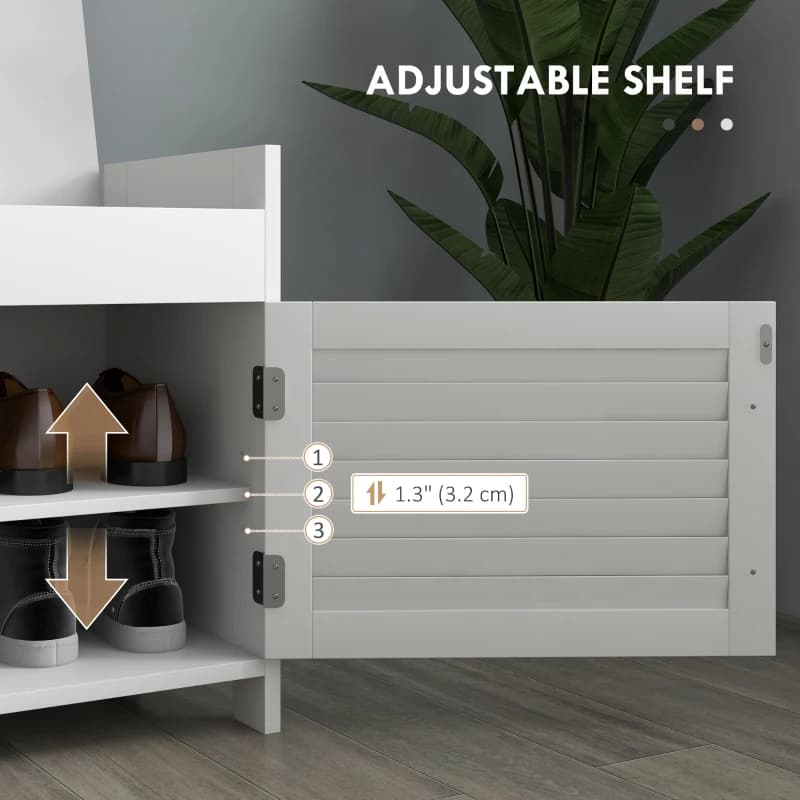
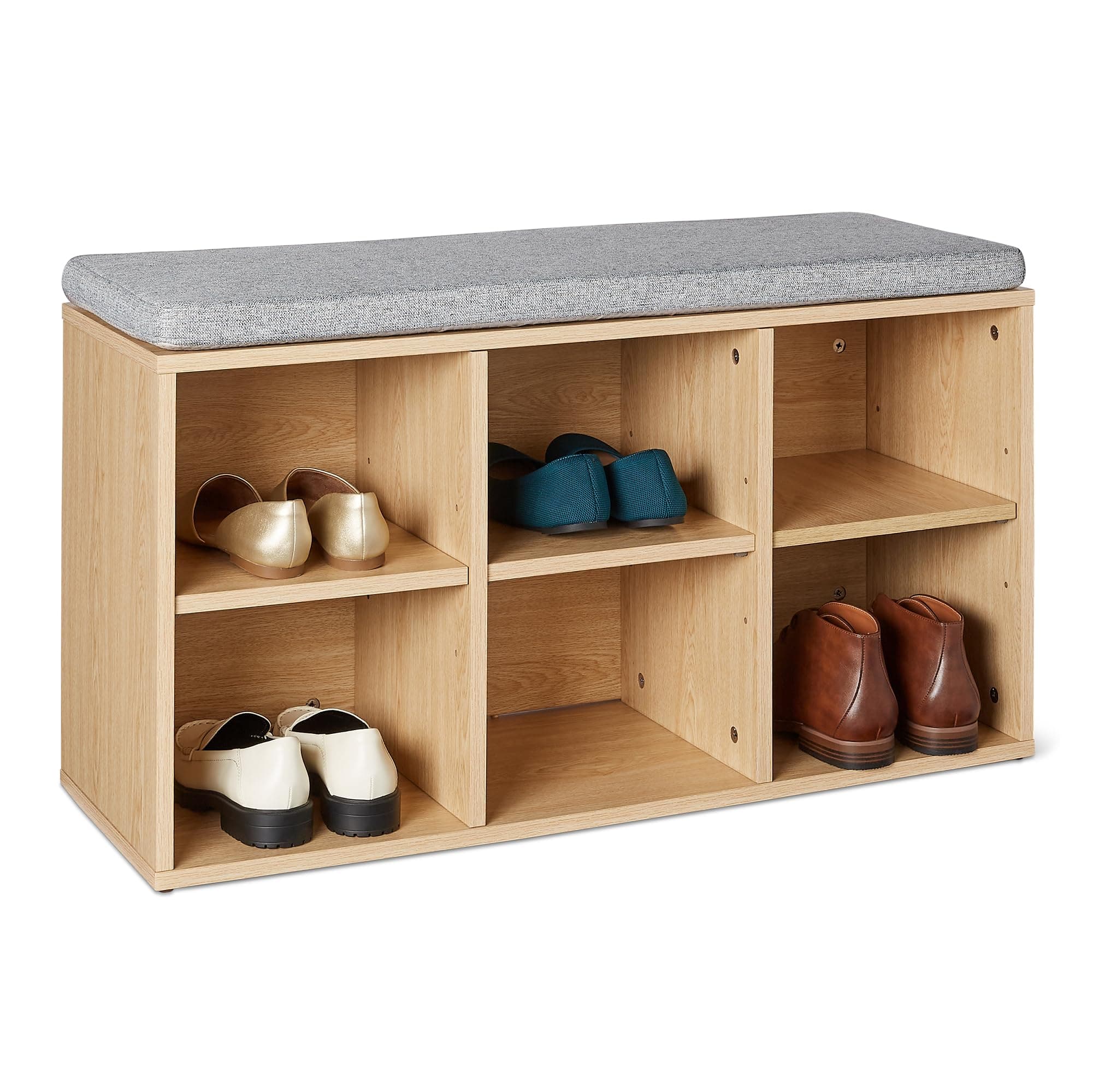
Look specifically for adjustable-height or open-slot racks that can accommodate boots standing upright. A bench with open cubbies rather than slanted shelf rails handles boots much better than a traditional shoe rack.
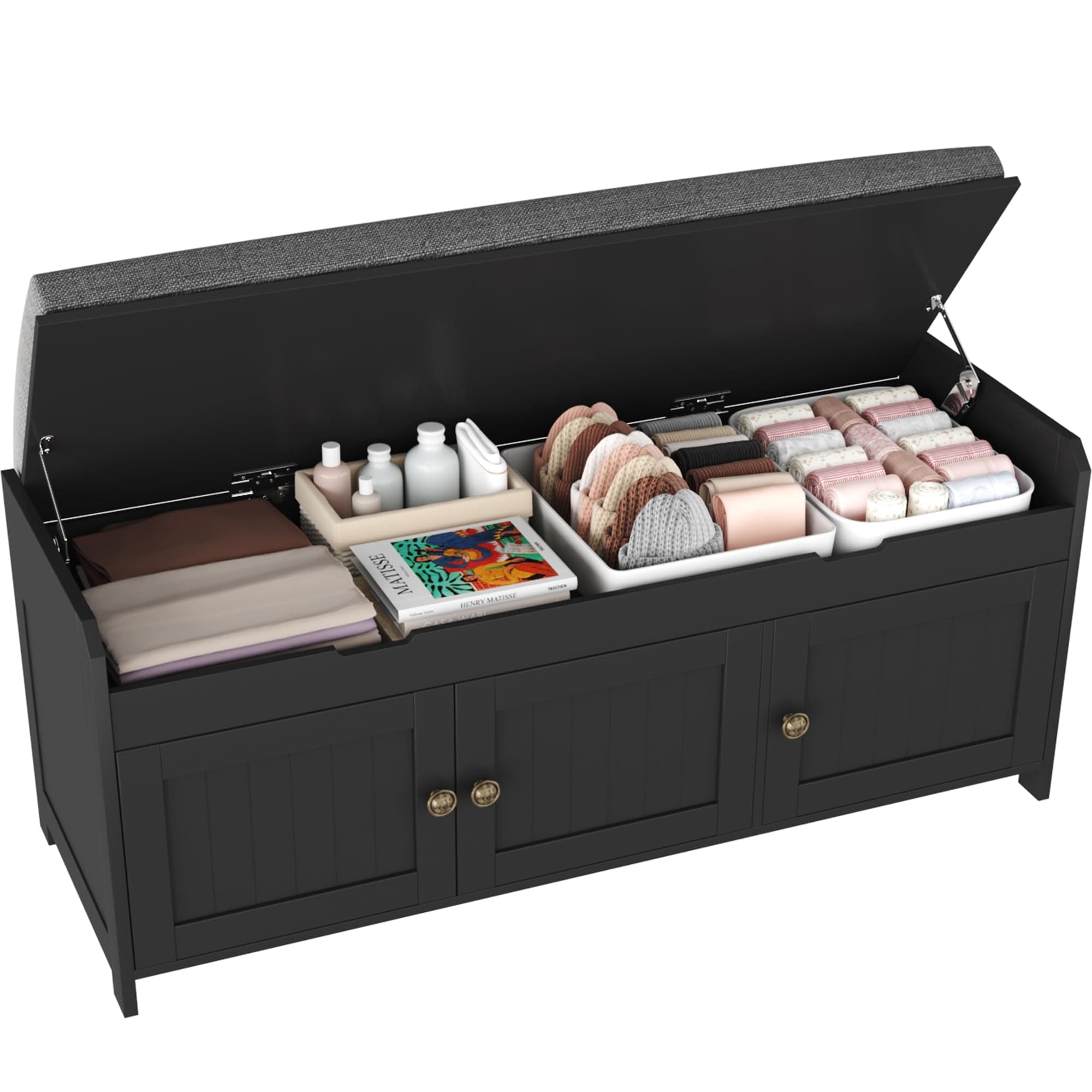
Homefort Shoe Bench Storage White
$79
Open cubby shoe bench in white. 6 cubbies with adjustable dividers. 41 inches wide, 11 inches deep. Each cubby fits shoes up to 13 inches long or short boots standing upright.
Cushioned Shoe Bench Cubby
$85
Upholstered shoe bench with 6 open cubbies. Padded seat with gray fabric. 42 inches wide, 12 inches deep. Open cubbies fit boots and larger shoes that standard racks miss.
Problem: Your Kids' Shoes Create a Second Pile Alongside Your Own
Kids' shoe storage is a separate problem from adult shoe storage because kids don't use anything that requires two hands or a specific motion to access. If the shoe storage requires lifting a lid, opening a door, or pulling a slot — kids will ignore it.
The only shoe storage that works for kids in entryways is completely open and at their eye level. A low open rack or a small bin at their height is the only solution that actually gets used.
6 Tier Rotating Shoe Rack
$45
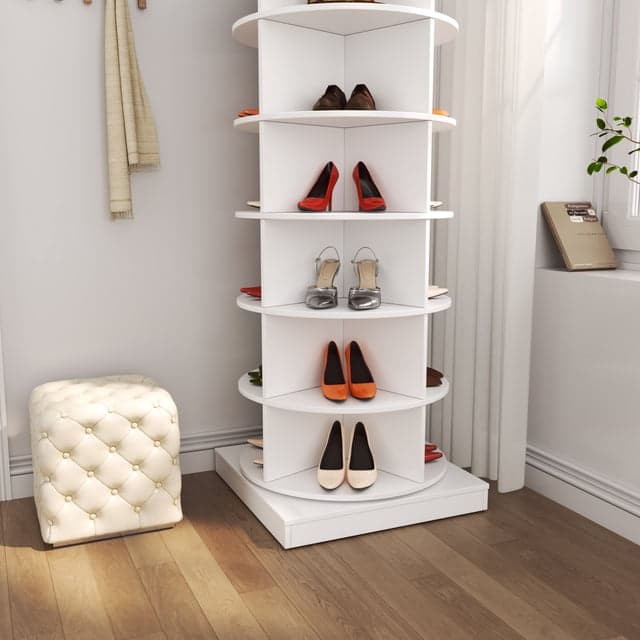
6-tier rotating shoe tower. Holds 30 to 36 pairs total. Rotates 360 degrees for easy access. 63 inches tall. Works for mixed family use — bottom 2 tiers accessible for kids.
A rotating shoe tower works for families because the bottom tiers are naturally lower and accessible to kids, while upper tiers hold adult shoes. The rotation means you're not reaching behind other shoes to find a pair — everything rotates to you.
What to Skip
Skip over-door organizers with flimsy hooks. The hook gauge matters more than anything else on these products. Thin wire hooks bend and drop the organizer within a week of loading it with shoes. Look for hooks made from solid bar stock, not bent wire.
Skip shoe racks with angled shelf rails if you have long shoes or boots. The angled design slides 13+ shoe sizes right off, and boots won't balance on the rails at all. Open cubbies or flat shelves handle more shoe types.
Skip decorative cabinets with doors if your household has more than 4 people. Closed-door shoe cabinets only work if everyone consistently opens and closes the door. In busy households they stay open permanently, which defeats the purpose and looks worse than an open rack.
Frequently Asked Questions
How wide should a shoe bench be for a narrow entryway?
For a standard hallway of 36 to 42 inches wide, a bench that's 36 to 42 inches wide works. Leave at least 6 inches of clearance on each side of the bench for comfortable passage. In entryways under 32 inches wide, go vertical with an over-door organizer or slim shoe tower instead.
How many pairs of shoes does a shoe bench typically hold?
A standard 3-shelf shoe bench holds 9 to 12 pairs of adult shoes. Open cubby benches with 6 cubbies hold 6 to 8 pairs. For families of four, you typically need capacity for 15 to 20 pairs in the entryway rotation, which usually requires a bench plus an over-door organizer or second rack.
What is the shallowest shoe storage that actually works?
Open shoe racks with angled shelves can run as shallow as 9 to 10 inches deep. Closed-door shoe cabinets typically need 12 to 14 inches of depth. If your entryway is very constrained, an over-door organizer uses zero floor depth at all.
How do I stop shoes from smelling in closed storage?
Put a cedar shoe insert or a small activated charcoal sachet inside each cubby. Cedar absorbs moisture and neutralizes odor without any fragrance. Replace cedar inserts every 6 to 12 months as they lose potency. Activated charcoal bags work for 2 to 3 months before needing to be refreshed in sunlight.
Affiliate Disclosure
This post contains affiliate links. Haven & Home may earn a commission on purchases made through these links, at no extra cost to you. We only recommend products we genuinely love.
You Might Also Love
 Organization
The Best Toy Storage Bins That Don't Look Like a Daycare
Toy storage in the living room does not have to ruin the aesthetic. These bins are functional enough for real use and nice enough to leave out.
 Organization
4 Under-$25 Swaps That Turn a Dump Drawer Into a Functional One
Under $25 each and your junk drawer finally closes. Four small swaps — bamboo organizer, clear dividers, pen caddy, and cushioned liner — that fix the chaos.
 Organization
How to Stop Tripping Over Shoes Without Buying More Furniture
Shoe piles at the door are a solved problem — and none of the solutions require a new bench or cabinet. Six options that work in real entryways.