

How to Make a Tiny Bedroom Feel Twice as Big Without Renovating
A small bedroom is one of the most frustrating design problems because it feels unsolvable. You can't knock down a wall. You can't add square footage. Every time you buy something new — a prettier lamp, a nicer rug, a set of throw pillows — the room feels more crowded, not better. And yet some small bedrooms feel like retreats. Others feel like storage units you happen to sleep in.
The difference isn't usually floor plan. It's how every square inch of vertical and under-utilized space is being used. Clutter on surfaces compresses a room visually. Stuff piled on the floor makes it feel cramped regardless of the actual square footage. And the wrong furniture choices — anything too tall, too wide, or too visually heavy — can make a 12x12 bedroom feel like a closet.
Here's a problem-by-problem breakdown of what actually works, with one specific fix for each issue.
The "Where Do I Put My Clothes" Problem
The first place small bedrooms accumulate visual clutter is clothing. Chairs covered in clothes. Floors covered in shoes. Dressers overflowing. If you don't have a large closet — or any closet — the room never feels calm because there's always something piled somewhere. The fix isn't a bigger dresser. It's reclaiming the space you already have underneath your bed.

Rolling Under-Bed Storage Bins with Lids 2-Pack
$38
Set of 2 rolling under-bed storage bins with zippered lids. 36 x 18 x 6 inch low profile fits most bed frames. Holds sweaters, shoes, extra bedding. Locking caster wheels.
Under-bed bins work because they capture storage capacity you're currently not using at all. A queen bed frame has roughly 30 cubic feet of space underneath. Most of that goes completely unused. Rolling bins on casters let you pull everything out at once instead of fishing around on your knees. The low profile — typically 6 inches — fits under the vast majority of standard bed frames. This is the single highest-impact change for a small bedroom with a clothing problem.
The "Every Surface Is Covered" Problem
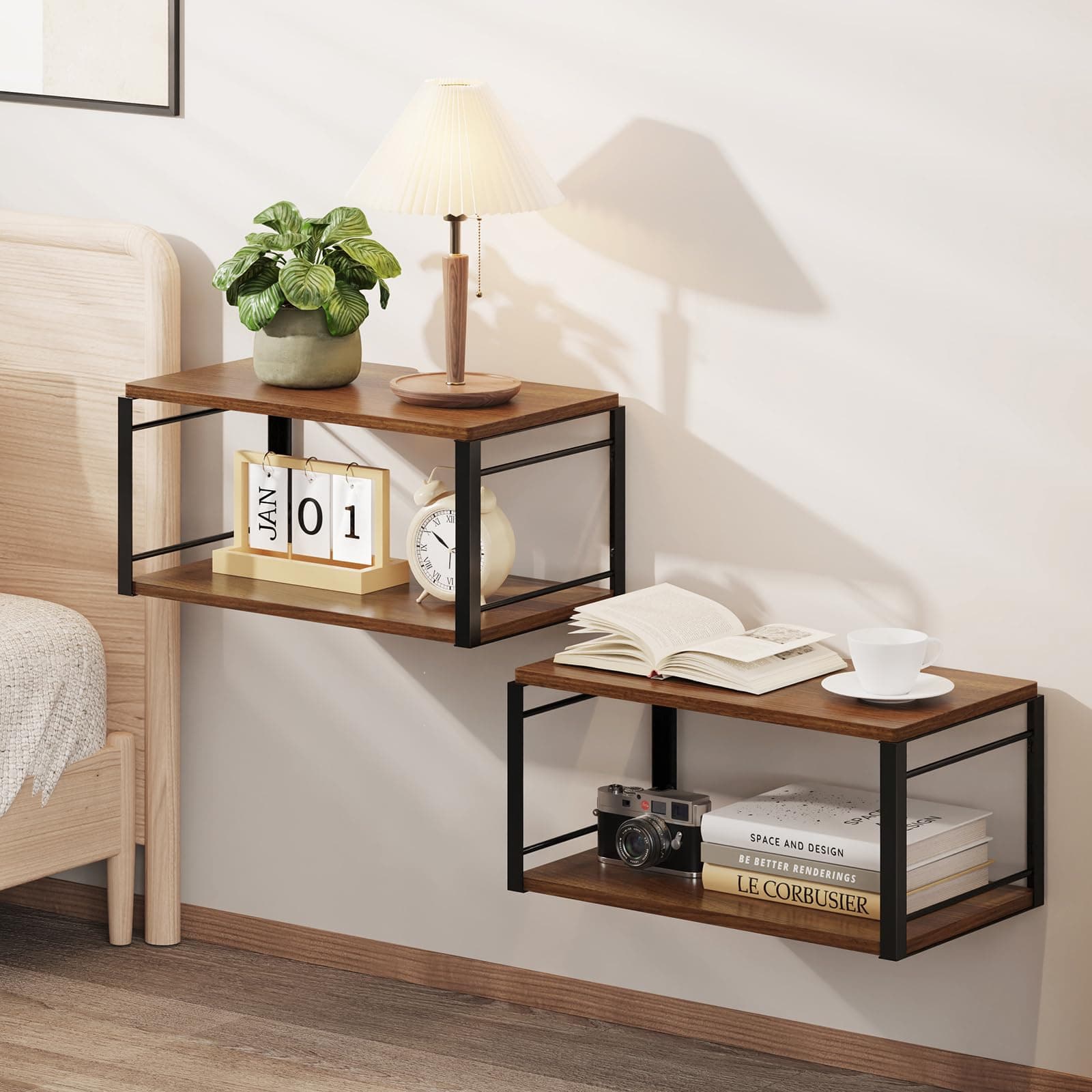
Nightstands, dressers, windowsills — in a small bedroom, every flat surface becomes a landing pad for things that don't have a home. The issue isn't that you have too much stuff. It's that there's no clear place for anything, so everything goes on the nearest flat surface. The fix is adding vertical storage on walls that aren't currently doing anything.

Floating Wall Shelves Bedroom Set of 2
$32
Set of 2 floating wall shelves with invisible brackets. 24 inch length. Holds up to 30 lbs each. Works as nightstand alternative or display shelf above dresser. Easy 20-minute install.
Floating shelves do two things: they give you surfaces off the floor (which makes the room feel bigger), and they move storage to vertical space you weren't using. A pair of floating shelves above the bed replaces a traditional nightstand entirely, which frees up floor space. Above the dresser, they give you a place for books or display items so the dresser top becomes less cluttered. The key is keeping what goes on the shelves intentional — three or four things, not fifteen.
The "No Room for a Proper Nightstand" Problem
Standard nightstands are wider than they need to be for a small bedroom. The average nightstand is 18 to 24 inches wide. In a room where your bed is 6 inches from the wall, that's not workable. Slim nightstands — designed specifically for tight spaces — are 12 to 15 inches wide and give you the same surface area and drawer without eating into walking space.
Slim Nightstand with Drawer for Small Spaces
$45
Narrow nightstand 12 inches wide with single drawer and open shelf. 24-inch height. Modern wood and metal design. Fits in tight spaces between bed and wall. Easy assembly.
A 12-inch nightstand looks proportionally correct next to a bed in a small room in a way that a standard 24-inch table never does. The room reads as intentionally designed rather than cramped. If even a slim freestanding nightstand is too much floor space, a floating nightstand screwed directly into the wall is the next step down — zero floor footprint, full surface area.
The "The Bedroom Feels Like a Hallway" Problem
Long, narrow bedrooms are a specific kind of difficult. You can't rearrange the furniture because there's essentially one way to orient the bed, and whatever's left over ends up crammed at the foot of it. Over-the-door storage is the fix here — it uses a surface (the back of the door) that's completely empty in almost every bedroom.
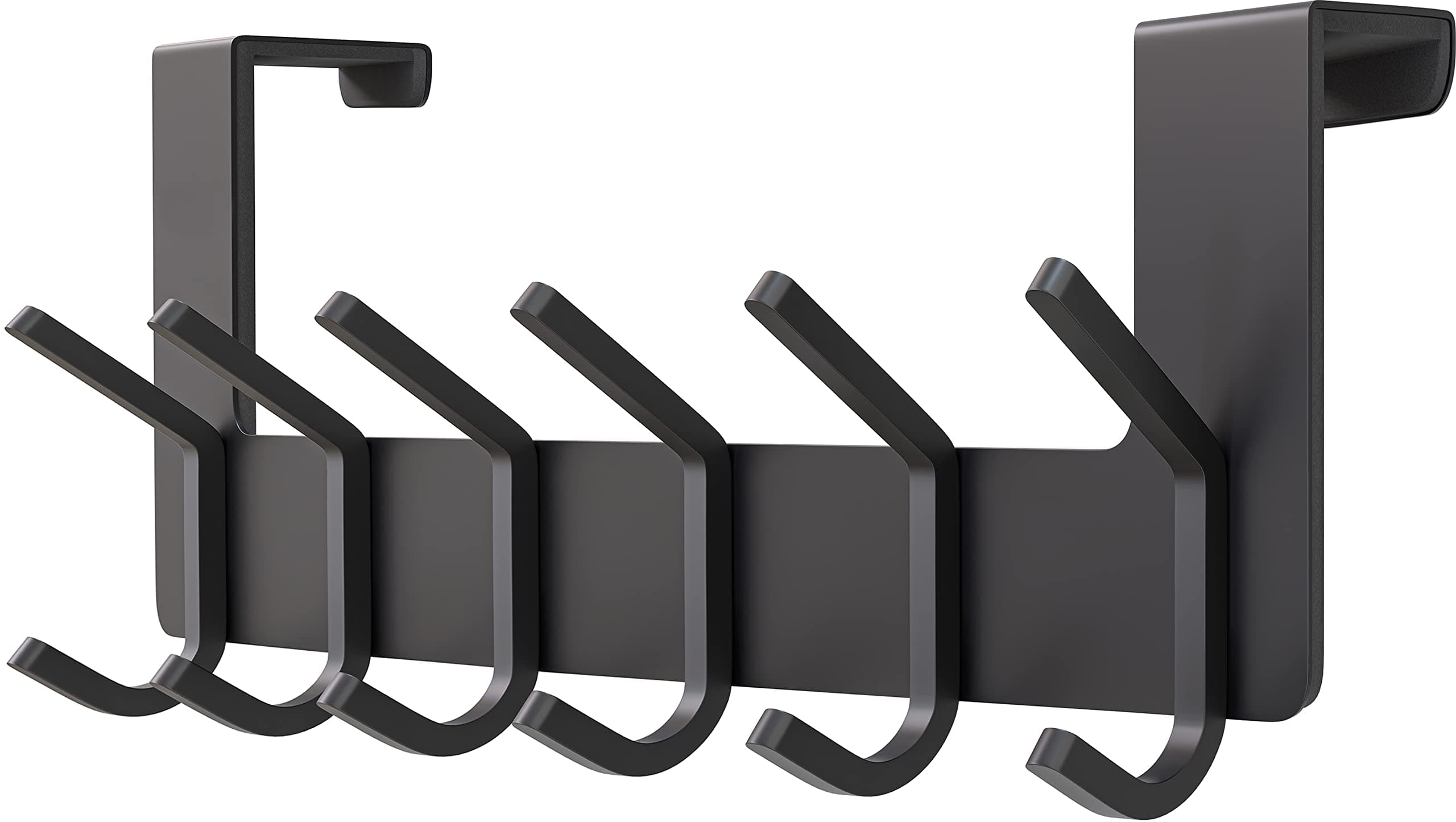
Over-the-Door Hooks Organizer 6-Hook Matte Black
$22
Over-the-door hook rack with 6 hooks in matte black. Holds coats, bags, robes, scarves. Fits doors up to 2 inches thick. No tools required. Weight capacity 50 lbs.
Over-the-door hooks turn the back of the bedroom door into a functioning storage zone for the things that most often end up on the floor or the chair: robes, bags, tomorrow's outfit, gym clothes. Removing those items from floor and chair circulation makes the room feel less chaotic within a week. The matte black finish is the most versatile — it works with white, gray, and dark walls without drawing attention to itself.
The "The Room Just Feels Small" Problem
This one is about perception rather than actual storage. Sometimes a bedroom has adequate storage but still feels compressed. The most reliable fix is a large mirror positioned to reflect natural light and the open parts of the room. A full-length mirror leaned against the wall or a large framed wall mirror above the dresser can make the room read as noticeably larger.
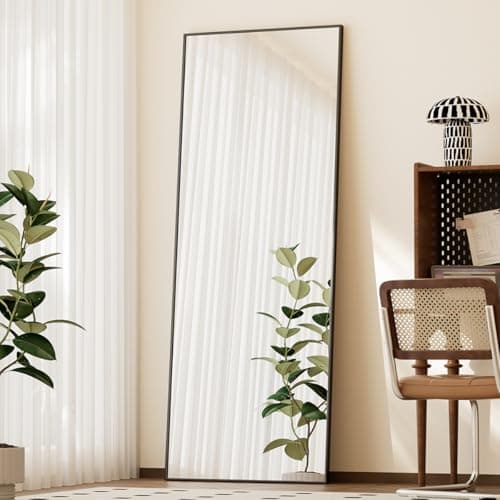
Full Length Leaning Mirror Black Frame 65 inch
$48
65 x 22 inch full-length leaning mirror with thin black frame. Can be hung vertically or used freestanding. Includes safety backing. Reflects full room depth.
Positioning matters as much as the mirror itself. Place it on a wall that faces a window, and the mirror doubles the apparent light source in the room. Place it at the end of a narrow bedroom, and it makes the room look longer. The black frame is the most useful for small rooms because it adds definition without adding visual weight — a heavy ornate frame would do the opposite.
The "No Space for a Bench or Extra Seating" Problem
At the foot of the bed, most people either have nothing or a bench that takes up floor space they don't have. A slimline storage bench — narrower than a standard ottoman, designed for the foot of a bed — solves two problems: it gives you a place to sit while putting on shoes, and the interior storage handles extra blankets, pillows, or seasonal bedding.
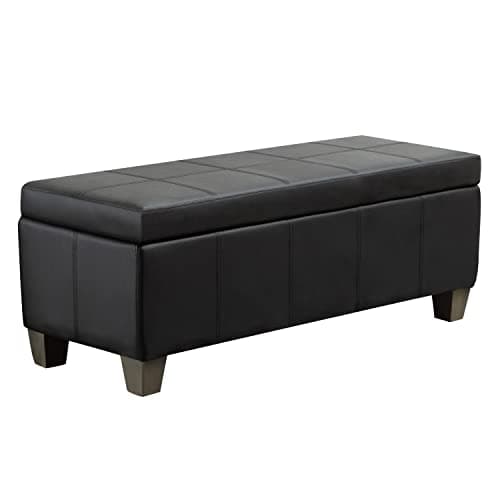
Slimline Storage Bench Foot of Bed Gray
$49
Slim storage bench 39 x 13 x 16 inches. Interior storage with lift-top lid. Faux leather upholstery in light gray. Holds up to 350 lbs. Fits at foot of queen or full bed.
The 13-inch depth is the critical measurement. Standard ottomans are 18 to 24 inches deep, which is usually too much for the foot of a bed in a small room. A 13-inch bench gives you 18 inches of floor clearance from the bed frame, which is the minimum you need to walk comfortably. The lift-top storage means you're not adding visual mass to the room — the interior is invisible when the lid is closed.
What to Skip
Tall armoires and wardrobes — they eat ceiling height visually and make the room feel lower, which is the opposite of what you want. If you need the storage, go with a low dresser instead of a tall one.
Rugs that are too small — a rug that barely fits under the bed makes the floor plan look cramped. Either go bigger (most designers recommend the rug extend 12 to 18 inches beyond the sides of the bed) or skip the rug entirely.
Matching bedroom sets — coordinated furniture sets make rooms look smaller because everything is the same visual weight. Mixing a wood nightstand with a different-finish dresser creates visual rhythm that keeps the eye moving rather than landing in one heavy block.
Dark accent walls behind the bed — in a small room, they work in photos and shrink the room in real life. Light walls with texture (a simple gallery wall, a rattan headboard, light wallpaper) accomplish the cozy feeling without closing the room in.
The goal with a small bedroom isn't to trick the eye with mirrors and tricks. It's to remove the actual clutter that makes any room feel tight, and to put every underused surface — walls, door backs, under the bed — to work.
Affiliate Disclosure
This post contains affiliate links. Haven & Home may earn a commission on purchases made through these links, at no extra cost to you. We only recommend products we genuinely love.
You Might Also Love
 Bedroom
8 Cotton Sheet Sets Under $80 for Hot Summer Sleepers
How to find breathable cotton sheets that actually keep hot sleepers cool through summer. Eight sets under $80 with real cooling reviews from sweat-prone sleepers.
 Bedroom
How to Quiet a Squeaky Bedroom Floor Without Pulling Up Boards
Squeaky bedroom floors do not require ripping up boards. Here are the specific products and fixes that actually work without calling a contractor.
 Bedroom
Why Sage Green Is Quietly Replacing Gray in Bedrooms
Something happened in bedroom Pinterest this past year. Gray is out, sage green is in, and the shift is happening one duvet cover at a time.