

How to Stop Your Tupperware Cabinet From Becoming a Disaster
I opened my tupperware cabinet last Sunday and a plastic avalanche hit my foot. Three lids skittered across the floor, a container I hadn't seen in a year rolled out from behind a bigger one, and I stood there wondering why this is the one cabinet in my kitchen I actively avoid. You probably have the same cabinet. Nobody's tupperware cabinet is organized — it's the universal kitchen failure.
The reason it always ends up chaos is that containers are designed to be bought, not stored. Brands sell you 20-piece sets to get the shelf appeal, but nobody tells you that 20 containers means 20 lids means 40 pieces that all need to live somewhere. After rebuilding mine twice, I've landed on five fixes that actually hold up. Each one targets a specific failure point.
The "Lids Live in Their Own Country" Problem
The core issue is that lids and containers don't stack together. The lids slide, flop, tip, and end up wedged behind a Costco-sized Ziploc box. Trying to nest lids inside containers works for about three days before everything ends up separated again.
The fix: a vertical lid organizer. Stand the lids on edge, sorted by size. You can see every lid at once, you can grab one without disturbing the rest, and you stop losing the medium round lid that matches nothing.
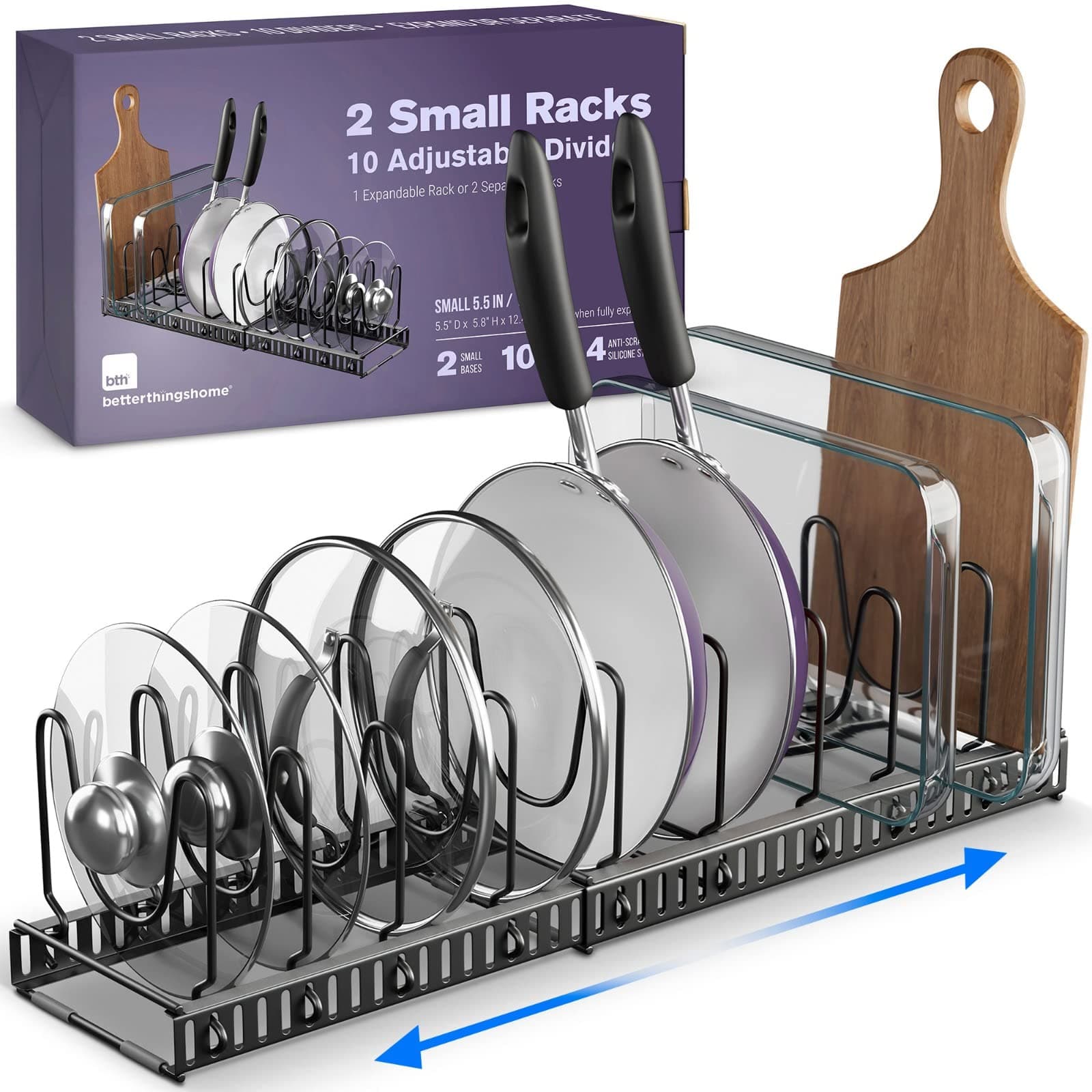
Better Things Home Pot Lid Organizer Adjustable
$28
Adjustable vertical lid rack. Holds 6-10 lids of varying sizes. Chrome wire construction, no tools required. Works for pot lids and large container lids.
The adjustable dividers are the key — fixed-slot organizers only work if all your lids are the same size, which they never are. Mount this on the inside of a cabinet door if you have space, or set it flat on the shelf. Either way, the lids go from horizontal chaos to vertical order.
The "Nothing Stacks" Problem
You bought a set that was supposed to nest. It didn't — or it did for about a week until you lost two of the smaller containers and now you have three mediums and two larges that don't nest at all. Rounds don't stack into squares, squares don't stack into rectangles, and everything ends up as a precarious Jenga tower.
The fix: commit to a single-shape system. Glass rectangular containers stack flawlessly because every size is a scale of the same footprint. Ditch the random-shape plastic, keep one nested set of glass, and the cabinet solves itself.
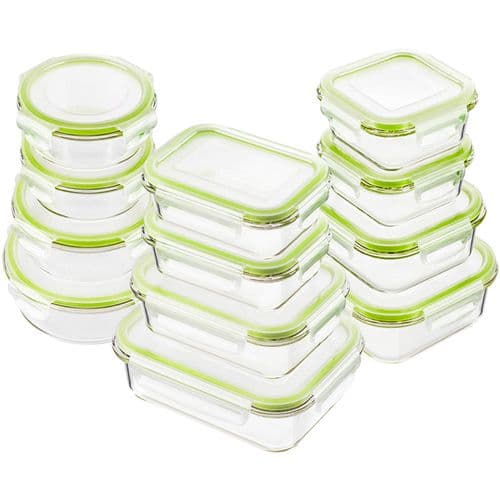
Bayco Glass Meal Prep Storage Set 18-Piece
$42
18-piece borosilicate glass food storage set with snap-lock bamboo lids. Rectangular only, five nesting sizes. Microwave, oven, freezer, and dishwasher safe.
Glass is the underrated answer. Yes, it's heavier, but it doesn't warp in the dishwasher, doesn't stain from tomato sauce, and when you nest them they actually stay nested because glass is rigid. The bamboo lids are cosmetic, but your guests will notice when they open your cabinet.
The "I Have 12 Bowls and 3 Lids" Problem
Somewhere along the way, you lost most of your lids. The containers survive — they become Tupperware ghost bowls that live in the back of the cabinet waiting for lids that will never come. You can't use them for storage because they don't seal, and you can't throw them out because "I might use them."
The fix: universal silicone stretch lids. One pack covers containers of every size that have lost their original lid, plus cups, bowls, and even half-cut produce. Your lidless containers become useful again overnight.

Adpartner Silicone Stretch Lids 12-Pack
$18
12-pack of food-grade silicone stretch lids in 6 sizes (2.6 to 8.3 inch diameter). Fits bowls, jars, fruits, cups, and mismatched containers. Dishwasher safe.
The ones under $20 work as well as the $40 "reusable cling wrap" brands, they just don't have branded packaging. Be honest about which lidless containers you actually want to save — if you haven't used it in a year, no silicone lid will bring it back from the dead. Donate or toss the rest.
The "Deep Cabinet Black Hole" Problem
If your tupperware cabinet is deep (12-14 inches), everything in the back is unreachable without removing everything in the front. You buy a new set of containers because you forgot about the ones hiding behind the cereal box, and now you've got more plastic than before.
The fix: a lazy susan. Turn the back of the cabinet into the front of the cabinet by spinning it. Lazy susans are the most underrated kitchen tool — they make deep shelves actually useful for the first time in your life.
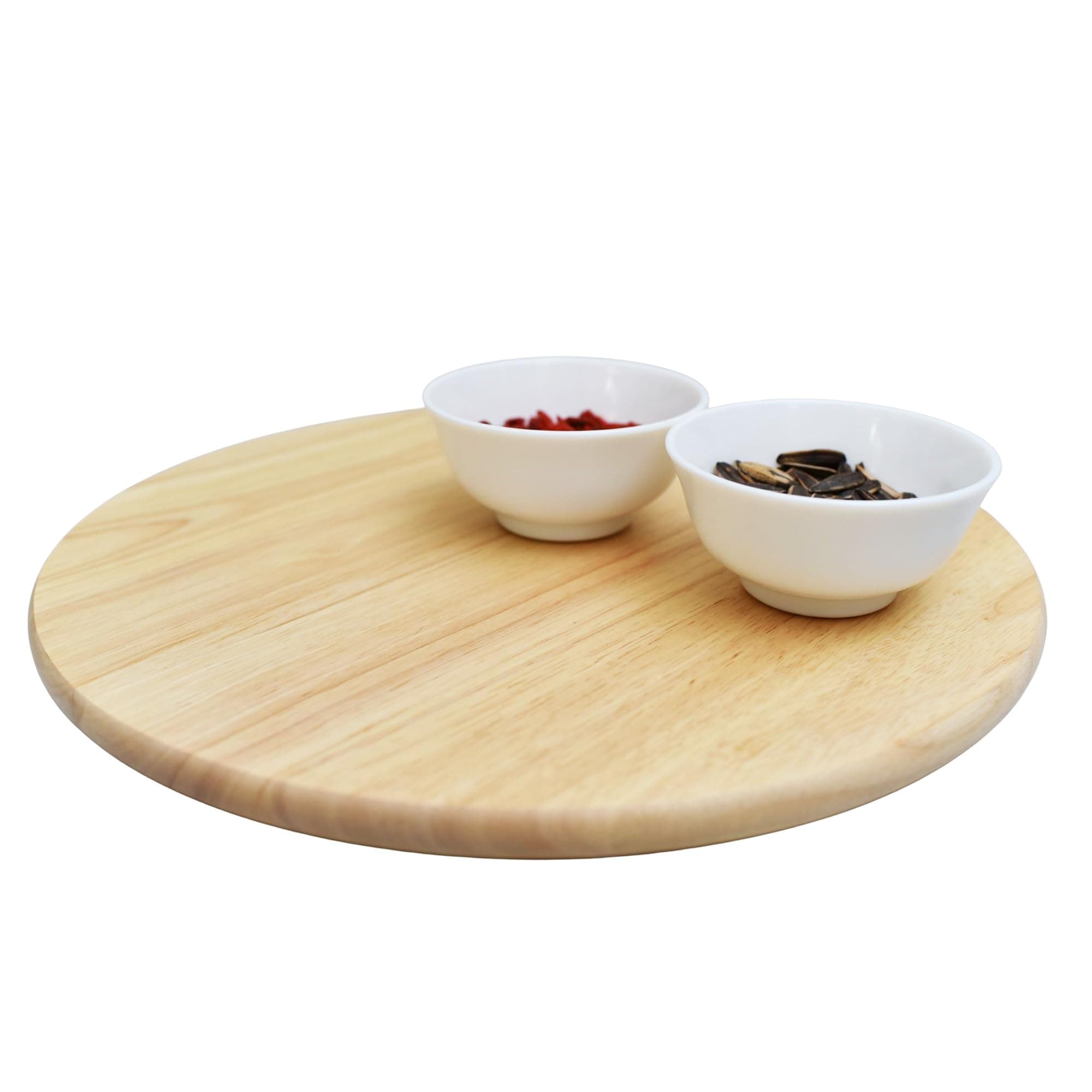
Bamboo 2-Tier Lazy Susan Turntable 14 inch
$32
Two-tier bamboo lazy susan, 14-inch diameter. Tall upper tier for bottles, lower tier for flat items. Smooth bearing rotation, raised lip to keep items from sliding off.
The 2-tier version gives you twice the storage from the same cabinet footprint. Stack smaller containers on top, larger ones on the bottom, and a quick spin surfaces whatever you need. This single tool has saved me from buying duplicate containers at least four times.
The "I Hate Plastic Now" Problem
You've watched the documentaries, you've read the microplastics articles, and you've decided the 15-year-old stained plastic containers microwaving in your cabinet are out. But you can't afford to replace everything with glass overnight, and you don't know where to start.
The fix: replace the "daily driver" containers (the ones you microwave, the ones you use for leftovers) first. Glass with snap-on bamboo or silicone lids is the upgrade that makes the biggest health and aesthetic difference. Keep a couple of plastic containers for freezer duty where glass cracks.
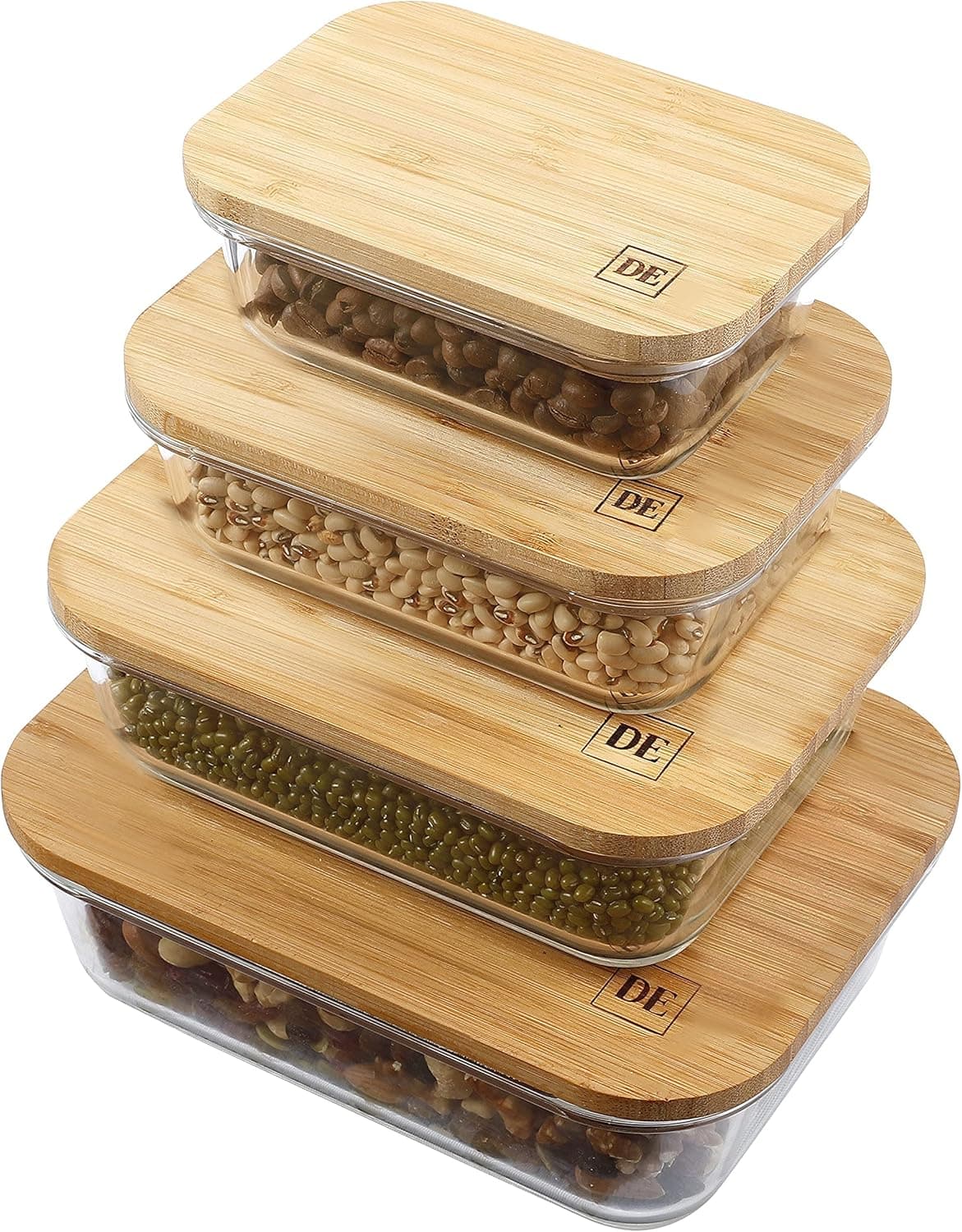
De Glass Food Storage with Bamboo Lids Set of 8
$39
Set of 8 rectangular glass containers with silicone-sealed bamboo lids. Four sizes, two of each. Airtight, microwave and oven safe (lids off). Visually attractive on open shelves.
The bamboo lids earn their keep for one specific reason: they look nice enough that the containers can live on your counter when they're empty rather than getting buried in a cabinet. That's actually the secret to long-term organization — if the thing looks good, you'll put it where you can see it, and when you can see it, you don't lose it.
What to Skip
A few products the tupperware aisle wants you to buy that will not fix your cabinet:
Mismatched cheap plastic sets. Anything under $15 for a 20-piece set is shapes-that-don't-stack plastic that will warp in the dishwasher within six months. You're buying future clutter.
Lid bins that don't fit your lids. The "universal" lid organizers with fixed slots only fit round lids of two specific sizes. Measure your lids before buying any rigid-slot organizer.
Drawer-style pull-out containers. These look great on TikTok but require you to have the exact drawer depth and clearance they're built for. For most cabinets, they're a waste of $60.
Labeled "sets" with weird sizes. The set with the 2-cup, 3-cup, and 4-cup containers looks thoughtful until you realize you only ever use one size. Buy multiples of the size you actually use.
Anything with a "one-touch" lid. The snapping mechanisms fail within a year and turn a $40 set into a lidless-container graveyard. Stick with simple snap-on or screw-on lids.
The goal isn't a Pinterest-perfect cabinet — it's a cabinet you can open in front of someone without apologizing. These five fixes get you there for under $160 total, and they hold up because each one targets a specific failure pattern instead of just adding more containers to the pile.
Frequently Asked Questions
What's the best single product to fix a tupperware cabinet?
A lazy susan, if your cabinet is deep. It's the single tool that makes the biggest day-to-day difference because it eliminates the "stuff lost in the back" problem, which is the main reason tupperware cabinets turn into graveyards.
Should I switch entirely to glass?
Mostly yes, but keep a few plastics for the freezer. Glass cracks when food expands during freezing, especially with liquids like soup. Plastic is safer for freezer use; glass is better for daily microwave and fridge use.
How many containers do I actually need?
For a household of 2-4 people, 10-12 total containers (in 3-4 sizes) is plenty. Anything more and you're just storing empty containers. Purge aggressively — if you haven't used it in six months, you don't need it.
Do silicone stretch lids actually seal well?
Yes, if you clean both the container rim and the lid before applying. They seal via suction, so any food debris on either surface breaks the seal. They're not as airtight as a screw-on lid but they're fine for fridge storage.
Why does glass tupperware cost so much more than plastic?
Glass is heavier, more expensive to ship, and harder to manufacture without defects. But it lasts essentially forever (no warping, no staining, no degradation), so the cost-per-year is actually cheaper than replacing plastic sets every 2-3 years.
Affiliate Disclosure
This post contains affiliate links. Haven & Home may earn a commission on purchases made through these links, at no extra cost to you. We only recommend products we genuinely love.
You Might Also Love
 Organization
The Best Toy Storage Bins That Don't Look Like a Daycare
Toy storage in the living room does not have to ruin the aesthetic. These bins are functional enough for real use and nice enough to leave out.
 Organization
4 Under-$25 Swaps That Turn a Dump Drawer Into a Functional One
Under $25 each and your junk drawer finally closes. Four small swaps — bamboo organizer, clear dividers, pen caddy, and cushioned liner — that fix the chaos.
 Organization
How to Stop Tripping Over Shoes Without Buying More Furniture
Shoe piles at the door are a solved problem — and none of the solutions require a new bench or cabinet. Six options that work in real entryways.