

A Beginner's Guide to Spring Container Gardening on a Budget
Skip the $500 raised bed kits. Container gardening gets you fresh herbs and flowers for under $40 total, and you don't need a yard. You need a porch, a balcony, a sunny windowsill, or a patch of concrete outside your door. That's it. People have been growing food in pots for centuries — the "beginner gardener needs elaborate infrastructure" narrative is mostly just good marketing from gardening brands.
Here's what you actually need to start growing this spring, in roughly the order you'll buy it.
1. What Should You Grow First?
Start with herbs and one flowering annual — not vegetables. Herbs are forgiving, produce fast, and give you immediate feedback that you're doing it right. Basil is the most satisfying beginner herb because it grows fast and you can harvest it every week. Mint is indestructible (contain it in its own pot — it will take over everything else if you don't). Thyme and chives require almost zero attention.
For a flowering annual, marigolds or petunias are the budget choice that make any container look intentional. They come in six-packs for $3-5 at any garden center in April and May.
Avoid tomatoes, cucumbers, and squash for your first season. They need bigger containers, more soil, more water, and specific pruning to produce well. Master herbs first, then tackle vegetables next year when you've got the fundamentals down.
2. Start Seeds or Buy Starts?
Buy starts for herbs you want quickly, start seeds for flowers and annuals. Herb starts from the grocery store or garden center cost $3-5 each and are already 6-8 weeks ahead of where you'd be starting from seed. For basil, parsley, and rosemary, the $4 start from Trader Joe's or your local garden center is worth it.
For flowers, starting from seed is where the real savings are. A seed packet has 50-200 seeds for $3-5. A six-pack of seedling starts is $4-6 for six plants. If you're growing more than a few pots, seed starting pays for itself fast — and it's genuinely satisfying to watch something you grew from scratch take off.
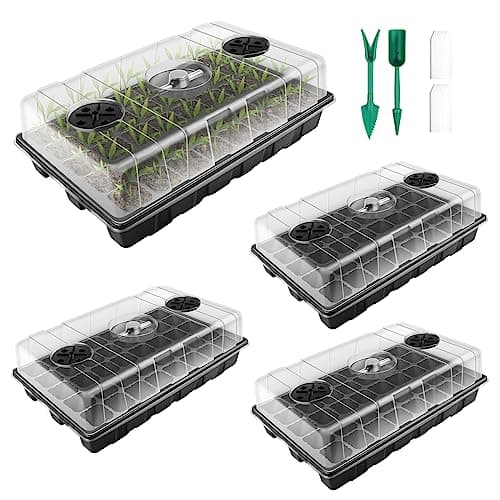
Burpee Seed Starter Kit 72-Cell Tray
$19
72-cell seed starting tray with dome lid and base. Biodegradable peat cells. Includes plant tags. 13x13 in. Reusable dome. Works for herbs, flowers, vegetables.
Start seeds indoors 6-8 weeks before your last frost date, then transplant outside once temperatures stay consistently above 50F at night.
3. The Container Decision: Fabric Grow Bags Are the Best Beginner Choice
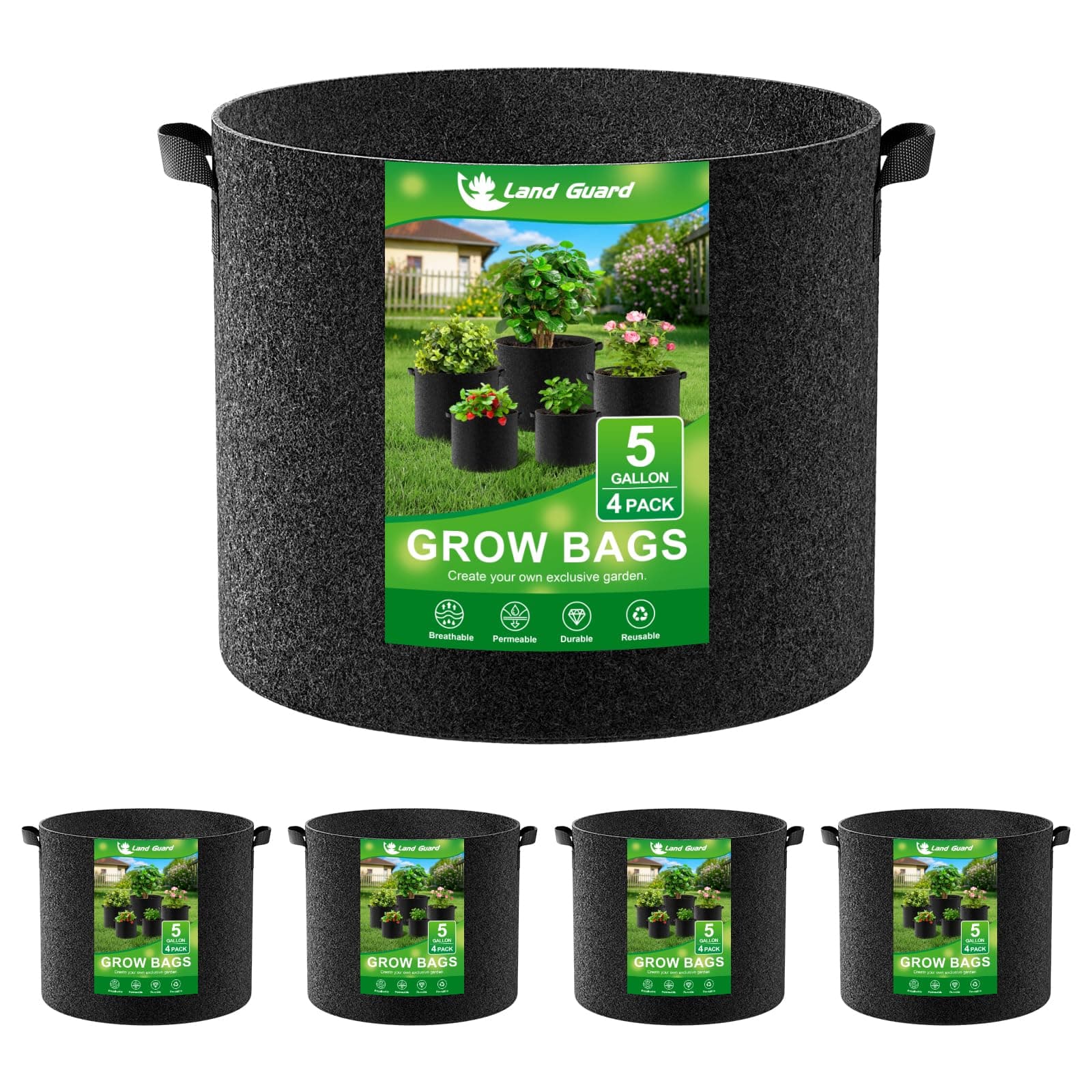
Fabric grow bags outperform plastic pots on almost every metric for beginners. They're cheaper, they drain perfectly (no root rot), they air-prune roots which leads to healthier, more productive plants, and they collapse flat for storage when the season ends. A 5-pack of 5-gallon fabric grow bags is typically $15-22, which is less than a single medium plastic pot at most garden stores.
The only downsides: they dry out faster than thick plastic (you'll water every 1-2 days in summer heat), and they don't look quite as polished as ceramic. For function over form, fabric wins every time.
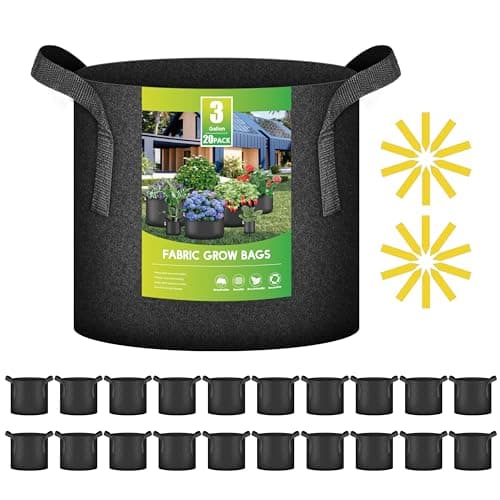
Fabric Grow Bags 5-Gallon 5-Pack
$17
5-pack 5-gallon fabric grow bags. BPA-free felt material. Handles for portability. Air pruning promotes healthy roots. Excellent drainage. Collapses flat for storage. 12 in. diameter.
Use the 5-gallon size for herbs and flowers. Go up to 10-gallon if you decide to try tomatoes or peppers later in the season.
4. Soil Is Where You Should Not Cut Corners
Potting mix — not garden soil — is what goes in containers. Garden soil compacts in pots, cuts off root oxygen, and leads to drainage problems within weeks. Real potting mix is formulated to stay loose and aerated in a container environment.
Miracle-Gro Potting Mix is the most widely available and genuinely good for most beginner plants. The 8-quart bag is around $9-12 and fills about two 5-gallon grow bags. For herbs specifically, look for a mix labeled "all-purpose" or add perlite (about 20% by volume) to improve drainage even further.
Miracle-Gro Potting Mix 8 Quarts
$11
8-quart all-purpose potting mix. Feeds plants for up to 6 months. Formulated for container use. Works for herbs, flowers, vegetables. Resealable bag.
5. The Three Tools You Actually Need
A trowel, a hand fork, and a watering can is the complete starter kit. Ignore the 20-piece tool sets with items you'll never identify. You transplant seedlings with the trowel, loosen soil and mix in amendments with the hand fork, and water daily with the can. That covers 95% of what beginner container gardening requires.
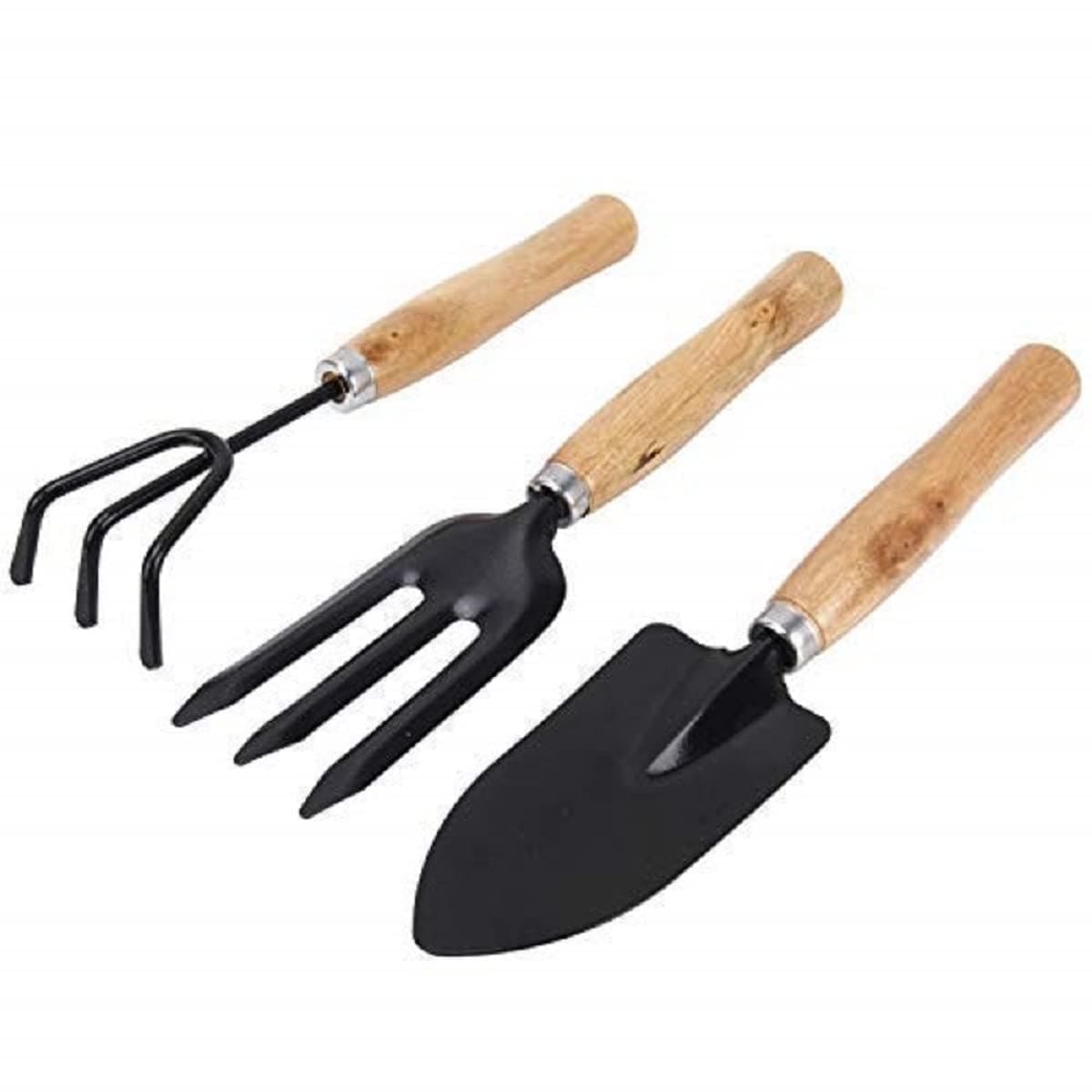
Garden Hand Tool Set 3-Piece Ergonomic
$16
3-piece garden hand tool set. Includes trowel, hand fork, transplanter. Ergonomic rubber grip handles. Stainless steel heads. Measurement markings on trowel. Rust-resistant.
A long-handled watering can (2-liter minimum) with a gentle rose head is the other essential. It lets you water at soil level without soaking leaves, which reduces fungal problems. Skip the squeeze nozzle bottles — they take forever and uneven pressure causes soil compaction.
6. Label Everything
Plant labels sound optional but they aren't. Once a seedling sprouts or a herb start loses its nursery tag, everything looks identical for weeks. You will forget which flat-leaf parsley is which. Label every pot or grow bag with the plant name and the date you planted it.
The Homestia Bamboo Plant Labels come as a 100-pack for $9 and are pre-cut with a blunt end that pushes into soil easily. They're unbleached wood so they don't leach chemicals into an herb garden. Write with a permanent marker (sharpie, not pencil) and they hold up through a full season.
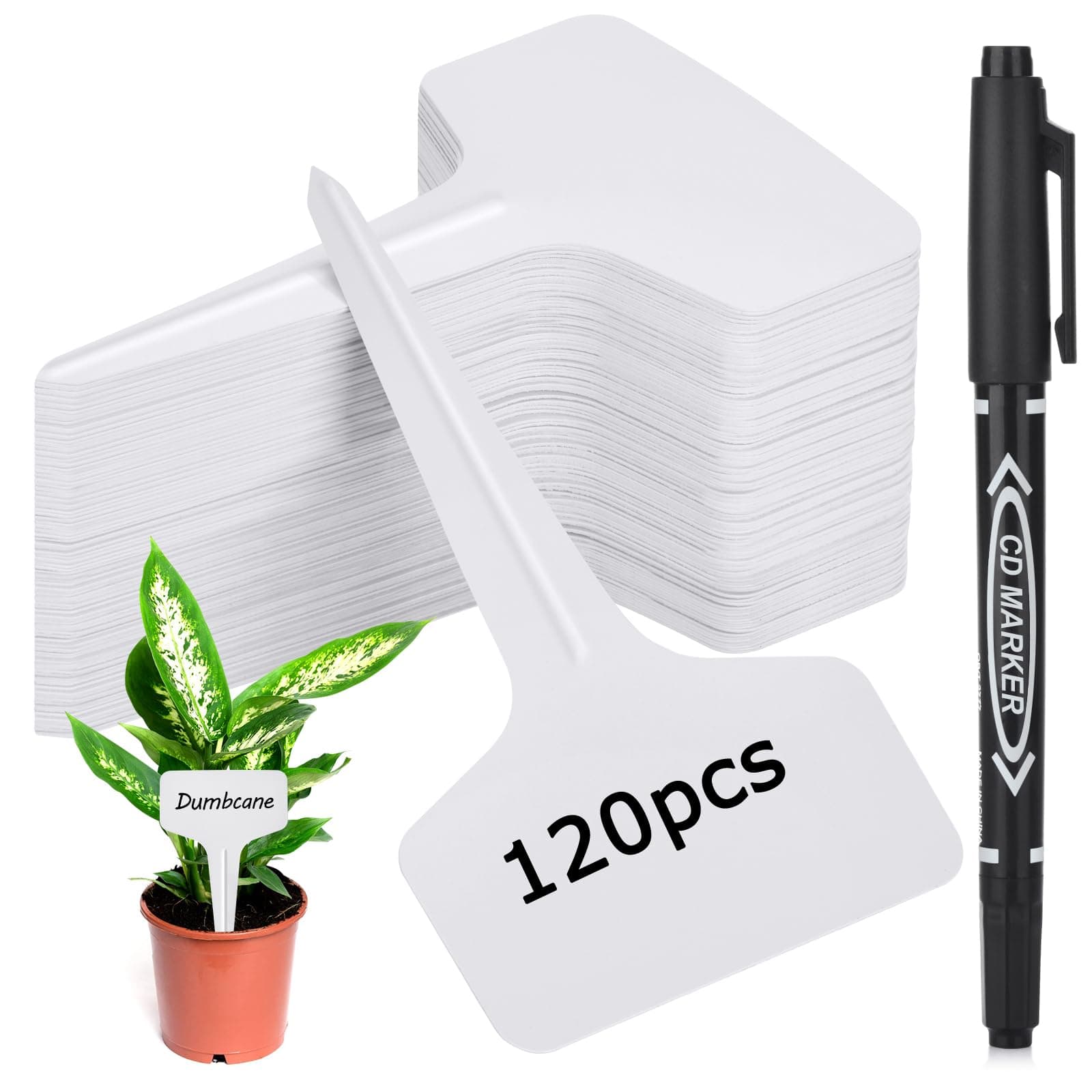
Homestia Bamboo Plant Labels 100-Pack
$9
100-pack natural bamboo plant labels. Pre-cut 6 in. stakes with blunt ends. Write with permanent marker. Compostable. No chemicals. Works for herbs, vegetables, seedlings.
Quick Tips for Keeping Things Alive
- Water in the morning, not at night. Evening watering leaves foliage damp overnight and invites fungal problems.
- Herbs go leggy (long and weak) when they're not getting enough sun. At least 6 hours of direct light is the minimum for basil and parsley.
- Harvest herbs regularly — pinching back stems encourages bushier, more productive plants. If you let basil flower, the flavor changes and production slows.
- Feed every 2-3 weeks with a balanced liquid fertilizer. Container soil nutrients deplete faster than ground soil because of all the watering.
- When something dies, don't take it personally. Every experienced gardener has killed plants. Try again with a fresh start and adjusted conditions.
Your whole starter kit — grow bags, potting mix, tools, seed tray, and labels — comes in under $70 total. You'll reuse the bags, tools, and tray next season, which means year two costs about $20 in seeds and soil. The math on homegrown herbs versus $4 grocery store packs pays for itself in about four harvests.
Pin this for later so you don't lose it!
Affiliate Disclosure
This post contains affiliate links. Haven & Home may earn a commission on purchases made through these links, at no extra cost to you. We only recommend products we genuinely love.
You Might Also Love
 Seasonal
Why Pleated Outdoor Lanterns Are Replacing String Lights This Summer
String lights had a long run. The 2026 patio swap is sculptural pleated and ribbed lanterns, and they're showing up everywhere.
 Seasonal
The Mother's Day Spa Basket Husbands Keep Asking Me About
If you're realizing it's almost Mother's Day and a CVS gift card isn't going to cut it, here's the spa basket husbands keep texting me about. Five problems, five fixes.
 Seasonal
A Renter's Guide to a Memorial Day Cookout in a Tiny Backyard
Hosting a Memorial Day cookout in a 200-square-foot rental backyard? Here's the renter-friendly playbook for every problem you'll hit.