

The $28 Patio String Lights I Plug In Every April
Every April first I drag the same set of string lights out of the bin in the garage, unwind them across the patio, and plug them in like it's a seasonal ritual. Three summers in and they still work. That's a small miracle. I've bought a half-dozen different string lights over the years — solar sets that faded after one season, Edison bulbs that cracked in a hailstorm, $80 commercial-grade lights that shorted the first time it rained. The $28 set I actually use is none of those.
Here's the full April-to-October setup I run every year, in the order I'd buy it if I were starting over.
The Lights That Survive Carolina Storms
Carolina summer weather is not gentle. Afternoon thunderstorms roll in most days in July, we've had two hurricanes in the last three years, and the humidity alone rots most cheap electronics. These are the lights that have handled all of it without a single bulb failure.

G40 Globe Patio String Lights (25 ft, 25 bulbs)
$28
Commercial-grade string lights with 25 shatterproof G40 globe bulbs on a 25-foot black cord. Indoor/outdoor rated. End-to-end connectable up to 4 strings. 2700K warm white.
Shatterproof is the feature that matters. The glass-bulb versions look better in catalog photos, but the first time a storm knocks a branch into the line you're picking glass out of the lawn for a month. These plastic bulbs look indistinguishable from glass once they're up and lit, and they survive every weather event.
The 2700K warm white is the right color temperature. Anything cooler (3500K+) reads as parking lot, not patio. If a set lists its color as just "LED" without a Kelvin number, skip it — it's going to be blue-white and wrong.
The Plug-In Set I Tried to Replace and Couldn't
I've tried to "upgrade" this set twice. Once with a solar version to avoid running the extension cord, once with a fancier Edison-bulb commercial set. Both came down within a month. The plug-in G40s are just the right brightness, they turn on the second you flip the switch (no solar charge-up delay), and the cord is long enough that one run plus a short extension gets you across most patios.
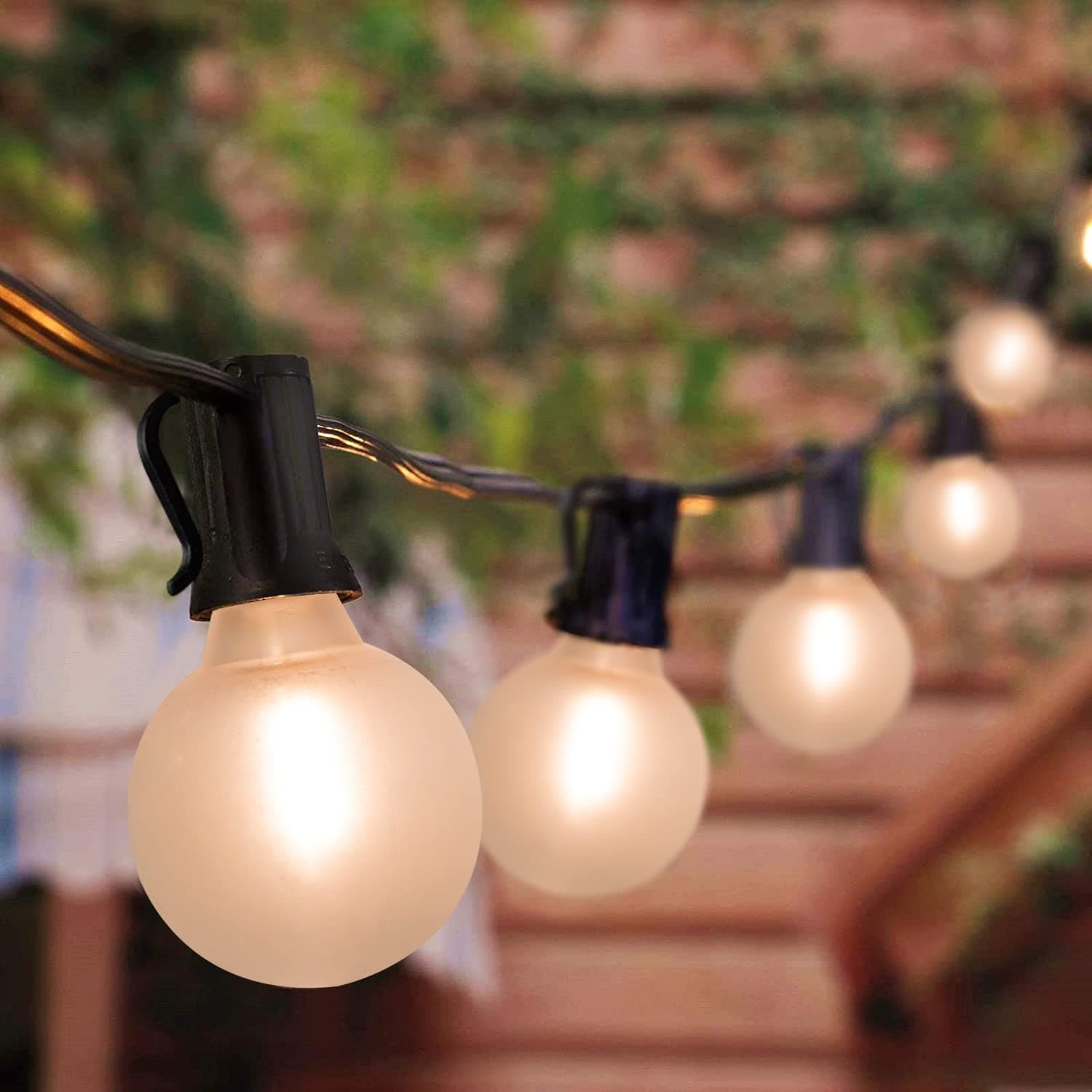
G40 Globe String Lights (25 ft, shatterproof)
$29
Second set that connects end-to-end with the first. 25 feet, 25 shatterproof bulbs. Same warm white. Use to extend across a larger patio or create a zigzag pattern.
If your patio is bigger than about 10x12, buy two strings and connect them end to end. This brand supports chaining up to four strings from a single outlet. Running a zigzag pattern across the patio (rather than a straight perimeter line) gives you better light coverage and more of that "outdoor room" ceiling effect.
The Solar Backup I Bought Anyway
I still have a solar set in the mix — but as a backup, not a primary. Solar is great for places where you can't easily run a cord, like a back corner of the yard or over a detached pergola. But if you have any extension cord access, plug-in is the more reliable system.
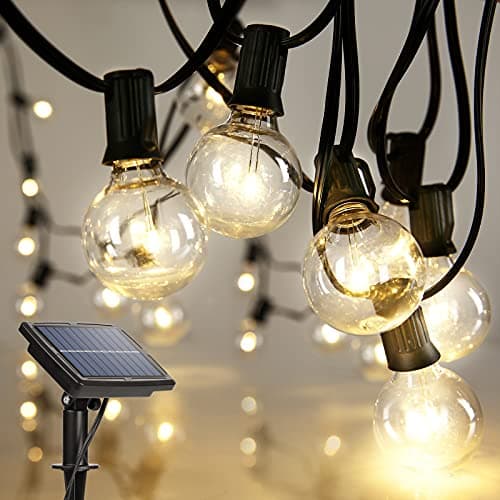
Solar Porch String Lights (48 ft, waterproof)
$32
48-foot solar string lights with 15 large globe bulbs. IP65 waterproof. 8 lighting modes. Auto on/off with dusk-to-dawn sensor. 6-8 hour runtime on full charge.
I run this set along the back fence where there's no outlet. The honest truth is the brightness isn't quite the same as plug-in, and during a string of cloudy days the runtime drops to about 3 hours. But for a backyard accent corner that's primarily decorative, it's fine. Just don't make solar your main patio light source if you plan to use the space every night.
The Hooks I Use Every Year
This is the detail most people get wrong. String lights taped up with blue painter's tape or held with random adhesive hooks sag within a week and fall by mid-summer. What you want is screw-in cup hooks with the plastic coating so they don't rust, installed permanently wherever you plan to run the lights every year.
Coated Screw-In Cup Hooks (20-pack)
$15
Vinyl-coated steel cup hooks. 1.25-inch length. Pre-threaded for wood or into drywall anchors. Rust resistant. 20 per pack — enough for most patio runs.
Screw them into wood fence posts, pergola beams, or into drywall anchors on the side of the house. Space them about 4 to 6 feet apart along the run. Once they're in, they stay in year-round — you just clip the string lights to them every April and pull the lights down in November. No adhesive fails, no falling lights, no repairs. This $15 purchase is the reason I can set up the whole patio in under 15 minutes every spring.
The Timer I Wish I'd Bought Sooner
For the first two summers I just left the lights plugged in. Sometimes I remembered to switch them off when I went to bed, sometimes I didn't. Two weeks ago in summer two I realized I hadn't actually turned them off in 11 days. That's when I finally bought a smart plug and now the lights turn on at 7:30 p.m. and off at 11:00 p.m. every night automatically.
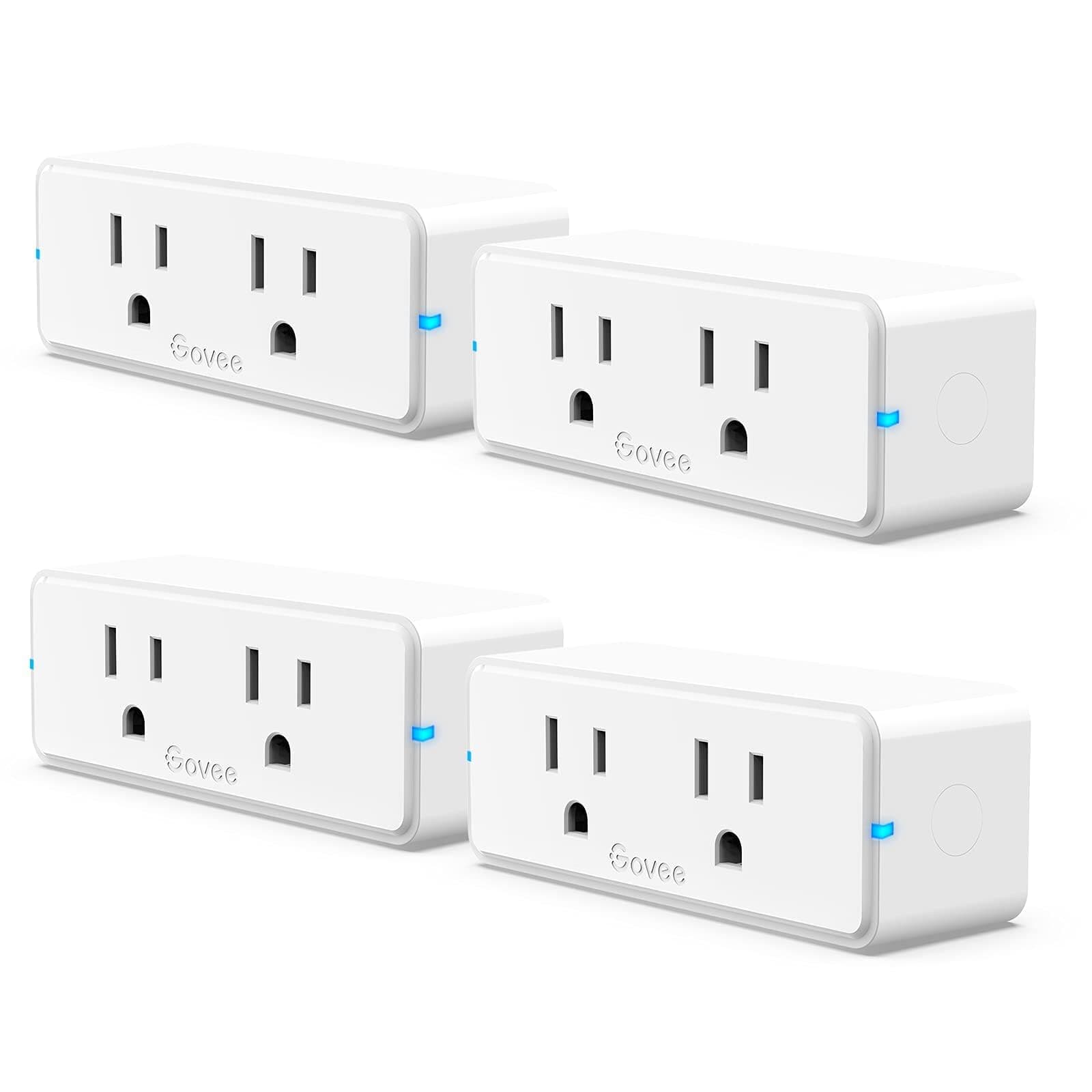
Outdoor Smart Plug (Wi-Fi, Weatherproof)
$22
Weatherproof smart plug with 2 outlets. Wi-Fi controlled via app, Alexa, or Google. Schedule on/off times, timer modes, and remote control. ETL certified.
The outdoor-rated enclosure is essential — indoor smart plugs mounted outside will fail in the first rain. This one has a weather-sealed housing and two outlets (one for lights, one free for whatever else). Set the schedule once in the app and forget it. It's the closest thing to "set and forget" on any outdoor setup I have.
Honestly, if I'd bought this in year one I'd have saved probably 200 hours of mental energy over three summers. Do not skip the timer.
What I'd Buy First If I Were Starting Over
If I had to rebuild the whole setup from zero right now, I'd buy in this order: G40 lights first (the whole thing doesn't work without them), cup hooks second (because cleanup at season-end matters more than people think), smart plug third (the quality-of-life upgrade that pays for itself within a week), and a second string of G40s fourth if the patio is bigger than 10x12. Skip the solar unless you have a specific spot with no outlet access.
Total spend for the whole setup: $94. Six months a year of nightly patio use. Best dollar-per-hour home upgrade I've made.
Frequently Asked Questions
What are the best patio string lights for outdoor use?
The G40 Globe Patio String Lights ($28 for 25 feet, 25 bulbs) are the best pick for most patios. Shatterproof bulbs survive storms, 2700K warm white color temperature reads as inviting (not parking-lot blue), and the commercial-grade cord can be chained end-to-end up to 4 strings from a single outlet.
Are solar string lights as bright as plug-in?
No. Solar string lights are reliable but noticeably dimmer, and runtime drops to 3-4 hours on cloudy days. Use plug-in lights wherever an outlet is accessible, and reserve solar sets for detached areas like a back fence corner or a pergola with no power access.
How do you hang string lights on a patio without them falling?
Install vinyl-coated screw-in cup hooks ($15 for 20) into wood fence posts, pergola beams, or drywall anchors on the side of the house. Space them 4-6 feet apart. Once installed, they stay year-round — you just clip the lights to them each spring.
Do you need a timer for outdoor string lights?
A weatherproof outdoor smart plug ($22) pays for itself within two weeks by turning lights on at dusk and off at bedtime automatically. It eliminates the "did I leave the lights on?" mental load and extends bulb life by cutting runtime roughly in half.
What color temperature should patio string lights be?
Look for 2700K warm white. Cooler color temperatures (3500K and up) read as commercial or parking-lot and ruin the outdoor-room feel. Avoid any string light listing that doesn't specify a Kelvin number — those are usually the too-cool LEDs.
Affiliate Disclosure
This post contains affiliate links. Haven & Home may earn a commission on purchases made through these links, at no extra cost to you. We only recommend products we genuinely love.
You Might Also Love
 Seasonal
Why Pleated Outdoor Lanterns Are Replacing String Lights This Summer
String lights had a long run. The 2026 patio swap is sculptural pleated and ribbed lanterns, and they're showing up everywhere.
 Seasonal
The Mother's Day Spa Basket Husbands Keep Asking Me About
If you're realizing it's almost Mother's Day and a CVS gift card isn't going to cut it, here's the spa basket husbands keep texting me about. Five problems, five fixes.
 Seasonal
A Renter's Guide to a Memorial Day Cookout in a Tiny Backyard
Hosting a Memorial Day cookout in a 200-square-foot rental backyard? Here's the renter-friendly playbook for every problem you'll hit.