

How to Organize an Under-Stair Closet Without Custom Built-Ins
The under-stair closet is the Bermuda Triangle of every home. Things go in, things never come out, and somehow there's a vacuum cleaner blocking access to all of it. The ceiling is sloped so standard shelving doesn't work. The shape is awkward so bins slide around. And because it's hidden behind a door, the mess stays invisible right up until you need something that's buried in the back of it.
Custom built-ins would be amazing. They would also cost $800 to $3,000 and require weeks of planning. The good news: a few smart, affordable products in the right configuration can get you 80% of the way there for under $200 total. Here's how to tackle the most common under-stair closet problems one by one.
The "Stuff Piled Everywhere" Problem
If your closet is a single open space with no vertical organization, everything ends up in a pile. The floor fills up, the space above it goes completely unused, and the taller items block access to the shorter ones.
Stackable storage bins with lids transform floor space into vertical storage without needing any shelving at all.
The CTSNSLH 4-Tier Stackable Storage Bins are the starting point for any under-stair closet overhaul. The clear-front panels let you see what's inside without opening everything, and the lids stack securely so you can go 4 tiers high without anything tipping. At 23 quarts each, they're big enough for holiday decorations, sports equipment, art supplies — the stuff that actually lives in under-stair closets. The whole set runs around $35.
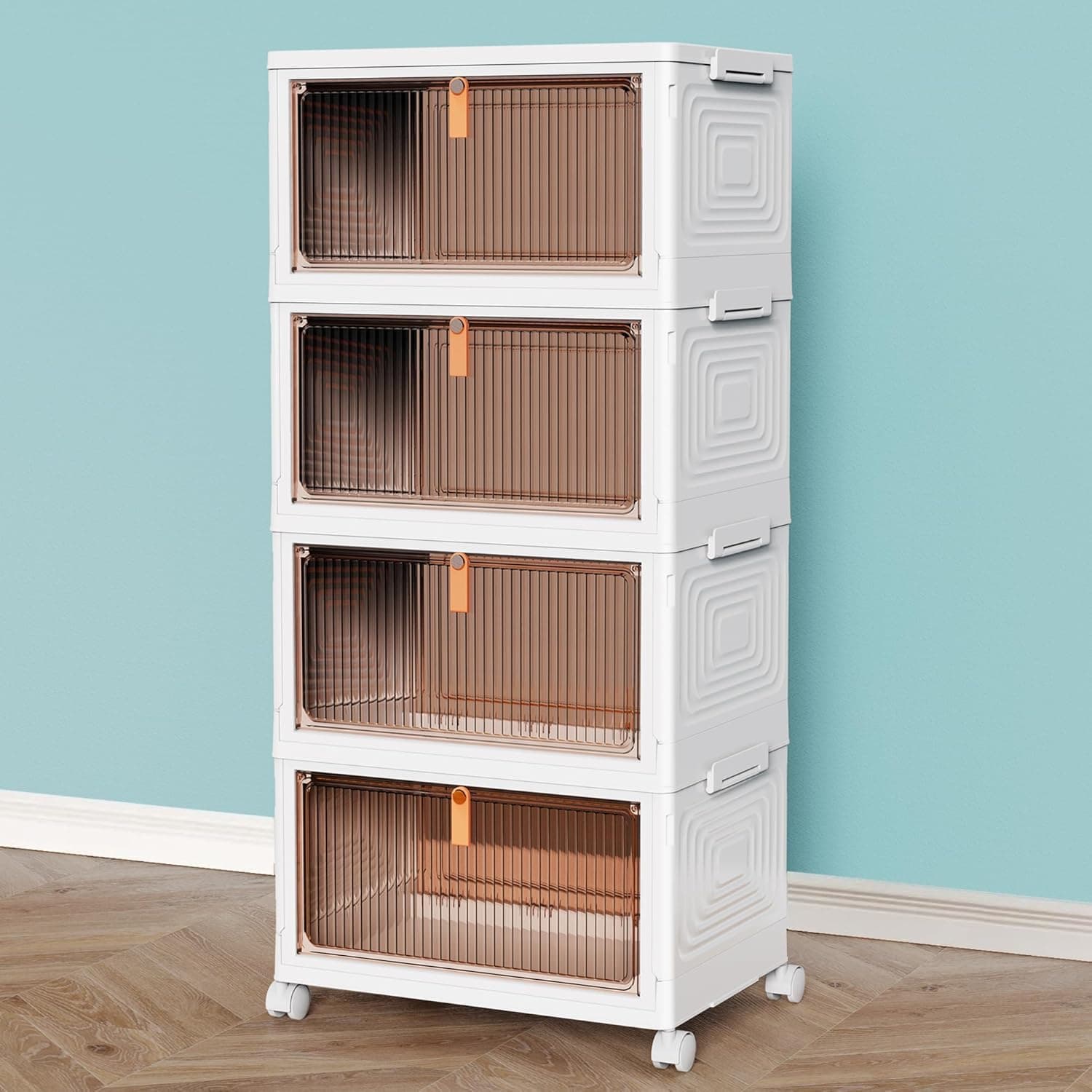
CTSNSLH 4-Tier Stackable Storage Bins with Lids
$35
Set of 4 stackable bins with secure lids, 23 qt each, clear front panels, secure stacking. Transforms floor space into vertical storage without any shelving installation.
The strategy here: line the deeper back wall (where the ceiling is still high) with stacked bins, and leave the front zone (where the ceiling slopes low) for flat storage and frequently accessed items.
The "No Hooks" Problem
Under-stair closets are often where coats, bags, dog leashes, and sports gear go to die. Without hooks, everything gets dumped on the floor because there's nowhere to hang it. Adding a hook rack to the back of the door turns wasted door space into the most accessible part of the closet.
An over-door hook rack installs in seconds with no drilling and transforms the door into a storage wall.
The over-door hook organizer for this job is a workhorse: it hangs over any standard door without screws, and you can load it with coats, tote bags, scarves, hats, and anything else that usually hits the floor. The wider the rack, the more you can fit — look for one with at least 8 hooks across multiple rows. The heavy-duty metal ones support 30 to 50 pounds total, which is enough for several coats and bags without the rack bending or slipping.
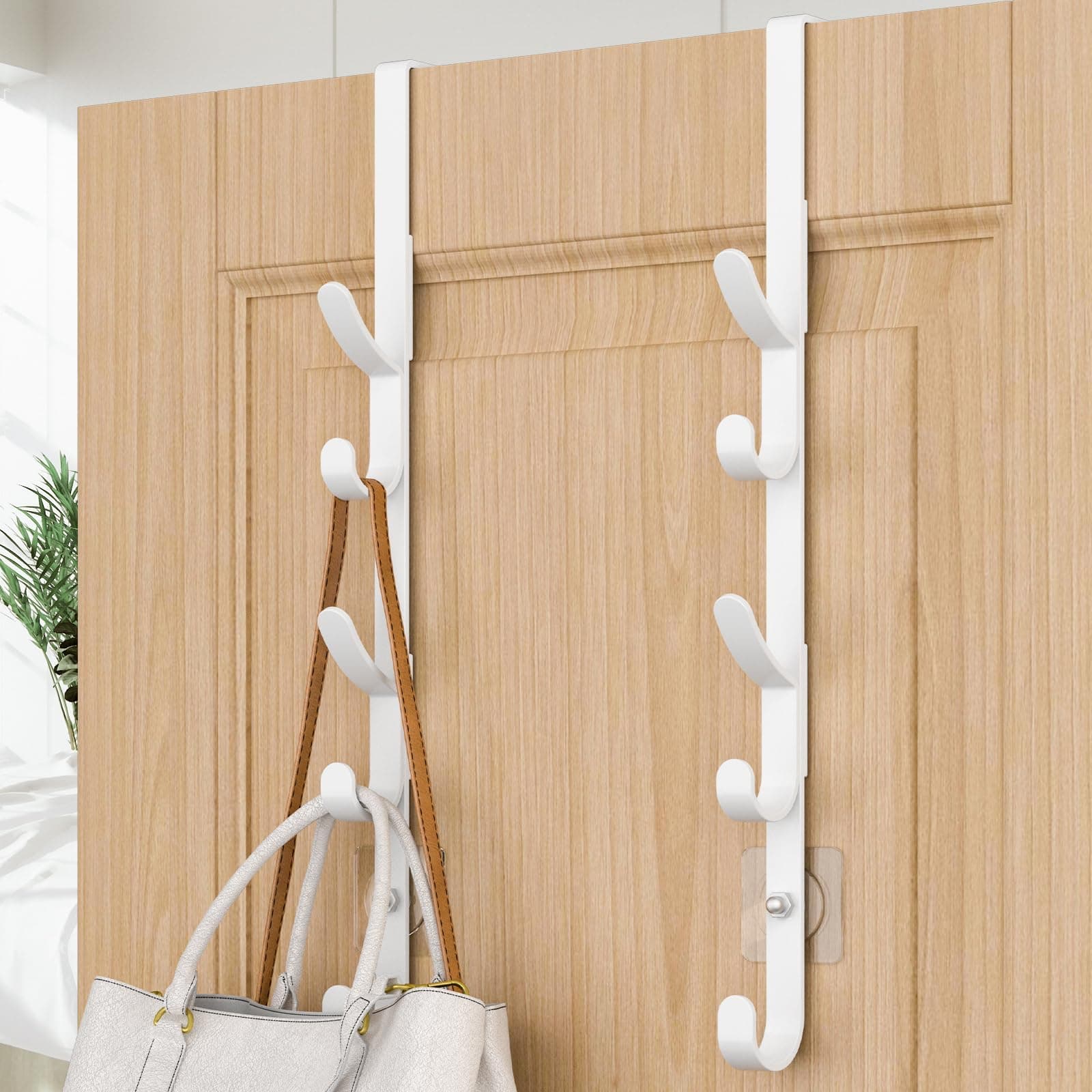
Over-The-Door Hook Organizer Rack Heavy Duty
$22
No-drill over-door installation, 8+ hooks on multiple rows, heavy-duty metal, fits standard and thick doors. Turns the door into a hanging storage wall.
The "Can't Reach the Back" Problem
Anything that gets pushed to the back of an under-stair closet is effectively gone forever. The sloped ceiling makes it uncomfortable to duck in and reach, and once things shift around, you can't see what's back there anyway.
A rolling utility cart solves this completely: you load it in the back, then roll the whole thing forward to access it.
The Amazon Basics 3-Tier Rolling Cart is the right tool here. Three tiers of open mesh shelving, casters that lock in place, and a slim footprint that fits in the deeper zones of most under-stair closets. Load it with cleaning supplies, paper goods, anything you access occasionally but don't want to dig for. When you need something, you roll the cart forward into the open. When you're done, it rolls back. No more crouching and reaching.
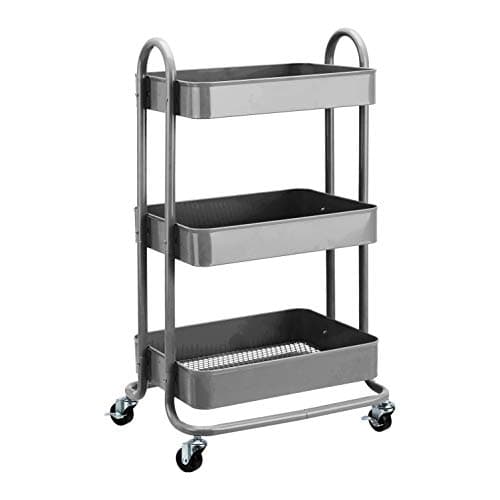
Amazon Basics 3-Tier Rolling Utility Cart
$33
3-tier open mesh shelving, locking casters, slim profile, 60 lb capacity. Solves the under-stair reach problem by letting you roll everything into the open to access it.
The "Shelves Don't Fit" Problem
Standard bookcases are 12 to 14 inches deep and built for walls with standard ceiling heights. In a sloped under-stair closet, they either won't fit under the low part of the ceiling or they'll eat so much floor space that you've gained nothing.
A skinny 3-tier bookshelf at around 10 inches deep fits along the angled wall and gives you actual vertical storage for the first time.
The HOOBRO 3-Tier Narrow Bookshelf is 10 inches deep and comes in heights from 36 to 48 inches — which means you can place the shorter version along the sloped section of the wall and still clear the ceiling. Wire side panels keep it visually lightweight and let air circulate around whatever you store there. Use it for cleaning supplies, shoe boxes, craft bins, or small appliances. At $38, it's one of the best-value pieces in any under-stair closet setup.
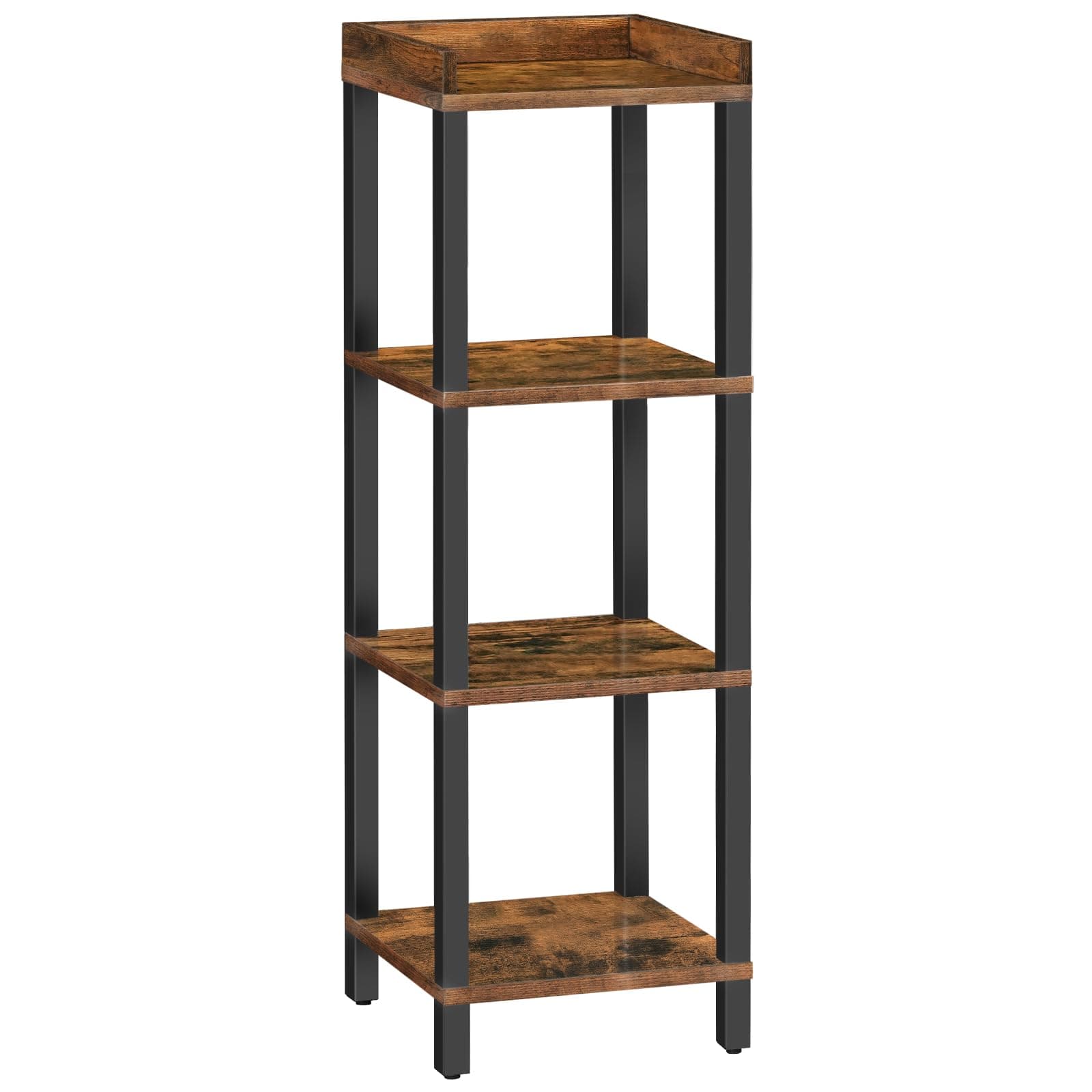
HOOBRO 3-Tier Narrow Bookshelf Skinny Bookcase
$38
10 in. deep x 36 in. tall, 3-tier open storage, industrial wire design, fits in sloped closet sections where standard shelves won't. Holds 20 lb per shelf.
The "No Place to Step" Problem
Half the things that end up on the floor of an under-stair closet are there because you couldn't reach the higher shelves. A step stool that also serves as a storage container does double duty: it keeps your step stool accessible without taking up extra space, and it adds one more closed container for things you don't need daily.
The Cosco 2-Step Folding Stool closes flat and folds down to about 3 inches, so it stores vertical against the wall when you don't need it.
The weight rating (225 pounds) is plenty for any adult, and the non-slip steps mean you're not white-knuckling it every time you need to reach a high shelf. Fold it up and lean it against the door wall when not in use — it takes up almost no space. At $25, it's one of the most practical under-stair closet additions.
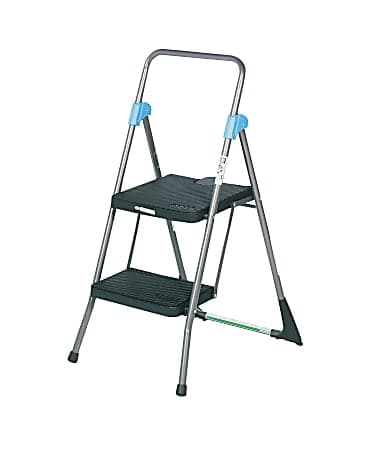
Cosco 2-Step Household Folding Step Stool
$25
2-step folding stool, 225 lb capacity, non-slip steps, folds to 3 in. flat for storage against the wall. Practical under-stair addition for reaching upper storage.
The "I Don't Know What's In Here" Problem
Once you've organized everything into bins and onto shelves, the final step is labeling — because an organized closet you can't navigate is still frustrating. This is the step most people skip, and it's the reason well-organized closets tend to drift back to chaos within a few months.
A label maker takes the guesswork out of where things are and keeps the system from falling apart.
The Phomemo P12 Label Maker is the right tool for this: it's handheld, connects via Bluetooth to your phone for easy custom labels, and the adhesive labels stick to plastic bins, shelf edges, and boxes without peeling. At under $30, it's inexpensive enough to actually use freely — label every bin, every shelf level, every section. When someone else in the house uses the closet, there's no guessing where things go back.
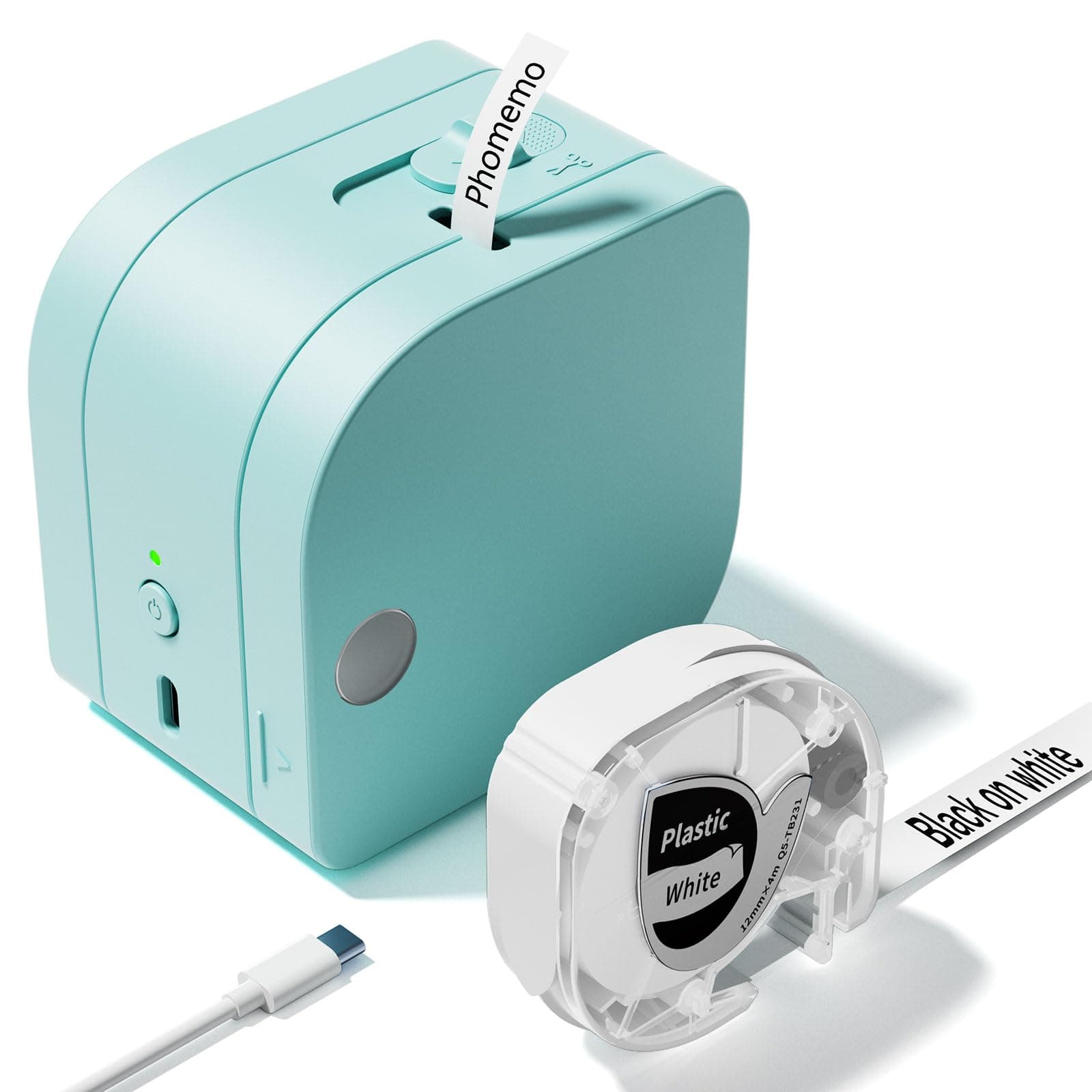
Phomemo P12 Label Maker Machine with Tape
$28
Bluetooth label maker with phone app control, includes 1 tape roll, prints on demand, adhesive labels stick to bins and shelves. The final step that keeps organized closets organized.
What to Skip
Don't buy a freestanding wardrobe or armoire and try to make it fit in an under-stair closet. The sloped ceiling makes it impossible to push against the wall, and the wasted space above it defeats the purpose.
Skip wire cube organizers without lids. They look great in photos, but in a closet that gets dusty and is used for irregular storage, open-top cubes collect mess faster than they solve it.
Avoid tension rod systems for this space. They work well in standard closets but the sloped ceiling and irregular dimensions of under-stair closets make tension rods unstable.
Quick Tips
- Measure the ceiling height at its lowest point before buying any shelving — most are under 40 inches at the slope
- Put the most frequently accessed items near the door, less-used items at the back
- Clear containers in the back mean you can see what's there without moving everything
- If you have a light in the closet, aim it at the back zone — that's where things disappear most
- Spend 20 minutes labeling after you organize; it takes an hour to re-organize a closet that lost its labels
Found something you love? Pin this for later so you don't lose it!
Affiliate Disclosure
This post contains affiliate links. Haven & Home may earn a commission on purchases made through these links, at no extra cost to you. We only recommend products we genuinely love.
You Might Also Love
 Organization
The Best Toy Storage Bins That Don't Look Like a Daycare
Toy storage in the living room does not have to ruin the aesthetic. These bins are functional enough for real use and nice enough to leave out.
 Organization
4 Under-$25 Swaps That Turn a Dump Drawer Into a Functional One
Under $25 each and your junk drawer finally closes. Four small swaps — bamboo organizer, clear dividers, pen caddy, and cushioned liner — that fix the chaos.
 Organization
How to Stop Tripping Over Shoes Without Buying More Furniture
Shoe piles at the door are a solved problem — and none of the solutions require a new bench or cabinet. Six options that work in real entryways.