

Why Linen Tea Towels Are Replacing Paper in Spring Kitchens
Walk through any well-styled kitchen on Pinterest right now and you'll notice something missing. The paper towel roll. It used to be the centerpiece of every counter shot, mounted on a sleek black holder next to the stove. Now it's hidden in a cabinet or replaced entirely by a stack of folded linen tea towels in oatmeal, sage, and cream.
The shift isn't really about aesthetics, though that's what's selling it on social. It's that linen towels actually work better for most kitchen tasks. They dry hands faster than paper, they don't leave lint on glassware the way cotton terry does, and a single set of six replaces about $200 worth of paper towels per year. Below are the linen tea towels that have made the jump worth it.
What's the Best Linen Tea Towel Set Under $25?
The best linen tea towel set under $25 is this 6-piece flax linen set at $22. It has 4,800+ reviews, a 4.5 rating, and the towels actually get softer and more absorbent after the first three washes, which is the way real linen is supposed to behave.
Real linen is initially stiff. That's how you know it's actually linen and not a cotton blend pretending to be linen. The fibers soften over time as they break in, and by wash three or four they're noticeably more absorbent than cotton at the same weight.
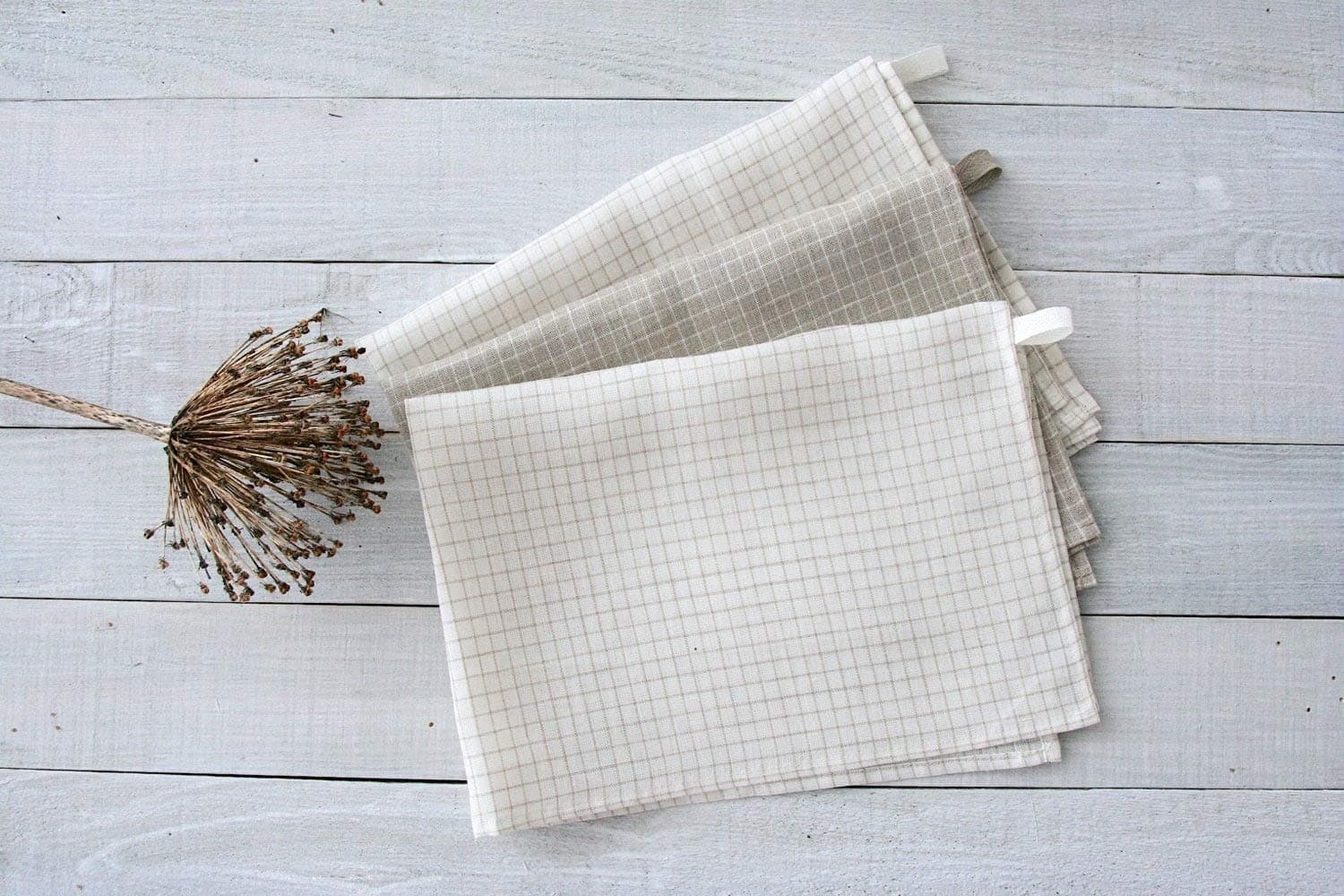
Pure Flax Linen Tea Towel Set of 6
$22
Set of six 100 percent European flax linen tea towels. 17 by 27 inches each. Pre-washed for softness. Comes in oatmeal, white, sage, and natural. Machine washable.
European flax (mostly grown in France and Belgium) is the gold standard for linen. The fibers are longer and finer than flax grown elsewhere, which means the resulting fabric has a smoother weave and better absorbency. This set specifies European flax in the listing, which is a good sign that the manufacturer isn't cutting corners with cheaper Chinese or Indian flax.
Herringbone Linen Kitchen Towels
The herringbone weave is the texture you see in expensive European tea towels. The diagonal pattern adds surface area, which improves absorbency without adding weight. These dry your hands in about half the time of a flat-weave linen towel.
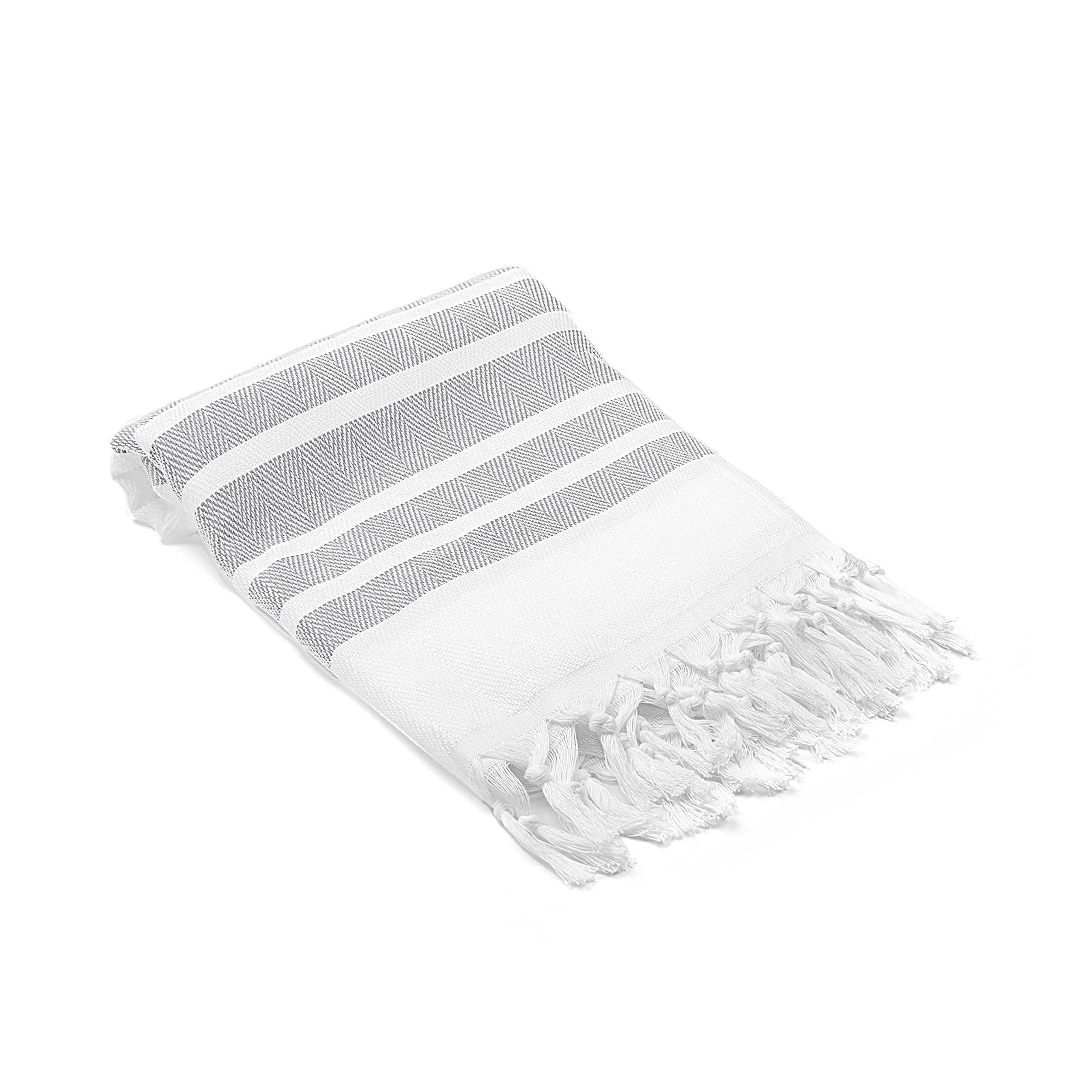
Herringbone Linen Kitchen Towel Set
$26
Set of four herringbone weave linen towels. 18 by 28 inches. 100 percent European flax. Comes in white, gray, and beige stripes. Pre-shrunk and pre-washed.
The herringbone pattern hides stains better than flat-weave linen too. If you cook with turmeric, paprika, or anything that leaves yellow or orange marks, the textured weave camouflages residual color that washing doesn't fully remove. Smaller advantage than absorbency, but a real one for anyone who actually cooks.
Why Striped Linen Towels Look So Good
Striped linen tea towels work in any kitchen because the stripe pattern is timeless. A simple black or gray stripe on natural linen reads as Belgian-modern, French-country, or Scandinavian-minimal depending on what surrounds it. Worth the $4-5 premium over plain.
There's a reason every interior design account uses striped linen towels in their kitchen styling. The stripe gives the eye somewhere to rest, breaks up the visual heaviness of solid neutrals, and photographs more interesting than plain natural linen.
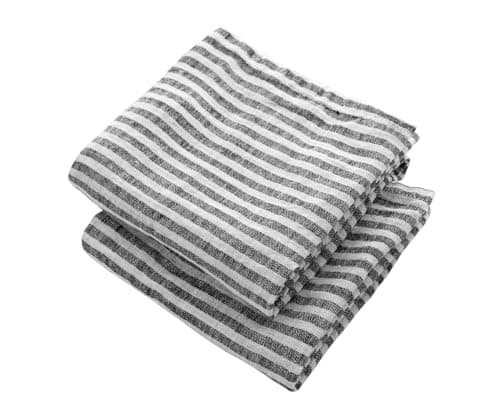
Striped Linen Tea Towel Set
$24
Set of three striped linen towels in classic black, gray, and tan stripes on natural ground. 18 by 26 inches. 100 percent linen. Hanging loop for hooks.
Look for towels with a sewn hanging loop, not just a printed-on detail. Linen is heavier than cotton when wet, and a real loop holds up to repeated hanging without fraying. The sewn loops on this set are finished with a small reinforcement stitch, which is the kind of detail that separates $24 towels from $12 towels.
Embroidered Flour Sack Style Towels
Flour sack towels are technically cotton, not linen, but the high-quality embroidered ones look like vintage European linen and absorb water beautifully. Worth including because they're the budget alternative for someone who isn't ready to spend $22-26 on a linen set.
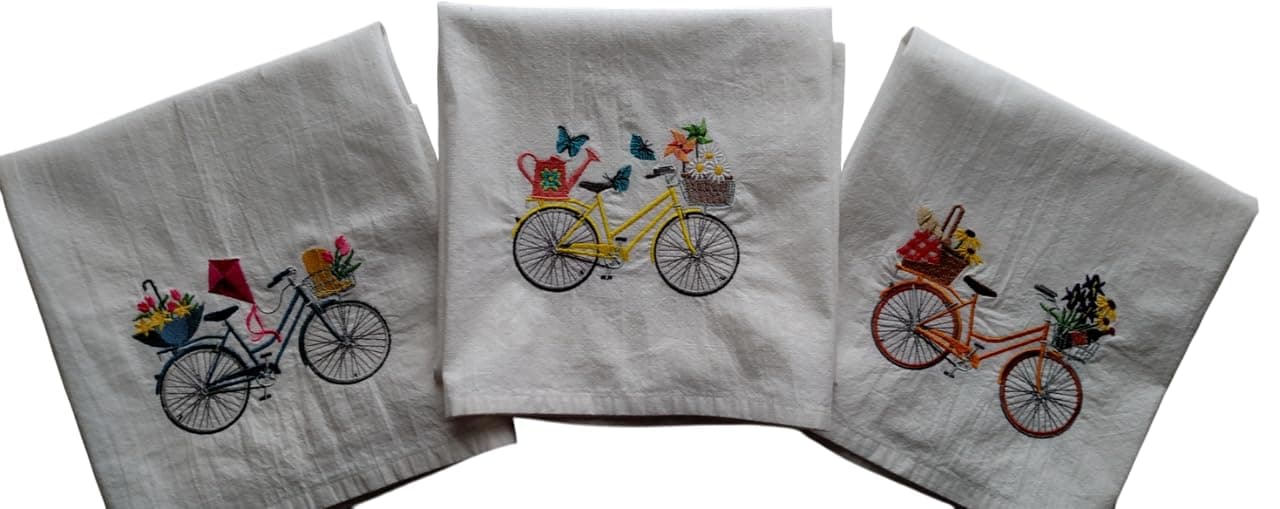
Embroidered Flour Sack Tea Towels
$16
Set of six 100 percent cotton flour sack towels with vintage embroidered details. 28 by 28 inches. Lint-free for glassware. Embroidered designs vary by set.
The embroidered sets are usually six pieces with different designs (a chicken, a pie, a coffee cup, that kind of thing). If you find them too cute or busy, look for the plain flour sack version of the same product, usually a few dollars less. Either way, these are the towel I'd actually use to dry stemware since they leave zero lint, which linen sometimes does on the first few uses.
Waffle Weave Linen Cotton Blend
Waffle weave is a third option that splits the difference between flat-weave linen and terry cotton. The honeycomb texture grabs water faster than flat-weave but isn't as bulky as terry, which means it dries quickly and stores in less space.
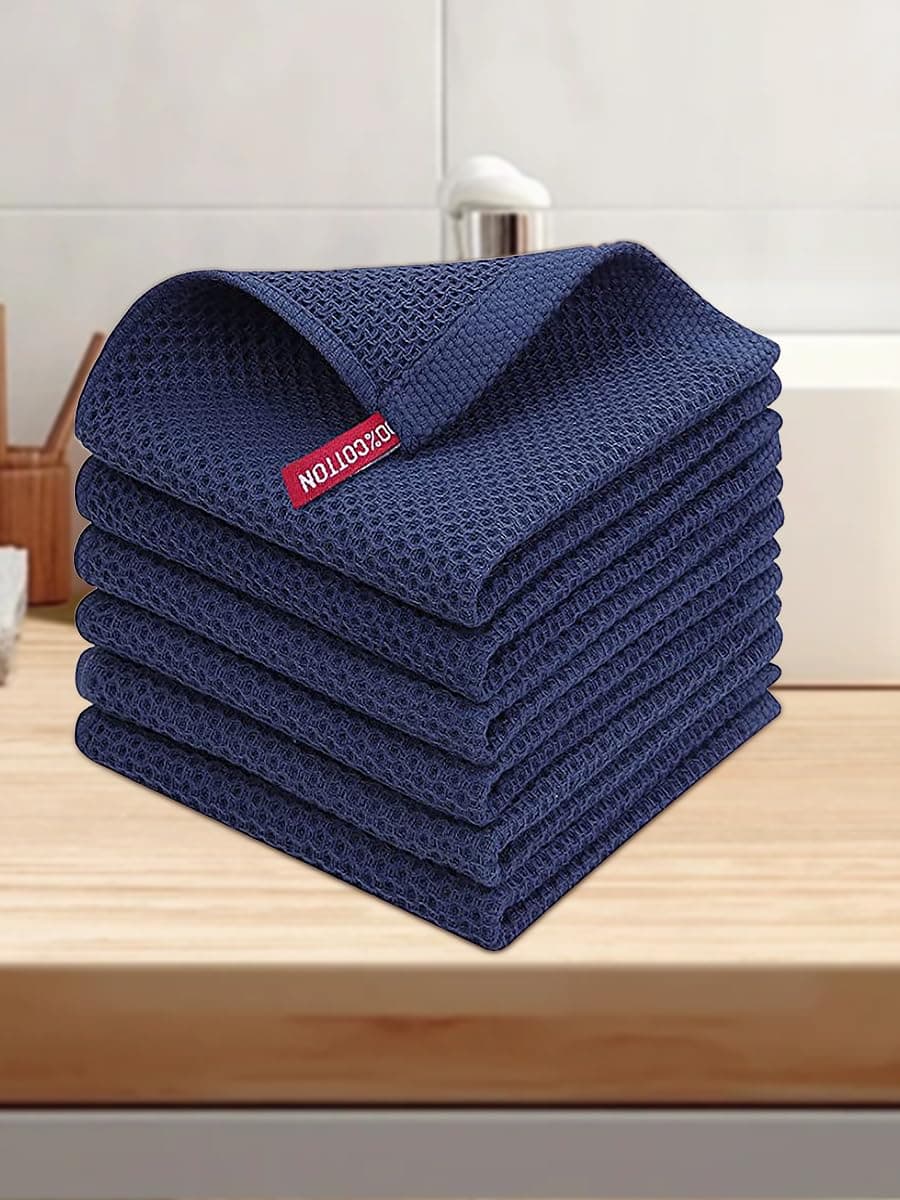
Waffle Weave Kitchen Towel Set
$20
Set of four waffle weave towels. 70 percent linen, 30 percent cotton blend. 18 by 28 inches. Quick-drying texture. Available in white, gray, sage, and rust.
The 70/30 linen-cotton blend is what you want here. Pure cotton waffle is fluffier but loses shape after a year of washing. Pure linen waffle is rare and expensive. The 70/30 blend hits the sweet spot: keeps its shape, dries fast, and costs about half what 100 percent linen waffle would run you. This is the towel I'd actually use as a dish towel for daily kitchen use.
French Linen Dish Towels
If you want the towels you'll actually be slightly precious about, the French linen ones are it. These are made from heavier 270-gram linen (most kitchen towels are 200 gram), which makes them feel substantial in your hand and absorbent enough to dry an entire dishwasher load without getting saturated.
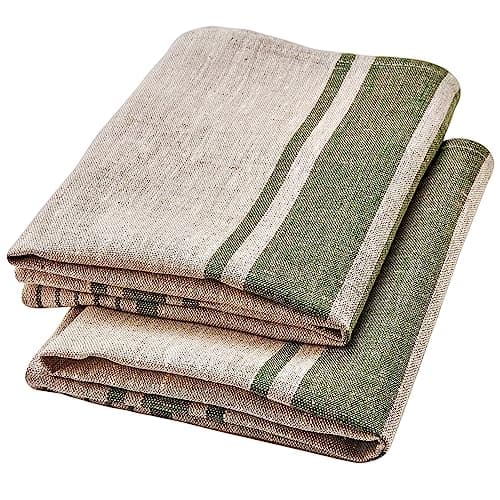
French Linen Dish Towels Set
$28
Set of three heavyweight 270gsm French linen dish towels. 19 by 29 inches. Made from European flax. Comes in natural, white, and chambray. Pre-washed for softness.
The 270gsm weight is what justifies the price. Cheaper linen towels run 180-200gsm, which means thinner fabric that wears out faster. Heavier linen lasts noticeably longer, especially under daily kitchen abuse. I've had a 270gsm linen towel for four years and it's only gotten softer. The cheaper ones I've replaced twice in the same period.
Quick Tips for Linen Tea Towels
- Pre-wash before first use. Even pre-washed linen sheds a small amount of fiber the first wash. Run them on a regular cycle in cold water before using on glassware.
- Skip fabric softener. Linen has natural anti-microbial properties from the lignin in the flax fibers, but fabric softener coats the fibers and reduces absorbency. Air drying or low tumble dry is enough to keep them soft.
- Keep one set for hands, one for dishes. Hand-drying towels get more bacteria buildup than dish-drying ones since they touch raw food residue less. Mark them with a small thread or hang them on different hooks.
- Replace paper towels gradually, not all at once. The mental switch is harder than the physical one. Keep the paper towel roll for the first month while you build the habit of grabbing a linen towel instead.
- Wash on cold, hang dry. High heat shrinks linen and breaks down the fibers faster. A monthly hot wash for sanitation is fine, but everyday washing should be cold.
The math on switching is genuinely good. A typical household goes through about $200-250 in paper towels per year. A complete switch to linen is a one-time $80-120 investment for 12-15 towels (enough to always have clean ones), and the towels last 3-5 years minimum. After year one, you're saving close to $200 annually.
Frequently Asked Questions
Are linen tea towels better than cotton?
For most kitchen tasks, yes. Linen absorbs more water per gram than cotton, dries faster, and doesn't leave lint on glassware. Cotton is fluffier and softer, which some people prefer for hand-drying. Linen wins on durability and absorbency.
How long do linen tea towels last?
Quality linen towels (270gsm or higher) typically last 4-6 years with daily use. Cheaper 180gsm towels last 2-3 years. Both outlast the cost of equivalent paper towels by a wide margin.
Do linen tea towels really replace paper towels?
For most uses, yes. Hand drying, drying dishes, wiping counters, and covering rising bread dough all work better with linen. Paper towels are still useful for raw meat juice cleanup and absorbing fryer oil, so most kitchens keep one roll on hand.
Why do linen towels feel stiff at first?
Real linen is naturally stiff because the flax fibers haven't been broken down yet. After 3-4 washes, the fibers soften and the towel becomes more absorbent. If a "linen" towel feels soft from day one, it's probably a cotton blend.
What size linen tea towel is most useful?
The 18 by 28-inch size is the most versatile. It's big enough to dry hands, cover a bowl of rising dough, or wrap fresh herbs in the fridge. Smaller 16 by 24-inch towels are fine for hand drying but limit your other uses.
Affiliate Disclosure
This post contains affiliate links. Haven & Home may earn a commission on purchases made through these links, at no extra cost to you. We only recommend products we genuinely love.
You Might Also Love
 Kitchen
Why Linen Roman Shades Are Taking Over Kitchen Windows This Spring
Scroll any kitchen reno hashtag right now and you'll see linen roman shades replacing every plastic blind in sight. Here's why and what to buy.
 Kitchen
Why Copper Kitchen Accents Are Taking Over Countertops
Copper kitchen accents are everywhere right now — and for good reason. Here's how to style them across your countertop, sink, stovetop, and open shelves.
 Kitchen
8 Spring Baking Tools Under $30 That Make You Feel Like a Real Baker
Most amateur bakers are one or two tools away from results that look and taste professional. Here are 8 spring baking upgrades all under $30.