

Why Kitchen Shears Are Quietly Replacing Knives in Real Home Kitchens
Something has shifted quietly in how people actually cook. Watch any home cooking video closely and you will notice a pair of kitchen shears showing up in places that used to belong to knives and cutting boards. Pizza cut at the pan. Herbs snipped directly into a bowl. Bacon separated from the package and cut in strips without ever touching a board. Green onions trimmed into soup mid-simmer.
It is not that knives are going anywhere. It is that shears are handling a class of everyday tasks faster, with less mess, and with fewer surfaces to clean. Here is where they show up, why they work, and what to buy.
At the Counter: Prepping Without a Cutting Board
The biggest time-saving application for kitchen shears is eliminating the board entirely for small prep tasks. Cutting board out, food on it, knife, then board in the sink — that is a sequence that adds up when you are just trimming green beans, portioning cooked chicken, or cutting sun-dried tomatoes from a jar.
Shears let you hold the ingredient over the bowl or pan and cut directly. No board, no transfer. The savings feel small each time and significant across a week of cooking.
OXO Good Grips Kitchen and Herb Scissors
$15
Micro-serrated blades stay sharp through heavy use. Comfortable non-slip handles. Comes apart for thorough dishwasher cleaning. Built-in herb stripper and bottle opener.
The blades that work best for this kind of work are micro-serrated — the tiny teeth grip slippery foods like raw chicken, herbs, and citrus peel without the shears sliding off. If your current kitchen scissors feel like they are mashing rather than cutting, that is a blade quality issue, not a technique issue.
Over the Sink: Herbs, Greens, and Trim Work
The sink is where kitchen shears earn their keep the most. Washing and trimming herbs at the same time by holding a bunch under running water and snipping the stems directly into the drain. Cutting the fronds off fennel. Trimming asparagus ends without transferring them to a board.
Herb scissors with multiple blades take this further by cutting an entire bunch of herbs into fine pieces in seconds. The five-blade designs are genuinely faster than knife-chopping for any herb that goes into a dish in large quantities — parsley, basil, chives, dill.
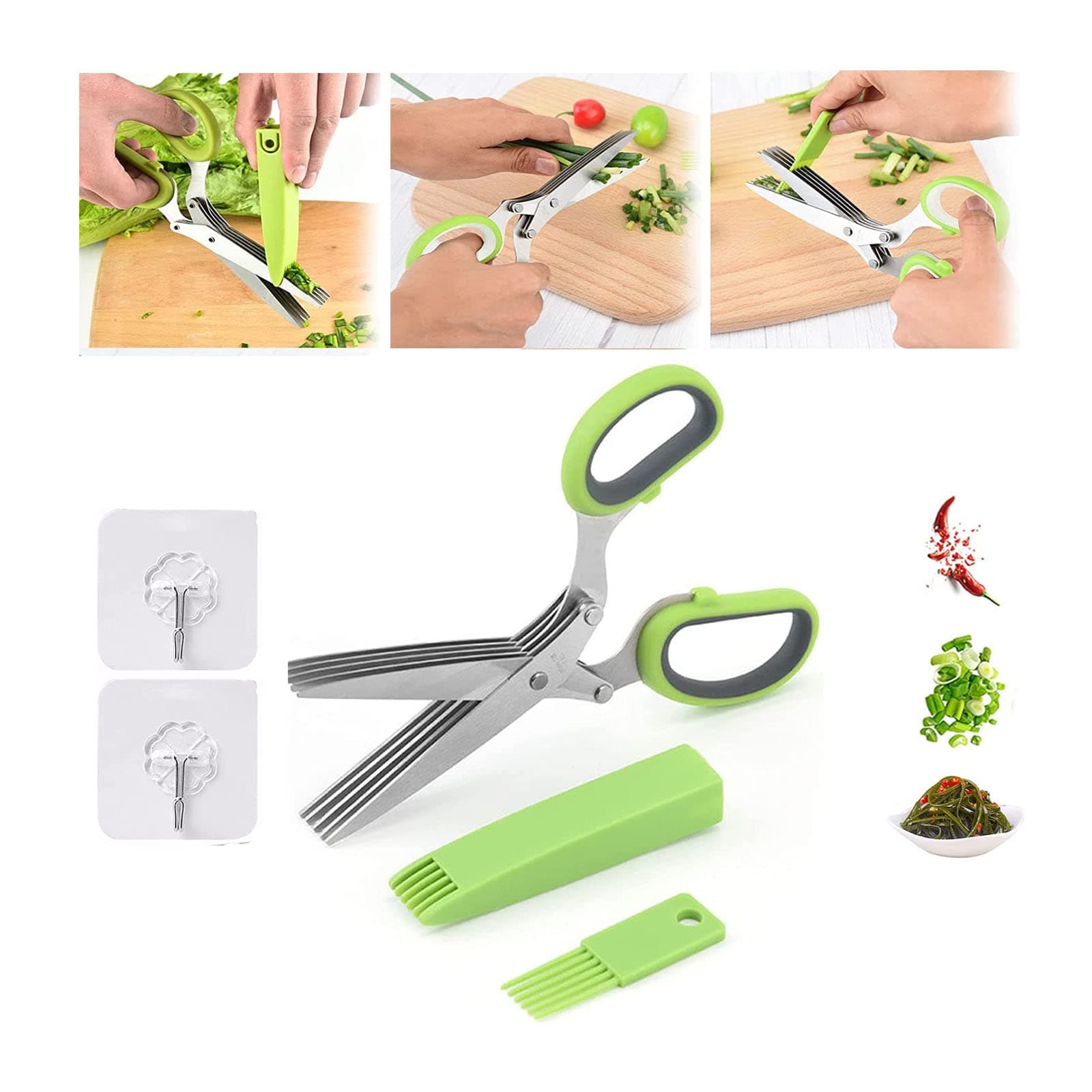
Herb Scissors 5-Blade Kitchen Herb Cutter
$13
5 stainless steel blades cut herbs 5x faster than a knife. Includes cleaning comb to clear blades between uses. Dishwasher safe. Works for parsley, basil, chives, dill, and green onions.
The cleaning comb that comes with most multi-blade herb scissors is essential — without it, herb scraps get packed between the blades and are annoying to remove. Any set you buy should include one.
On the Cutting Board: Poultry, Pizza, and Packages
Where kitchen shears are genuinely replacing knives rather than just supplementing them is in poultry work and pizza cutting. Spatchcocking a chicken — removing the backbone to butterfly it flat — is dramatically easier with heavy-duty kitchen shears than with any knife. The shears cut through bone cleanly in two or three cuts where a knife requires force and a board that gets covered in raw chicken.
Pizza cut with shears at the pan means you are not dragging a wheel across melted cheese and toppings, which rearranges everything. A few diagonal snips and you are done.
KitchenAid All-Purpose Kitchen Shears
$17
High-carbon stainless steel blades with serrated edge. Soft-grip handles for comfort during extended use. Includes bone notch for cutting through poultry bones. Comes apart for dishwasher cleaning.
The bone notch that sits near the handle base is the detail that separates general kitchen scissors from actual kitchen shears. Without it, cutting through chicken joints requires you to grind through bone with the middle of the blade, which dulls it quickly. The notch applies leverage at the strongest part of the blade.
In the Herb Garden or at the Table
The extension of kitchen shears that fewer people think about is small herb snips for countertop herb gardens and fresh herb finishing at the table. A pair of compact herb snips sits right next to the herb pot, and you snip directly onto a dish without ever going back to the kitchen.
Finishing dishes at the table with fresh herbs is a restaurant technique that home cooks underuse because the friction of getting a board and knife out is too high. Herb snips remove that friction entirely.
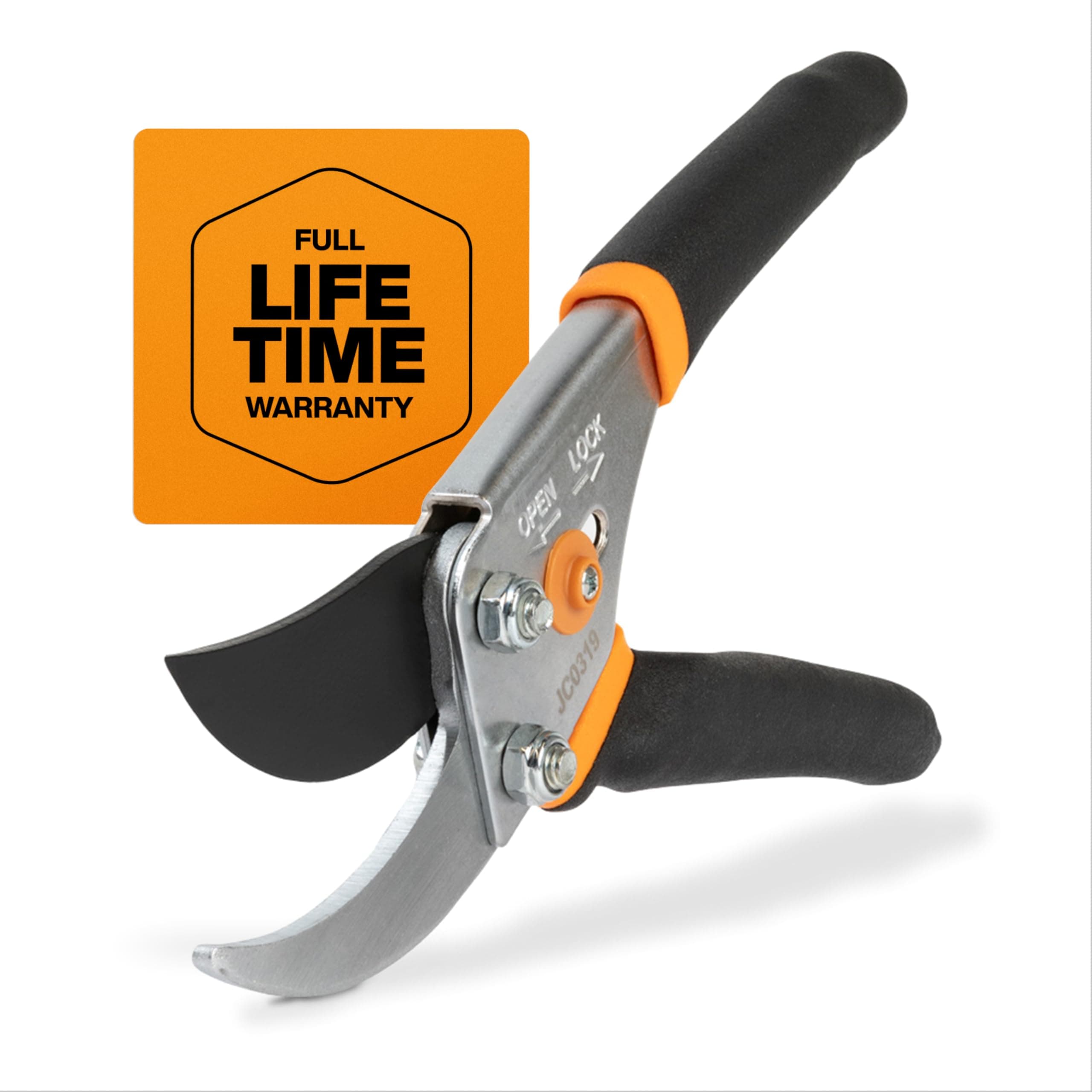
Herb Snips Small Kitchen Scissors
$10
Compact 6-inch herb scissors for fresh herb gardens. Micro-serrated stainless blades. Comfortable soft-grip handles. Ideal for basil, chives, mint, and parsley. Hand wash recommended.
If you have a countertop herb garden and are still walking to the kitchen for every snip, a pair of small herb scissors kept right next to the pots will change how often you actually use fresh herbs in daily cooking.
What to Look for Before You Buy
The features that matter most in kitchen shears come down to three things: blade material, separation for cleaning, and handle comfort.
Stainless steel blades are the baseline. High-carbon stainless holds an edge longer but requires hand washing. Standard stainless is dishwasher safe and fine for most home cooks.
Separation for cleaning matters more than most people think. Shears that pull apart into two pieces can be run through the dishwasher properly. Shears that stay together trap grease and protein residue in the pivot joint, which is a sanitation issue for anything used on raw meat.
Handle comfort becomes relevant the moment you are cutting anything tougher than herbs. Soft-grip handles on a pair with decent leverage will feel completely different from budget scissors with hard plastic handles when you are cutting through poultry or dense herbs.
Wusthof Come-Apart Kitchen Shears
$35
High-carbon stainless steel blades with micro-serration. Fully come apart for dishwasher cleaning. Includes bone notch, bottle opener, and jar opener built into handle. Made in Germany.
Frequently Asked Questions
Can kitchen shears replace a chef's knife?
Not entirely. A chef's knife is still the right tool for dicing vegetables, mincing, and precision cuts. But kitchen shears replace knives for specific tasks — herb work, poultry trimming, pizza cutting, and package prep — faster and with less cleanup.
How often should kitchen shears be sharpened?
Quality kitchen shears with high-carbon steel blades typically need sharpening every one to two years depending on use. Pull-apart shears can be sent to a professional sharpener or sharpened at home with a honing rod along each blade individually.
Are kitchen shears and kitchen scissors the same?
Kitchen scissors are a general-purpose tool. Kitchen shears are heavier-duty with features like bone notches, micro-serrated blades, and pull-apart construction for cleaning. For any task beyond herbs and packages, actual shears outperform scissors significantly.
Affiliate Disclosure
This post contains affiliate links. Haven & Home may earn a commission on purchases made through these links, at no extra cost to you. We only recommend products we genuinely love.
You Might Also Love
 Kitchen
Why Linen Roman Shades Are Taking Over Kitchen Windows This Spring
Scroll any kitchen reno hashtag right now and you'll see linen roman shades replacing every plastic blind in sight. Here's why and what to buy.
 Kitchen
Why Copper Kitchen Accents Are Taking Over Countertops
Copper kitchen accents are everywhere right now — and for good reason. Here's how to style them across your countertop, sink, stovetop, and open shelves.
 Kitchen
8 Spring Baking Tools Under $30 That Make You Feel Like a Real Baker
Most amateur bakers are one or two tools away from results that look and taste professional. Here are 8 spring baking upgrades all under $30.