

Why Japandi Decor Is Taking Over Living Rooms in 2026
If you've been scrolling Pinterest home boards lately, you've probably noticed something: the maximalist boho wave is receding, and something quieter is taking its place. Fewer things. Cleaner lines. Colors that feel borrowed from a forest floor or a weathered coastline.
That's Japandi — a design philosophy that merges Japanese wabi-sabi (finding beauty in imperfection and impermanence) with Scandinavian hygge (warmth, simplicity, coziness). The two aesthetics were always traveling toward each other. Natural materials, muted palettes, functional furniture with soul — it turns out the Japanese and the Scandinavians have been solving the same design problem from different directions for centuries.
The result is a living room that feels intentional without feeling cold. Minimal without feeling empty. And in 2026, it's everywhere.
Here's how to style each zone in your living room to get there without starting over from scratch.
The Coffee Table
The coffee table is where most living rooms fall apart. It becomes a landing pad for remotes, magazines, half-empty glasses, and everything you grabbed on your way through the door. Japandi discipline starts here.
The principle is "considered objects, negative space." You want three things max on a coffee table: a tray to anchor the arrangement, one organic element (a small vase, a piece of driftwood, a single stem), and one functional piece (a candle, a small book). The negative space around those objects is not wasted — it's the point.
A low-profile wooden side table is the Japandi foundation. The closer furniture sits to the ground, the calmer the room feels. Traditional Japanese interiors favor floor-level living specifically because it slows you down, makes you more deliberate.
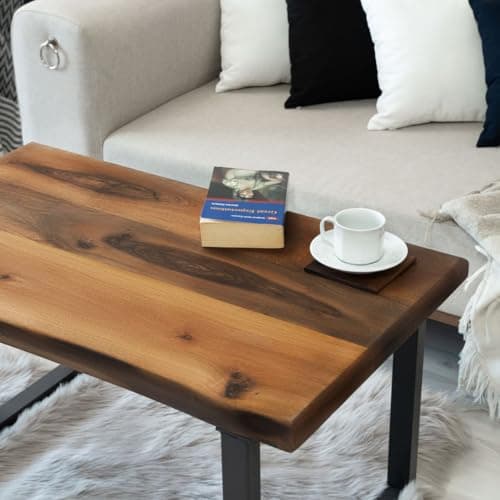
Japandi Low-Profile Bamboo Side Table
$42
Low-profile bamboo construction, 16 in. height, clean straight legs. Natural finish. Works as coffee table accent or standalone surface. Easy assembly.
For the organic element, a matte ceramic vase in an irregular shape is more Japandi than a perfect sphere from a home goods chain. The imperfection is the aesthetic. A set of two or three at varying heights gives you more flexibility to rearrange seasonally.
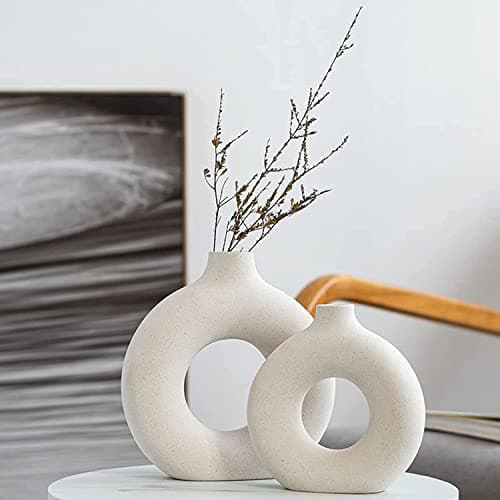
Matte Ceramic Bud Vase Set (3 Pieces)
$28
Set of 3 matte ceramic vases in varying heights (4 in., 6 in., 8 in.). Earthy neutral tones. Flat bottom, no drainage holes. Works with dried or fresh stems.
The Sofa Area
Japandi sofas are almost always low, upholstered in natural fabric (linen, cotton, boucle), and in colors that read as neutral from across a room but have complexity up close — warm greige, dusty sage, soft oat.
If you're not replacing your sofa (and you probably shouldn't have to), cushion covers are where you make the shift. Swap out anything patterned, anything in a synthetic-looking fabric, anything that reads as trendy. Go back to basics: a linen cushion cover in 18x18 or 20x20, in a color that either matches your sofa or sits one tone warmer.
The texture of linen does something pattern can't: it reads differently depending on the light in the room, the time of day, the season. It's the kind of detail that makes a room feel photographed when you weren't trying to.
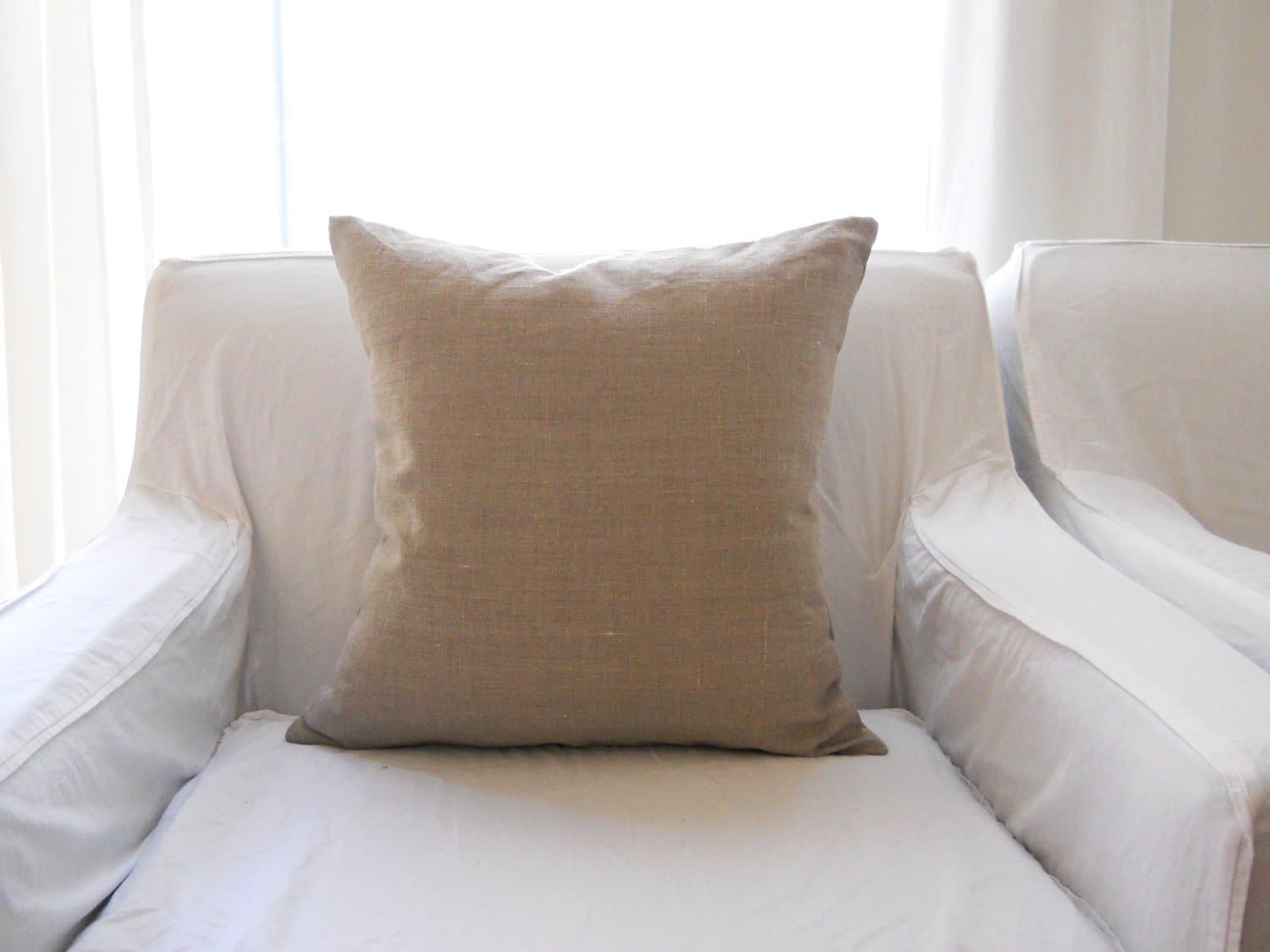
Linen Throw Pillow Covers, Set of 4 (18x18 in.)
$32
100% linen pillow covers with hidden zipper closure. Set of 4 in neutral tones. Machine washable. Inserts not included. Fits standard 18x18 inserts.
Throw blankets in Japandi rooms are folded and draped deliberately — they're not thrown. A waffle-weave cotton or a textured knit in oat or warm sand, folded into thirds and laid across the arm of the sofa, signals intentional coziness versus clutter.
The Shelf Display
Open shelves are where Japandi styling either succeeds completely or collapses entirely. The difference between a shelf that looks curated and a shelf that looks like a storage problem is almost always the ratio of empty space to objects.
The rule designers use: 60% negative space, 40% objects. Most people have it backwards.
For a Japandi shelf, you want: books (spines out, or turned spine-in for a uniform look), one or two ceramic or natural objects, a plant or dried botanicals, and a woven element. The woven element — a small rattan basket, a woven tray — adds warmth and texture that keeps the shelf from feeling clinical.
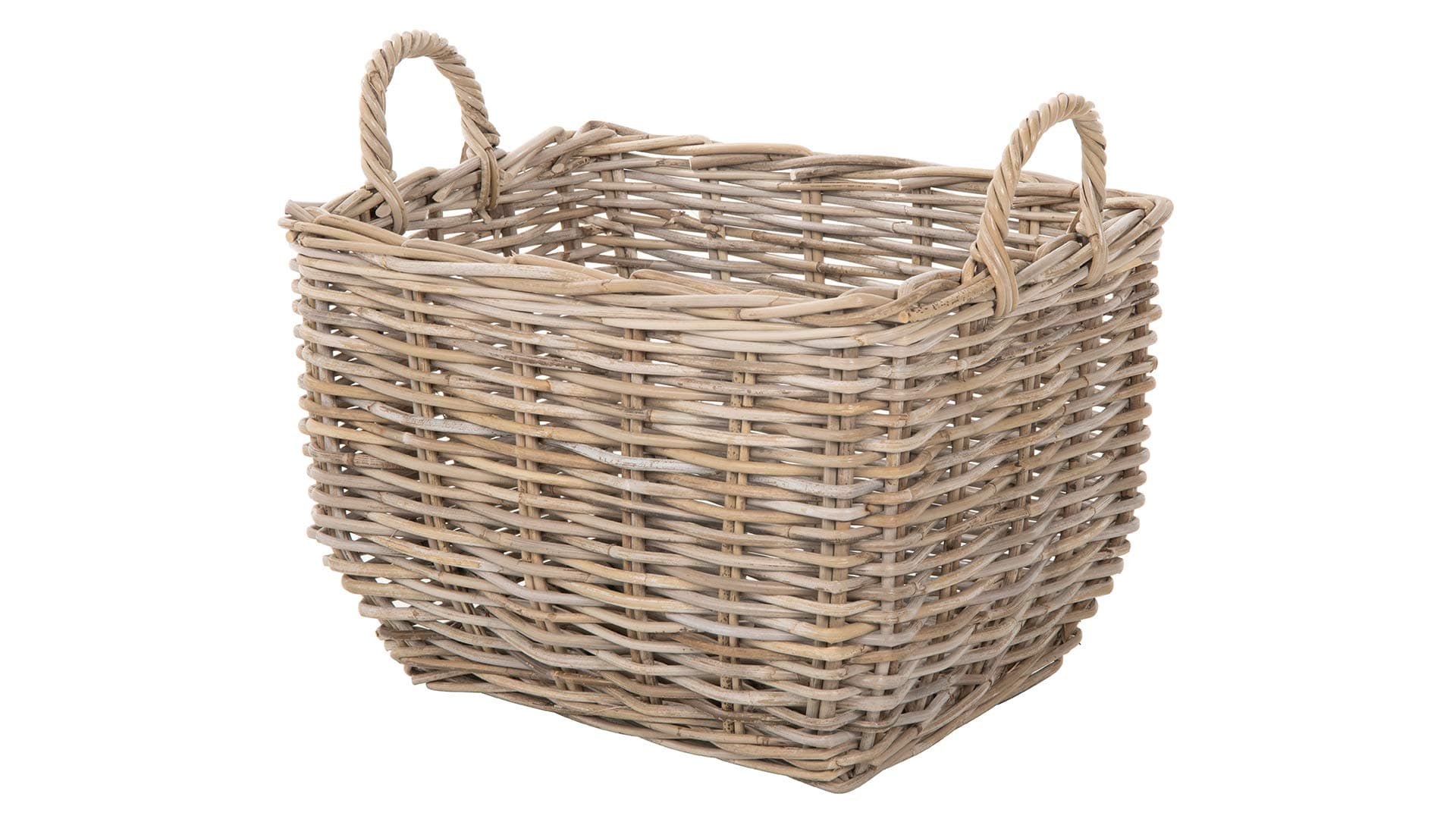
Rattan Storage Basket with Handles (Set of 2)
$35
Hand-woven rattan with natural finish. Two sizes included (8 in. and 11 in. diameter). Sturdy handles. Works for shelves, coffee tables, or side tables. No liner.
A wooden tray on the lower shelf tier anchors a small grouping — a candle, a stone, a small vase — without them looking scattered. Acacia and bamboo both work here. Round trays feel more wabi-sabi; rectangular trays feel more Scandinavian. Either is correct.
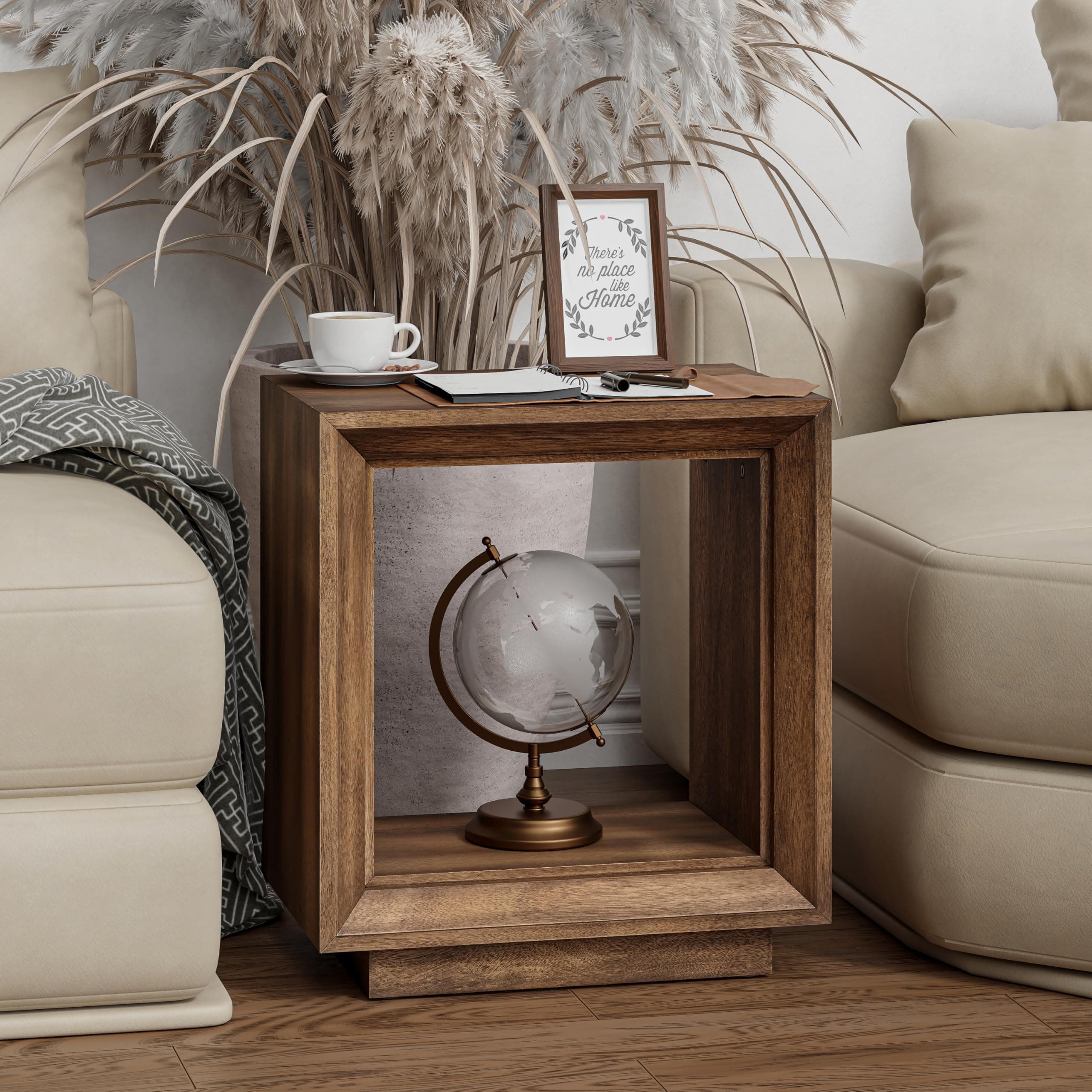
Acacia Wood Serving Tray with Handles
$26
Solid acacia wood with natural grain variation. 14 in. x 9 in. with integrated handles. Food safe. Works as a shelf tray, coffee table anchor, or ottoman tray.
The Lighting Corner
Japandi rooms use lighting to create zones, not just illuminate. A floor lamp in a corner transforms dead space into something purposeful — a reading nook, a meditation corner, a pause point in the room.
The right Japandi lamp has a simple profile: thin metal or wooden arm, a shade in natural fabric or matte white, warm bulb (2700K or lower). Arc lamps work especially well because the arc creates visual movement without adding mass to the floor.
What you want to avoid: anything that looks like it came from a hotel lobby, anything with a chrome finish, anything with a drum shade in a pattern.
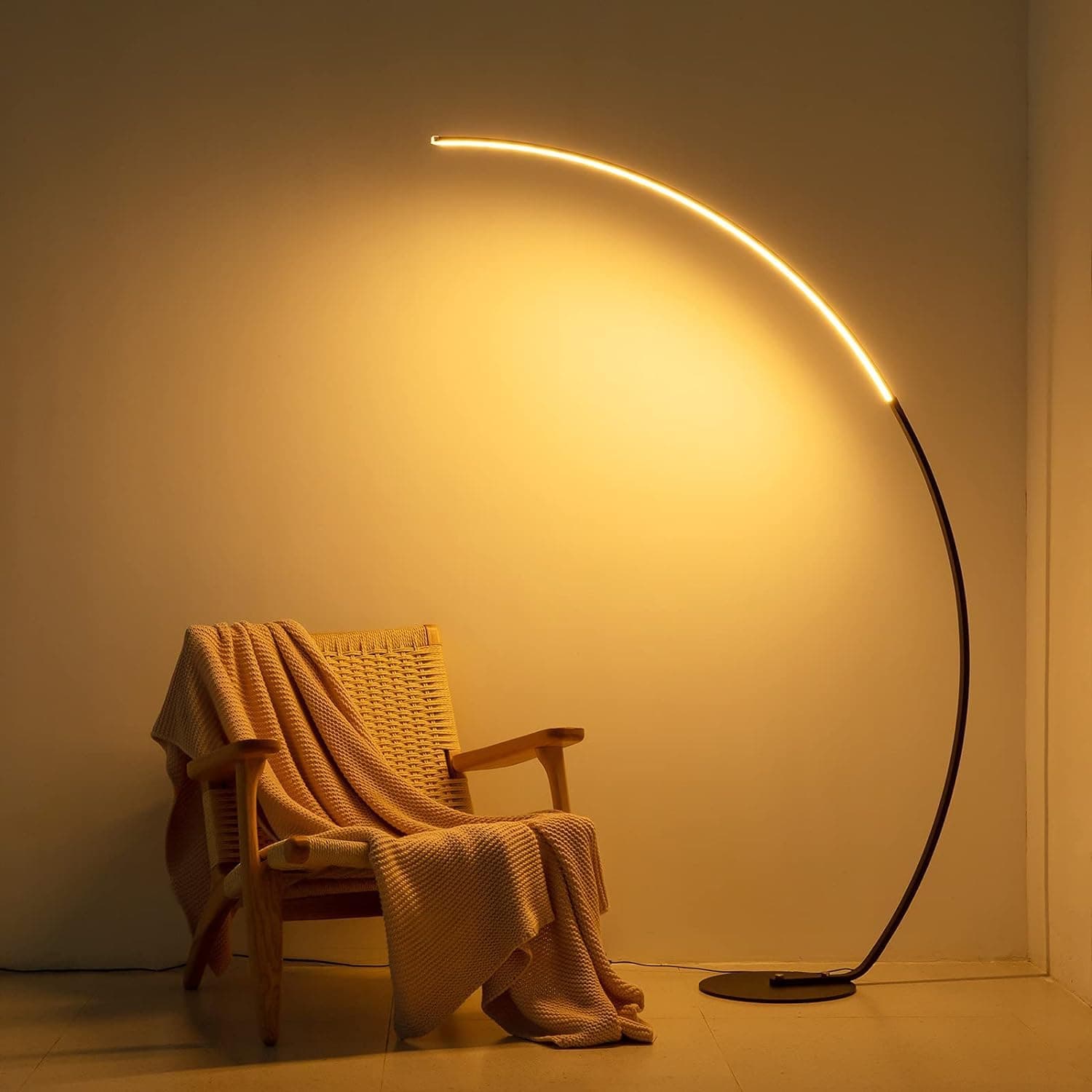
Minimalist Arc Floor Lamp with Linen Shade
$68
72 in. height, matte black arc arm with weighted base. Natural linen drum shade (14 in. diameter). E26 bulb socket, bulb not included. In-line foot switch.
If you have overhead lighting that casts a harsh, flat light, this is the most impactful single change you can make to a room. A single lamp in a corner changes the entire quality of light — softer, warmer, more directional. Your room will feel more expensive without spending much money.
Styling Notes
You don't need to gut your living room to get here. Japandi is not a style you buy — it's a discipline you apply. Start with the coffee table. Remove everything. Put back only what you'd be comfortable photographing. If you hesitate before putting something back, it doesn't belong.
Then work outward: sofa cushion covers, shelf edits, one lamp. Give each change a week before evaluating. The goal isn't a room that looks finished — it's a room that feels settled.
The best Japandi rooms have one object you bought in a market, one you inherited, and one you made. The aesthetic rewards things that have a story.
Pin this for later so you don't lose it — Japandi is one of those trends worth coming back to slowly.
Affiliate Disclosure
This post contains affiliate links. Haven & Home may earn a commission on purchases made through these links, at no extra cost to you. We only recommend products we genuinely love.
You Might Also Love
 Living Room
Why Picture Lights Are Taking Over Living Room Galleries This Spring
Picture lights are everywhere this spring — and it's not hard to see why. Here's how to use them in every gallery zone in your home.
 Living Room
Why Bouclé Throw Pillows Are Taking Over Living Rooms
Bouclé pillows are everywhere right now — and for good reason. Here's how to use the texture trend in every zone of your home.
 Living Room
Best Couch Organization Accessories for Remote Controls and Snacks
Best couch organization accessories: armrest caddies from $14, sofa trays, and ottoman organizers. Keep remotes and snacks within reach.