

The Closet Dehumidifier I Didn't Know I Needed
Here's something nobody talks about when they do a closet organization overhaul: humidity. Your clothes are hanging in a dark, enclosed space with limited airflow, usually on an exterior wall, often near a bathroom. That combination creates conditions that are surprisingly hospitable to mildew, musty smells, and the gradual damage of fabrics that were perfectly fine when you hung them there.
I didn't think about this until I pulled out a cashmere sweater I'd stored for the summer and found a faint smell I couldn't quite identify. I washed it. The smell came back. Then I noticed the same thing on a blazer I hadn't worn in a few months. That's when I actually looked at the back wall of my closet and realized I'd been ignoring a moisture problem for probably two years.
The good news: the fix isn't complicated. And it doesn't cost much.
The Discovery I Wish I'd Made Sooner
A humidity monitor is a $10 device that tells you the relative humidity in any room. I ordered one mostly out of curiosity, put it in my closet, and found the reading was consistently sitting at 68-72%. Ideal humidity for storing clothes is 40-50%. Anything above 60% is the range where mold and mildew start to thrive.
At $10-15, a small humidity monitor is the single most useful thing you can add to a closet — it tells you whether you have a problem before your clothes tell you.
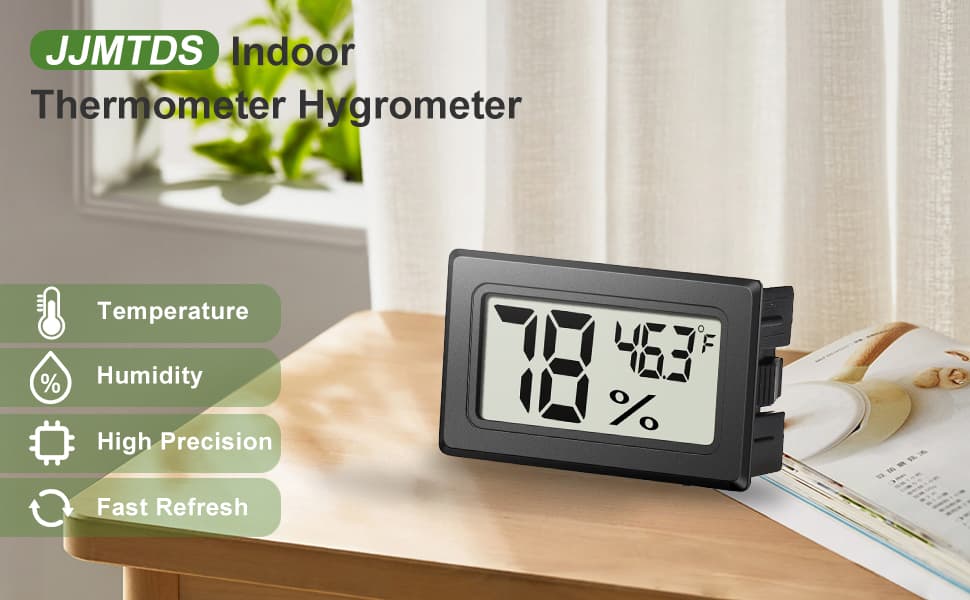
Mini Humidity Monitor Hygrometer Thermometer
$12
Compact digital humidity monitor with temperature display. Shows current, min, and max readings. Magnetic back and folding stand for versatile placement. 2-inch display.
Put one in your closet for 24 hours. If it reads above 60% consistently, you have the same problem I had. If it reads 40-50%, you're fine and you don't need anything else on this list. But you'd be surprised how many closets — especially in coastal areas, older homes, and anywhere with a bathroom on the other side of a shared wall — are running humid without anyone knowing.
The Passive Fix That Does the Heavy Lifting
Once I confirmed the problem, the first thing I bought was a moisture absorber. These are the little containers or hanging bags filled with calcium chloride crystals that pull moisture out of the air passively — no electricity, no maintenance beyond occasionally dumping the collected water or replacing the crystals.
I put two DampRid-style containers in my closet. Within two weeks, the humidity reading had dropped from 70% to 54%. Not perfect, but meaningfully better.
Moisture absorber packs are the most passive solution — no cords, no charging, no noise. At $10-15 for a pack of several, they're the right first move for most closets.
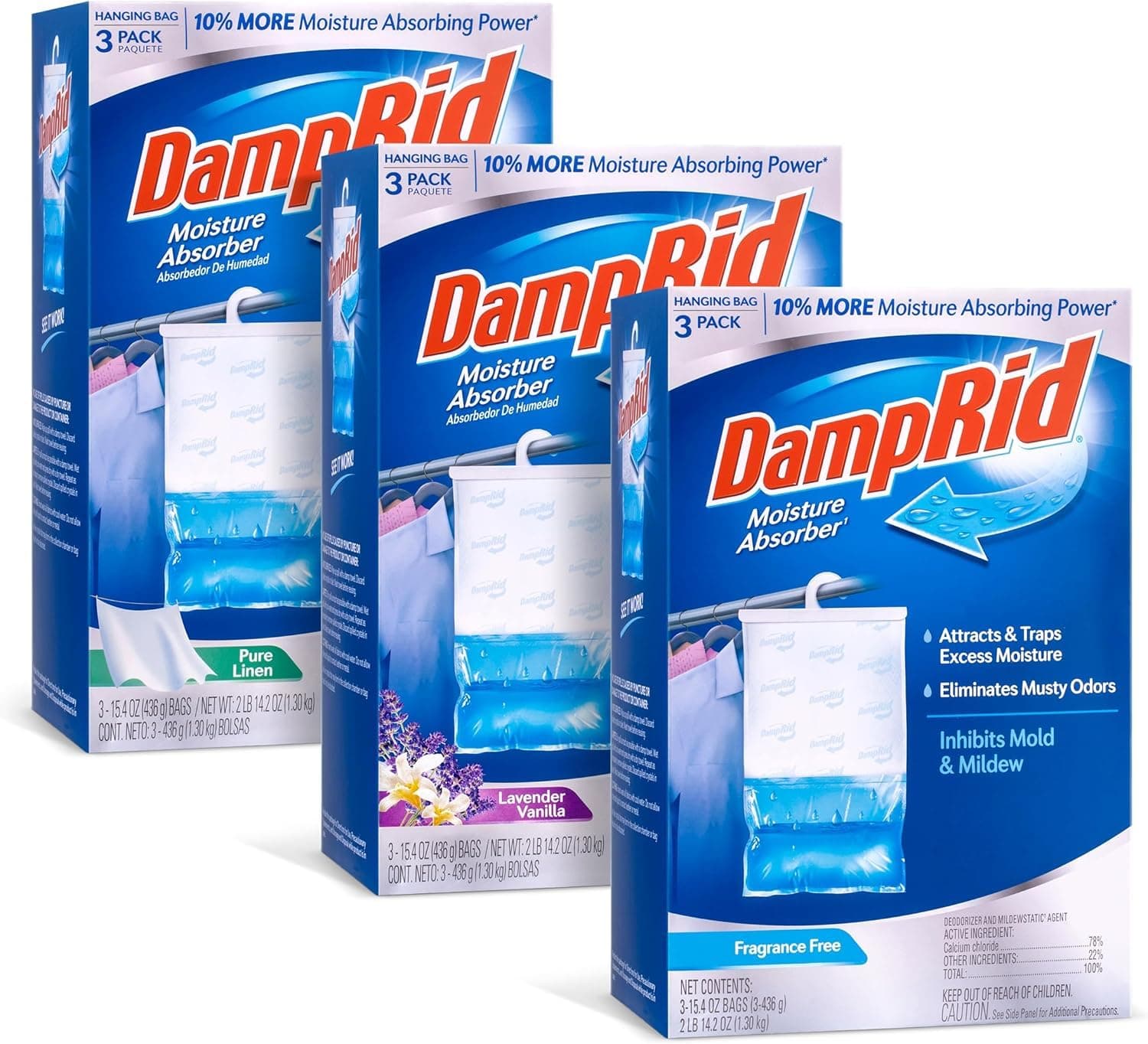
Closet Moisture Absorber Packs Hanging
$12
Hanging moisture absorber bags for closets with calcium chloride crystals. Each bag absorbs up to 1.5 lbs of moisture. Fragrance-free. Pack of 4. Replace every 1-3 months depending on humidity.
The hanging format is better than the container format for closets specifically because it doesn't take up floor or shelf space and distributes where you need it — near the clothes. Replace them when the crystals are gone and the collected water is sitting in the bottom of the bag. In humid environments, that's every 4-6 weeks. In drier climates, every 2-3 months.
The Electric Option for Stubborn Humidity
The passive absorbers dropped my humidity but didn't get it into the ideal range. If you're in a coastal climate, a basement bedroom, or a particularly tight space, you may need an electric mini dehumidifier that actively pulls moisture and collects it in a small reservoir.
These are compact — smaller than a shoebox — and use thermoelectric (Peltier) technology that makes them near-silent. Not the kind of dehumidifier your parents had in the basement. This is something you leave in the corner of a closet and forget about for most of the week.
A mini electric dehumidifier runs continuously and gets humidity into the 40-50% range in closets where passive solutions aren't enough. Most need emptying every 2-3 days in humid conditions, weekly in moderate ones.
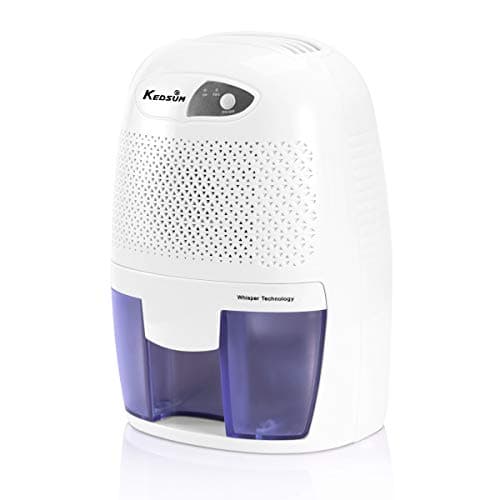
Mini Electric Dehumidifier for Closet Small Room
$28
Thermoelectric mini dehumidifier removes up to 9 oz of moisture per day. Near-silent operation. 16 oz water tank. Auto shut-off when tank is full. Coverage up to 100 sq ft.
Between the passive absorbers and the electric mini dehumidifier, my closet humidity settled at 47% — well within the ideal range for storing clothes. The electric dehumidifier does the structural work; the passive absorbers handle peaks.
The Cedar Addition That Actually Does Something
Cedar blocks, rings, and sachets are one of those things that seem like they might be folk wisdom but are actually functional. Cedar wood naturally emits oils that repel moths and insects, and it has mild moisture-absorbing properties as a secondary benefit. The limitation is that the effectiveness fades as the wood dries out over time — you renew it by sanding the surface lightly every few months.
The rings and balls are more practical than the blocks for closets because you can hang them directly on clothes rods or tuck them in jacket pockets.
Cedar rings hung on your clothes rod take up zero extra space and add both moth protection and a genuinely pleasant smell. At $12-15 for a set of 20+, they're worth including alongside an absorber.
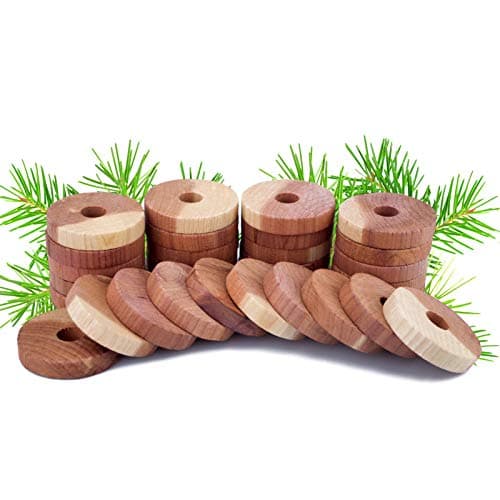
Cedar Rings for Closet Clothes Rod Hanging
$13
Aromatic red cedar rings and balls set. 20 rings, 30 balls. Hang directly on clothes hangers or rod. Repels moths and insects. Renew monthly with light sanding. Includes sandpaper.
Important note: cedar repels moths but doesn't kill existing moth larvae. If you have an active moth problem, cedar alone isn't enough — you need to clean and treat the closet first, then use cedar as an ongoing preventative.
Protecting What's Already Clean: Garment Bags
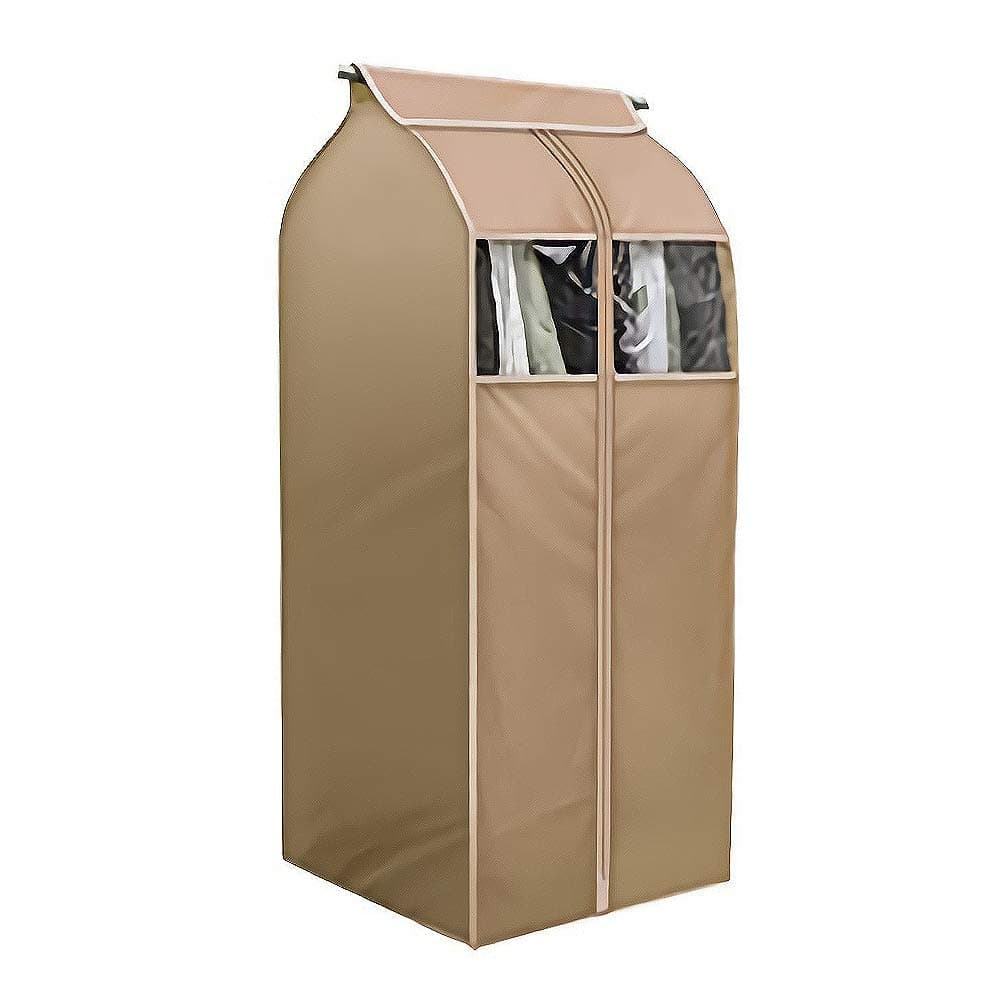
Once your closet humidity is under control, the next logical step is protecting your most valuable garments from whatever ambient moisture and dust remain. Garment bags — specifically the kind with a non-woven or cotton breathable material rather than plastic — let clothes breathe while blocking dust, humidity spikes, and insects.
Plastic dry-cleaning bags are not the answer. Plastic traps moisture inside and can cause condensation damage to the exact clothes you're trying to protect. Get breathable fabric bags for anything you care about.
Breathable non-woven garment bags protect suits, dresses, and seasonal items from both moisture and dust — at $18-25 for a set, they're the right storage for anything you don't wear regularly.
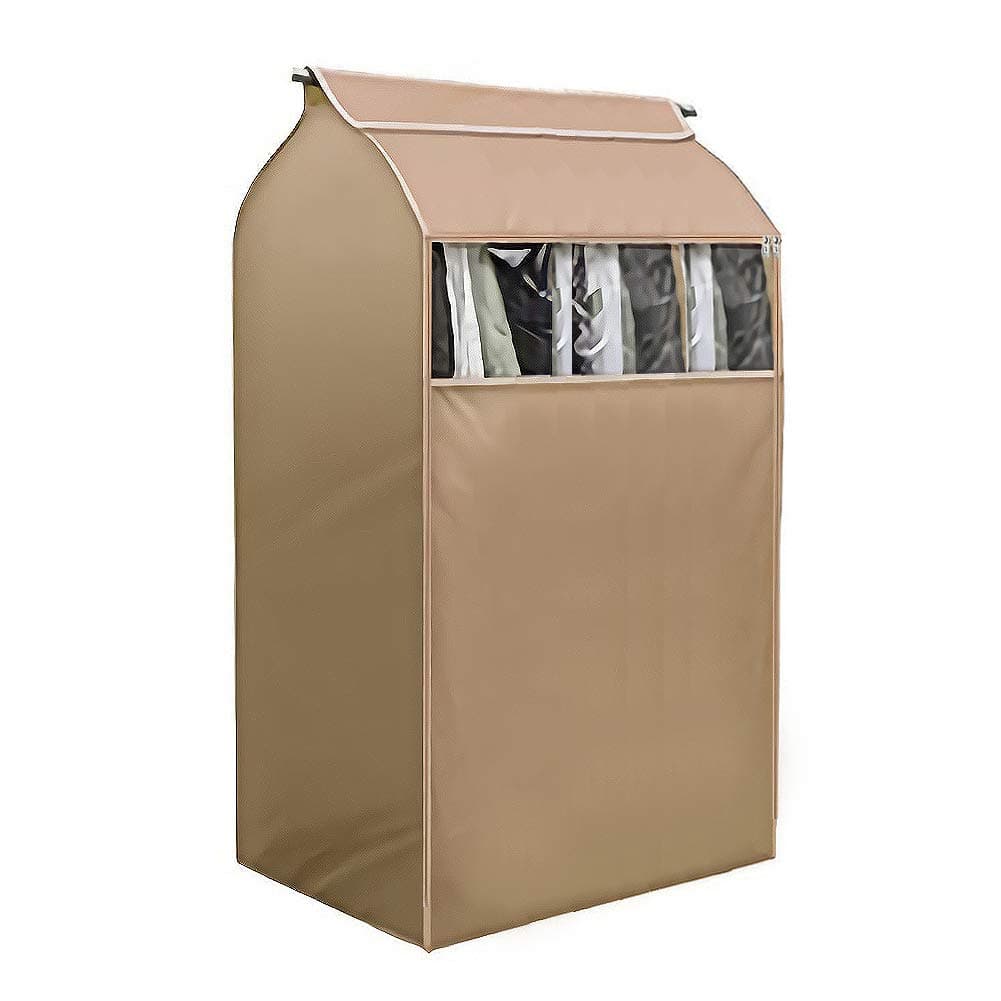
Breathable Garment Bags for Storage Clothes Covers
$22
Set of 6 breathable non-woven fabric garment bags. 60-inch length for full-length dresses and coats. Zipper closure with clear window. Protects against dust, light, and humidity.
Use these for seasonal items — winter coats in summer, summer dresses in winter — and for anything you wear infrequently. A garment bag won't protect against high humidity on its own, but once your dehumidifier and absorbers are doing their job, garment bags add a final layer of protection for your investment pieces.
The Dehumidifier Bag: Rechargeable and Reusable
If you want a passive solution that doesn't need replacing every few weeks, rechargeable silica gel dehumidifier bags are the answer. They absorb moisture the same way the crystal packs do, but when they're saturated you plug them in for a few hours and the moisture evaporates out, making them ready to reuse indefinitely.
Rechargeable silica gel dehumidifier bags cost slightly more upfront but pay for themselves within a few replacement cycles compared to the disposable crystal packs. The 2-3 month renewable cycle is also easier to remember.
Rechargeable Silica Gel Dehumidifier Bag Closet
$16
Rechargeable silica gel dehumidifier bag. Absorbs moisture in closets, cabinets, and drawers. Color indicator shows when to recharge. Plug in for 8 hours to renew. 3-pack.
The color-change indicator is the key feature — the beads turn from blue to pink when they're saturated and need recharging. You don't have to track dates or wonder if they're still working. When they turn pink, you plug them in. When they're blue again, you hang them back in the closet.
What I'd Buy First If I Were Starting Over
The humidity monitor. Spend $12, confirm you actually have a problem, then spend money on the solution that matches your situation. If you're in the 50-60% range, a set of hanging absorbers and cedar rings is probably all you need. If you're over 65%, add the mini electric dehumidifier. If you're in a particularly wet climate or basement space, run both.
Here's the priority order:
- Humidity monitor — confirm the problem first
- Moisture absorber packs — immediate passive solution
- Mini electric dehumidifier — if absorbers alone aren't enough
- Cedar rings — add to the rod for moth protection and scent
- Garment bags — protect your most valuable seasonal pieces
- Rechargeable silica bags — replace disposable packs long-term
The whole setup runs about $85-100 for all six, and once it's in place you largely forget about it. The humidity monitor tells you when something needs attention. The rest just works.
Found something you love? Pin this for later so you don't lose it!
Affiliate Disclosure
This post contains affiliate links. Haven & Home may earn a commission on purchases made through these links, at no extra cost to you. We only recommend products we genuinely love.
You Might Also Love
 Bedroom
8 Cotton Sheet Sets Under $80 for Hot Summer Sleepers
How to find breathable cotton sheets that actually keep hot sleepers cool through summer. Eight sets under $80 with real cooling reviews from sweat-prone sleepers.
 Bedroom
How to Quiet a Squeaky Bedroom Floor Without Pulling Up Boards
Squeaky bedroom floors do not require ripping up boards. Here are the specific products and fixes that actually work without calling a contractor.
 Bedroom
Why Sage Green Is Quietly Replacing Gray in Bedrooms
Something happened in bedroom Pinterest this past year. Gray is out, sage green is in, and the shift is happening one duvet cover at a time.