

A Beginner's Guide to the Capsule Pantry Method
The average American throws away $1,500 of food a year. A good chunk of that is pantry items that expired before you remembered they existed — the can of chickpeas from 2022 at the back of the shelf, the cereal that's been open for four months, the pasta sauce you bought because you thought you were out, when you had three more behind the ones you could see.
The capsule pantry method is the answer to this. The concept is borrowed from capsule wardrobes: instead of keeping everything you might theoretically need, you keep only what you actually cook with, in enough quantity to get through a week or two, organized so that you can see everything at a glance. No mystery items. No expired duplicates. No bags of expired rice flour from a phase you went through in 2021.
Here's how to fix the most common pantry problems using the capsule approach, and what to buy to make the system actually work.
The "Expired Cans in the Back" Problem
This is the first and most expensive pantry problem: a shelf so deep and poorly organized that things expire before you reach them. You buy duplicates because you can't see what you already have. You discover outdated items six months after you should have used them.
The capsule pantry rule for canned goods: first in, first out, and you should be able to see every can without moving anything.
A can organizer rack solves this structurally. Instead of stacking cans randomly behind each other, the rack holds cans at an angle and gravity rolls older cans to the front as you remove them. You load from the back, pull from the front. This is the same system grocery stores use, and it works because it's automatic — you don't have to remember to rotate.
Stackable Can Organizer Rack for Pantry, Set of 2
$29
Set of 2 stackable can dispensers. Each rack holds up to 10 standard soup cans. Gravity-fed — load from back, pull from front. Adjustable for different can heights. Chrome steel.
The second piece for deep shelves: a lazy susan for round items (olive oil, canned goods, spice jars) that you'd otherwise have to reach past. A two-tier turntable at the back of a deep shelf puts everything within reach without removing the front items. You spin instead of reaching.
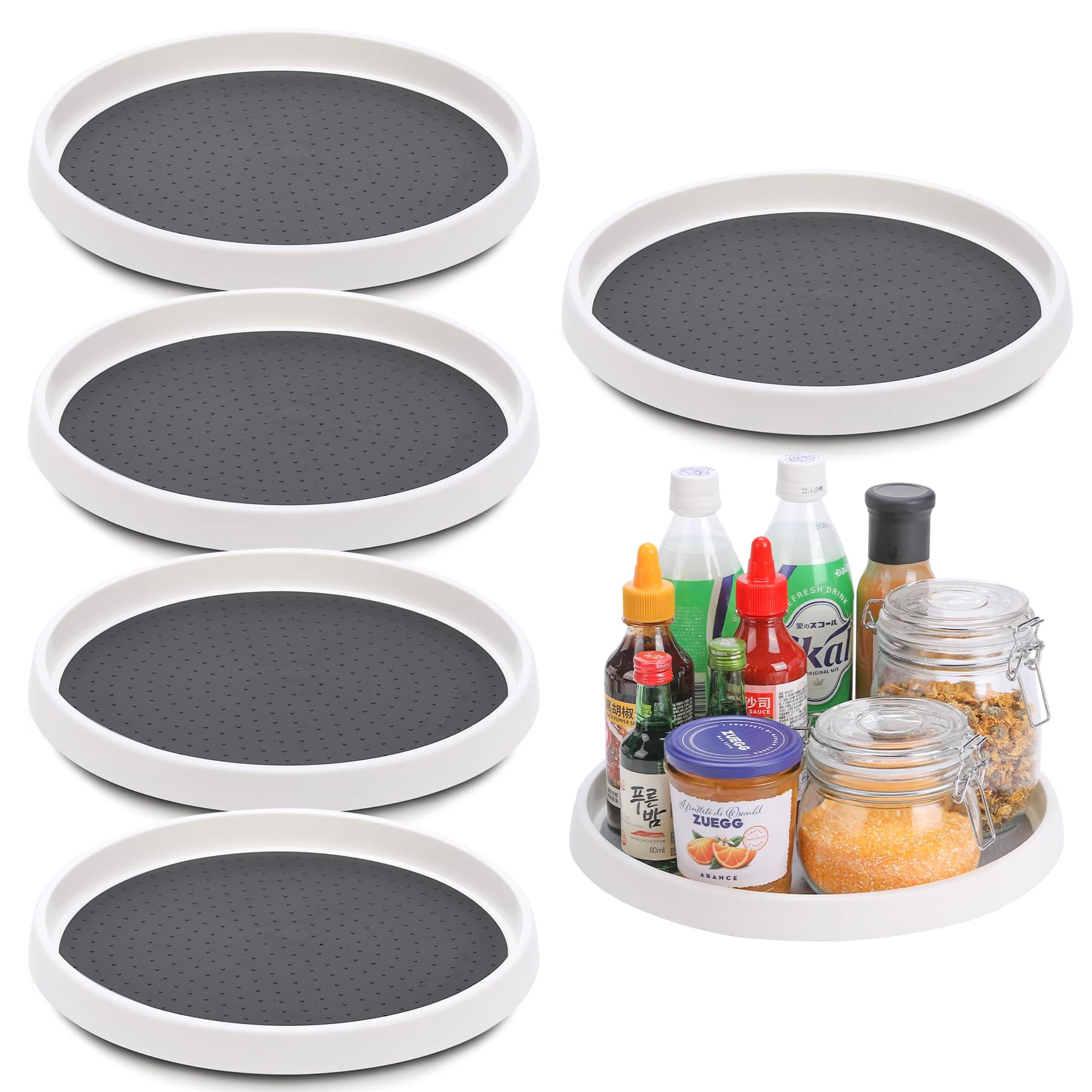
Two-Tier Lazy Susan Turntable for Pantry, 11 in.
$24
11 in. diameter, two-tier turntable with 360-degree rotation. Non-slip base. Works in pantries, cabinets, fridges. Each tier holds up to 25 lbs. Wipes clean easily.
The capsule approach to canned goods specifically: keep no more than 3-4 of any single item. If you have 7 cans of diced tomatoes, you're a food hoarder, not a prepper. The goal is enough for two weeks of normal cooking, visible and rotated. That's it.
The "Bag Clips Everywhere" Problem
Open bags are pantry enemy number two. Pasta bags clipped shut with a binder clip, cereal bags folded over and held with a rubber band, crackers in their original box that's been torn apart trying to reseal it. These bags take up more space than the food inside them requires, they don't seal well, and they look chaotic even when they're "organized."
The capsule pantry solution is airtight containers for everything dry. Not just for aesthetics — though the aesthetic improvement is dramatic — but because airtight containers actually keep food fresh longer, which is the whole point of having a pantry.
The items that always go into containers: cereal, pasta, rice, flour, sugar, coffee, oats, nuts, dried beans. The items you can leave in original packaging: canned goods (obviously), cooking oils, vinegars, things with a longer shelf life than you'll ever test.
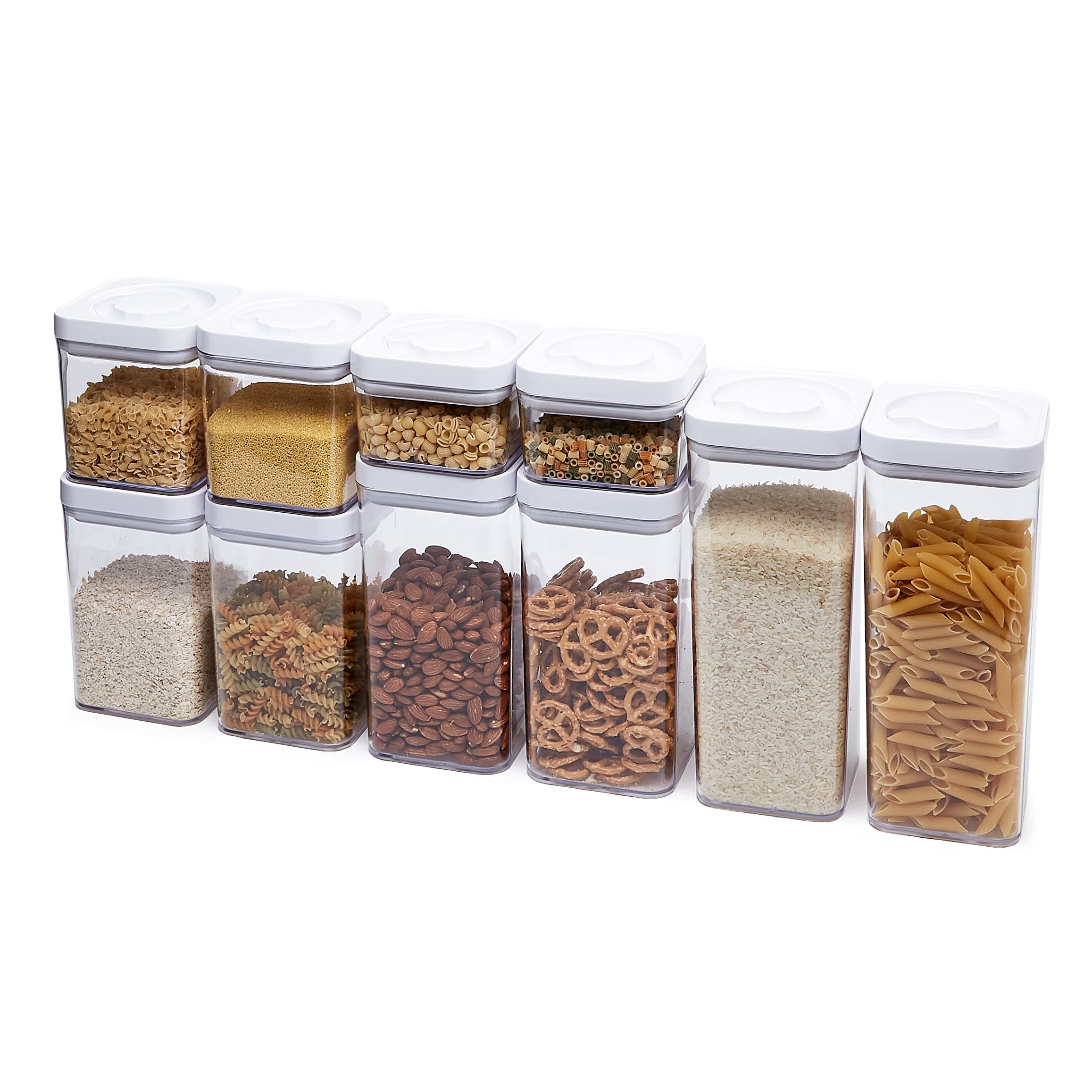
Airtight Pantry Food Storage Container Set (20 Pieces)
$55
20-piece set in clear BPA-free plastic with airtight lids. Includes 4 sizes from 0.5L to 4.5L. Stackable, fridge safe. Labeled sides and included chalkboard labels and marker.
The setup that works: put your most-used dry goods in the largest containers at eye level. Smaller containers for things you use less frequently go on upper shelves. Everything is visible at a glance.
But containers without labels are almost as bad as bags — you end up opening lids to figure out if something is cornstarch or powdered sugar. A label maker is the accessory that makes an organized pantry actually stay organized.
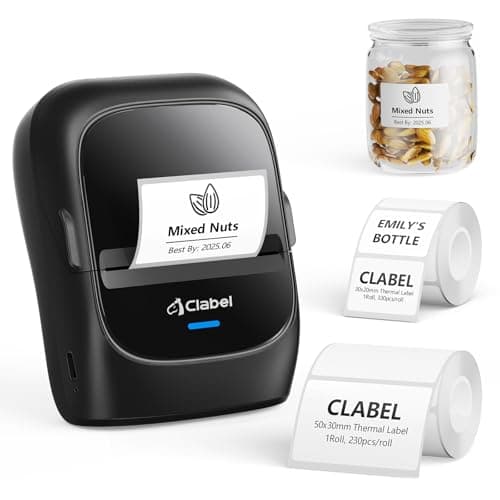
Brother P-Touch Label Maker, Handheld, White
$24
Handheld label maker with backlit LCD display. Prints on 0.47 in. TZe tapes (tape cassette included). Multiple fonts and borders. AA battery powered. Compact design for easy storage.
Label your containers with the contents and — critically — the expiration date of whatever's inside. When you refill a container, the old label comes off and a new one goes on. This sounds like more work than it is. Once it's set up, it takes about 30 seconds per item when you restock.
The "Nothing Fits on These Shelves" Problem
Factory-built pantry shelves are spaced as if everyone uses them to store the same items at the same height. In practice, you end up with dead space between short items and shelves, and tall items that don't fit. A shelf of soup cans has 6 in. of wasted air above it. A stack of cereal boxes might be too tall for any shelf.
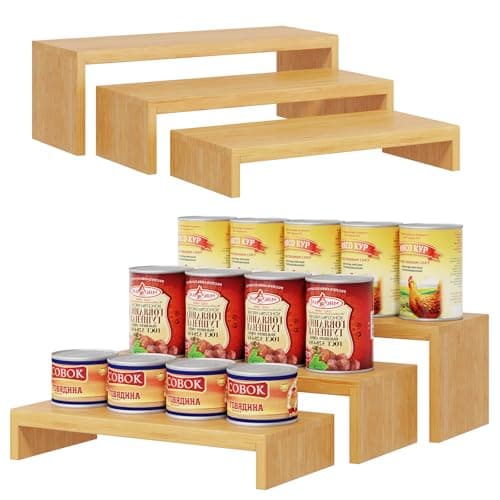
Shelf risers solve the wasted air problem. A riser effectively creates a second level within one shelf — short items on the riser level, short items below. One shelf becomes two usable surfaces. This matters most for spices, small jars, and canned goods where you're stacking things because there's no room rather than because stacking is efficient.
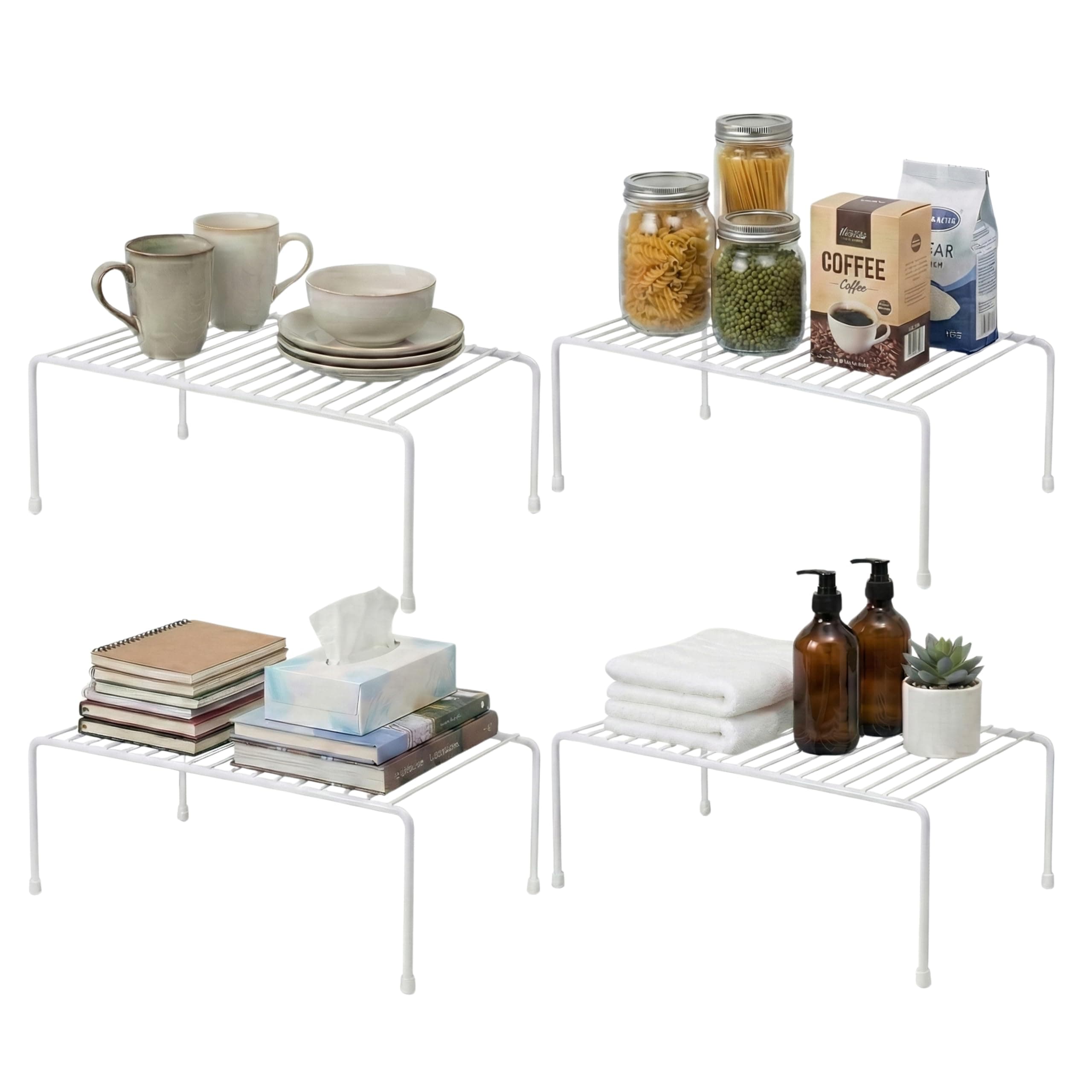
Expandable Cabinet Shelf Risers, Set of 2
$22
Set of 2 expandable risers (14-23 in. adjustable width). Each riser adds 5 in. of height. Bamboo construction, durable anti-scratch feet. Holds up to 10 lbs per riser.
For spice storage specifically: spice jars on a flat shelf mean you read only the front row's labels. Add a tiered riser or a small step shelf so each row of spices is elevated slightly above the one in front. Same principle as stadium seating — everything visible at once.
What to Skip
The capsule pantry method gets derailed by the same overcorrections every time:
Skip the matching container obsession. You don't need 40 identical glass jars from a specialty shop. Clear containers in a couple of sizes are sufficient. The goal is functional visibility, not an Instagram shoot.
Skip over-categorizing. Pantry organization labels like "baking," "grains," "snacks," and "canned goods" work if your pantry is large enough to have dedicated zones. In a small pantry, over-categorizing means you're moving things between zones constantly. Keep it simple: frequency of use determines placement (most-used at eye level), not category.
Skip anything that requires you to decant items you use rarely. Transferring flour into a container is worth it — you use flour all the time. Transferring that box of breadcrumbs you use twice a year into a labeled container is a system that adds maintenance without benefit. Keep the original packaging for low-use items.
Skip wire shelving organizers with lots of little compartments. They feel like organization but they're actually just a different form of chaos — things get stuck, sizes don't fit, and you end up organizing the organizer. Simple trays and open containers outperform segmented wire systems every time.
Quick Tips
- Empty the pantry completely before reorganizing — you cannot properly assess what you have by moving things around
- Group by frequency, not category: daily-use items at eye level, weekly-use above and below, monthly-use and bulk at the top
- The one-in-one-out rule applies: before buying more of something, make sure you've used what you have
- Clear containers outperform opaque ones — always choose visibility over aesthetics when they conflict
- Measure your shelf depths before buying any organizer — a lazy susan that's too wide for your shelf is a problem you don't want to discover after assembly
The capsule pantry is not a weekend project — it's a 2-3 hour reset followed by five minutes of maintenance when you restock. Get the containers, the label maker, and the lazy susan in place first. The system becomes obvious once you can actually see what you have.
Pin this for later so you don't lose it — this is the kind of post that's worth saving before a grocery run, not after.
Affiliate Disclosure
This post contains affiliate links. Haven & Home may earn a commission on purchases made through these links, at no extra cost to you. We only recommend products we genuinely love.
You Might Also Love
 Organization
The Best Toy Storage Bins That Don't Look Like a Daycare
Toy storage in the living room does not have to ruin the aesthetic. These bins are functional enough for real use and nice enough to leave out.
 Organization
4 Under-$25 Swaps That Turn a Dump Drawer Into a Functional One
Under $25 each and your junk drawer finally closes. Four small swaps — bamboo organizer, clear dividers, pen caddy, and cushioned liner — that fix the chaos.
 Organization
How to Stop Tripping Over Shoes Without Buying More Furniture
Shoe piles at the door are a solved problem — and none of the solutions require a new bench or cabinet. Six options that work in real entryways.