

A Beginner's Guide to Decluttering a Kitchen Junk Drawer
Every kitchen has one. You know the one -- it's the drawer that started off "just for takeout menus" and somehow ended up holding three tape measures, a dead battery, two rubber bands, a half-used birthday candle, and a key to a lock you cannot identify. It never gets touched unless you need something specific, at which point you spend seven minutes digging and still don't find it.
The good news is that decluttering a junk drawer is one of those projects that is almost impossible to mess up. There's no sentimental attachment to most of what's in there. The stakes are low. And if you do it right once, with the right organizers, it stays organized for years.
This is the beginner version -- no system, no color-coding, no label maker required. Just a clear plan and the five inserts that actually work.
The First Problem: Everything Is in One Pile
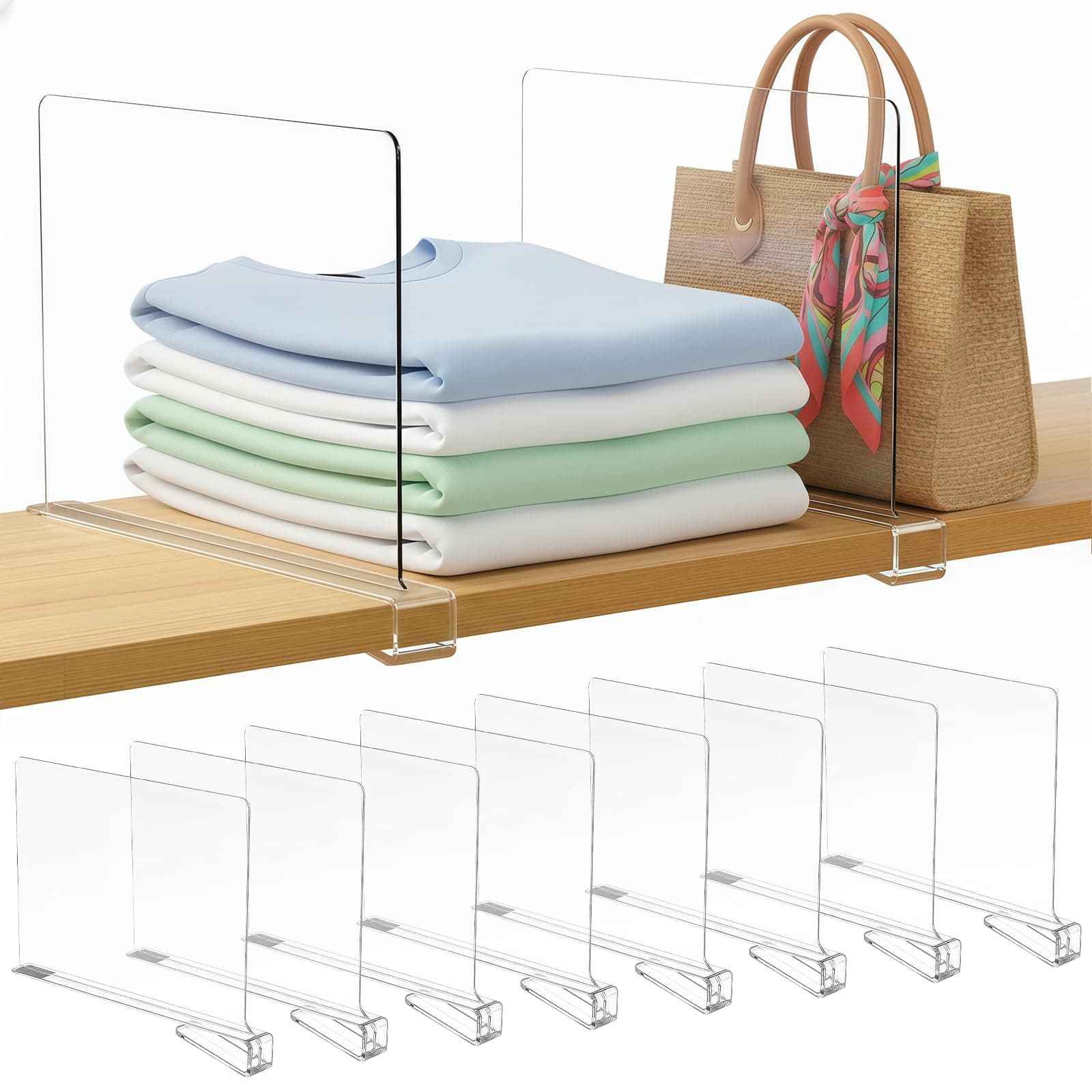
The reason a junk drawer becomes a junk drawer is that there are zero internal boundaries. Everything slides into one giant mess every time you open or close it. The fix isn't willpower -- it's physical dividers. The single biggest mistake people make is buying one big tray with a few compartments. You want a drawer full of small compartments, not a few large ones.
Step one: pull everything out, wipe the drawer with a damp cloth, and measure the drawer width and depth. Write it down. You'll need those numbers.
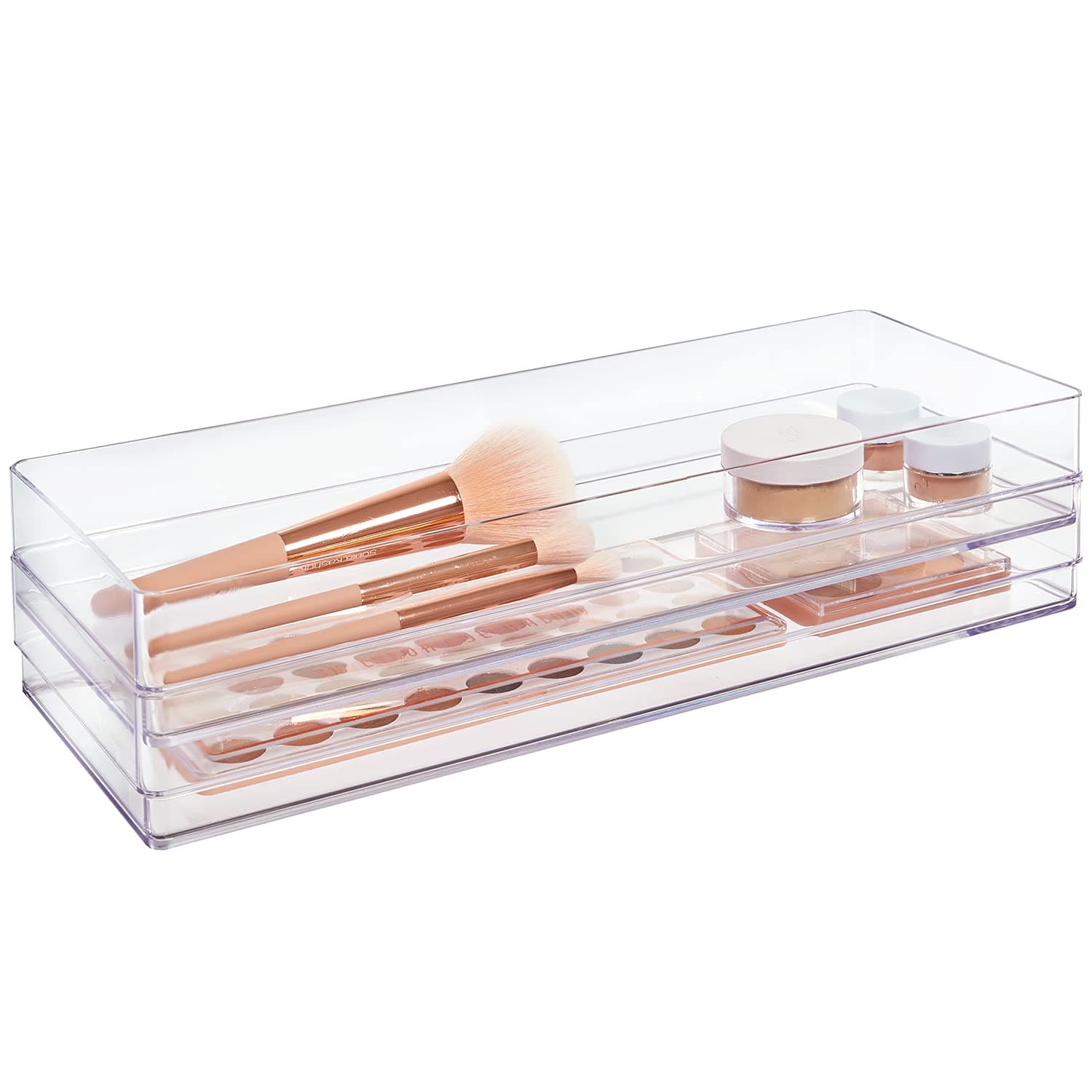
Clear Acrylic Drawer Organizer Set (25 Pieces)
$28
25 stackable acrylic bins in 6 different sizes. Modular -- arrange any configuration to fit your drawer. Clear so you can see everything at a glance.
The Second Problem: You Can't Pre-Sort Without Categories
Staring at a pile of random objects with no plan is overwhelming. Before you start organizing, sort everything into five buckets on the counter: keep and use weekly, keep and use occasionally, trash, belongs somewhere else, and can't decide.
Set a timer for 15 minutes. Anything you can't decide on in that time goes in a shoebox that lives on a shelf for 30 days. If you haven't touched the shoebox in a month, the contents are trash.
The "belongs somewhere else" pile is usually the biggest. Keys go by the door. Medicines go to the medicine cabinet. Receipts go in a file or the shredder. Batteries go in their own battery bin somewhere else.
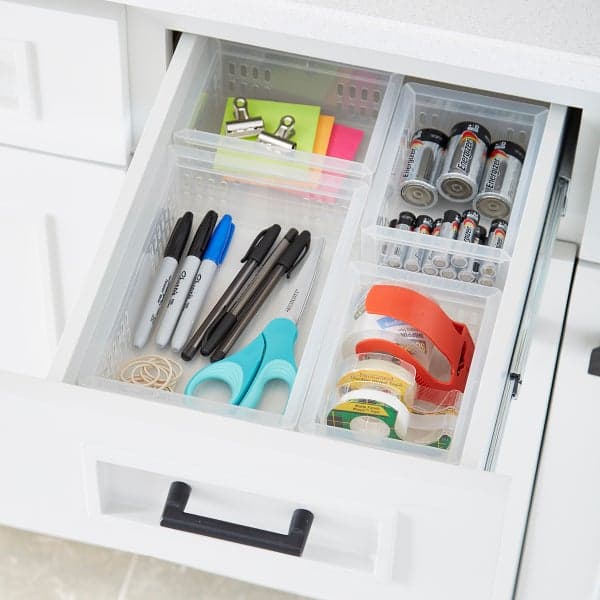
Battery Organizer Storage Case
$18
Holds 93 batteries (AA, AAA, C, D, 9V, button) with built-in tester. Fits on a shelf or in a drawer. Gets every battery out of your junk drawer in one step.
The Third Problem: The "Keep" Pile Is Still Too Big
Most people think they're keeping what they need, but they're actually keeping what feels wasteful to throw away. Half-used notepads. Pens that don't really work. Dried-out Sharpies. Eyeglass repair kits from three pairs of glasses ago.
Rule of thumb: if you have more than three of the same item, keep three and toss or donate the rest. You don't need twelve pens. You don't need four measuring tapes. You don't need seven keychains from businesses you don't go to anymore.
After this pass your "keep" pile should be about half what it started as. That's the correct amount.
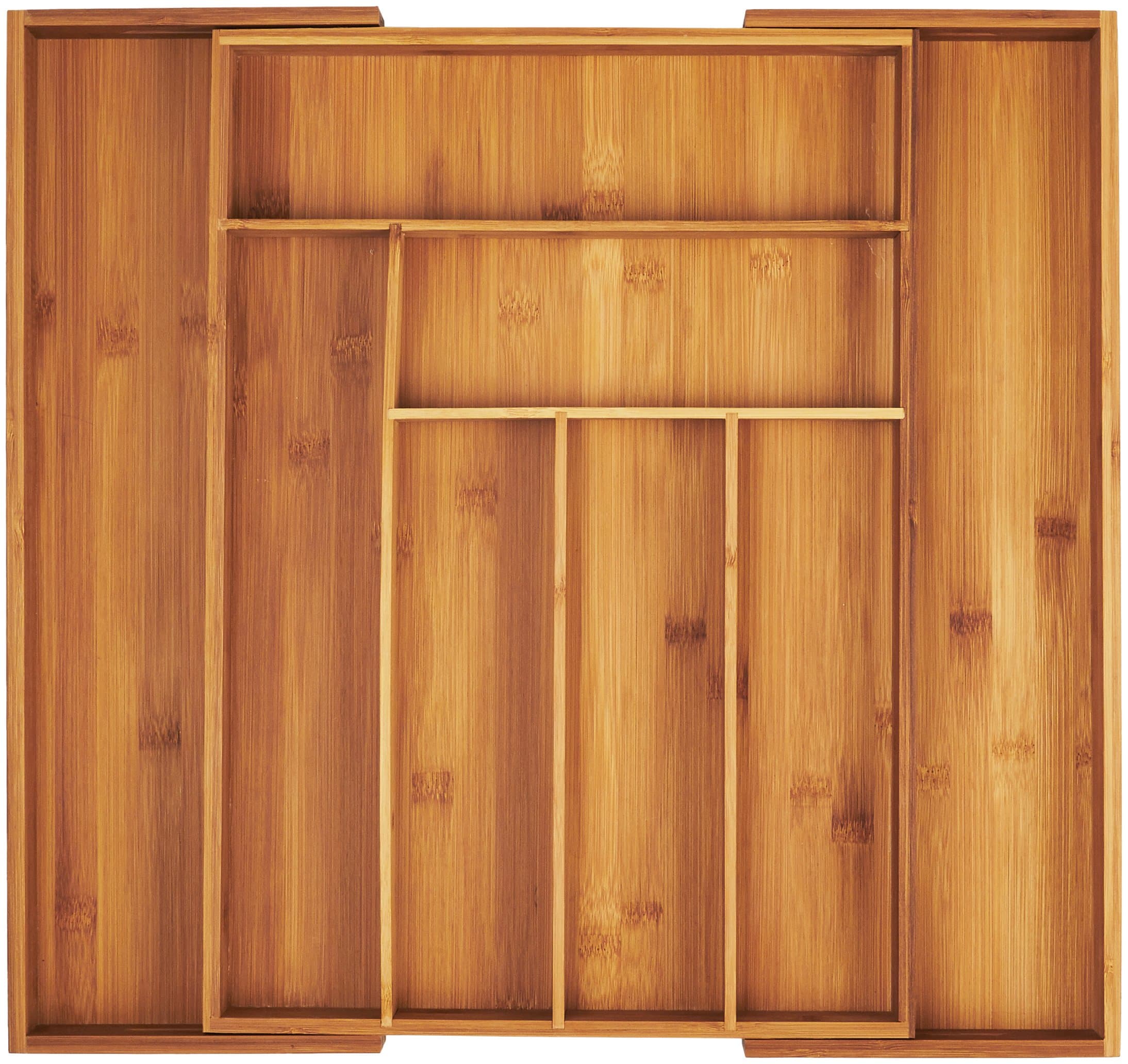
Bamboo Expandable Drawer Organizer
$25
Expands from 13 in. to 22 in. wide, with 8 adjustable bamboo compartments. Soft-close dividers, warm wood finish. Fits most kitchen drawers.
The Fourth Problem: Long Things Like Scissors Don't Fit in Standard Inserts
Most organizer sets assume everything is small. A junk drawer has weird stuff -- scissors, a screwdriver, a ruler, a glue gun charging cable. These need a dedicated long narrow bin, not a small square.
Carve out one long slot along the front or back edge of the drawer for the long stuff. Everything else gets pigeonholed into small compartments behind it.
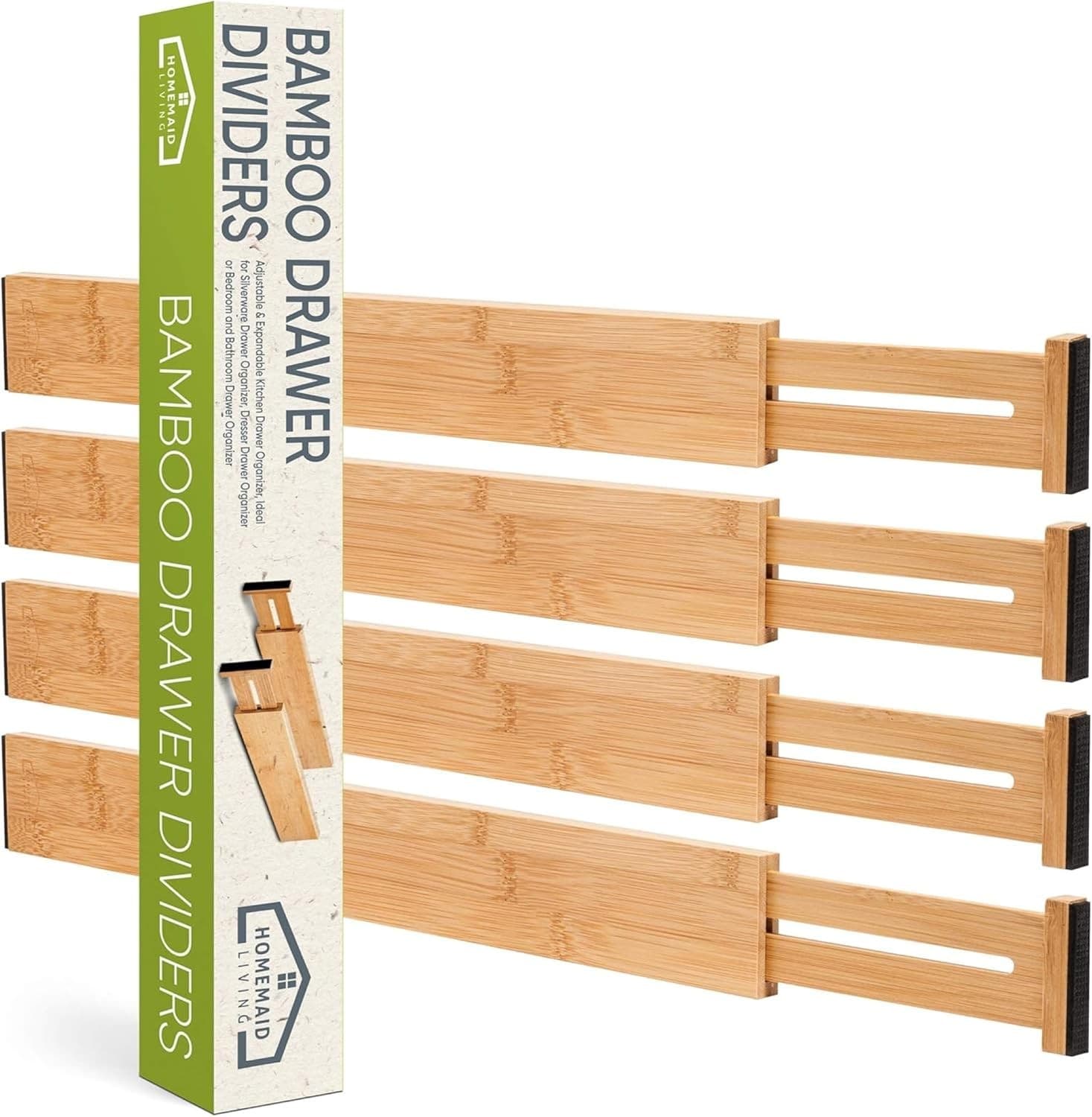
Adjustable Bamboo Drawer Dividers (Set of 4)
$22
Spring-loaded bamboo dividers that expand from 17 in. to 21 in. Create any size compartment. Perfect for the long narrow row at the front of a junk drawer.
The Fifth Problem: It Goes Back to Being a Junk Drawer in a Month
Without a system for maintenance, the drawer will re-collect chaos in three to six weeks. The single habit that keeps it organized: every single time you reach for tape or a pen or the scissors, return them to the exact bin you got them from. Sounds obvious. Nobody does it. Make it a rule for one full month and it becomes automatic.
Also -- don't use the drawer as an intake for random stuff. Mail goes in a mail tray. Screws from a furniture assembly go in a hardware box, not loose in the drawer. The junk drawer's job is to hold the twelve things you use regularly, not to be the orphanage for everything homeless in your kitchen.
Mesh Drawer Organizer Tray (10-Compartment)
$19
Metal mesh tray with 10 compartments including two long sections. 15 in. x 11 in. Sits flat in a drawer or on a shelf. Holds pens, scissors, tape, lip balm.
What to Skip
A couple of things that sound useful but don't work in a real junk drawer:
- Felt drawer liners. They look pretty for a week, then collect lint, pet hair, and mystery crumbs. Use a clean wipe-down drawer bottom with contact paper if you want grip, not felt.
- Drawer organizers that sit too high. If the tray is taller than your drawer is deep, it won't close. Measure your drawer depth before ordering anything. Most junk drawers are 2 to 3 in. deep.
- Color-coded bins. You don't need to label the batteries bin as "BATTERIES." You'll remember. Skip the label maker unless it genuinely calms you down to use one.
- "Junk drawer kit" bundles. They usually include one organizer, a tape dispenser, and a branded notepad. Buy the components separately and save money.
Quick Refresher Checklist
Once a season -- so about every three months -- do a quick 10-minute refresh:
- Pull anything that's accumulated out of place and put it back where it belongs.
- Toss anything expired, broken, or mystery.
- Test pens on a scrap of paper; trash the ones that skip.
- Wipe out any crumbs or dust.
- Confirm every item in the drawer is something you've actually used in the last three months.
That's it. You don't need a labeling system. You don't need a before-and-after photo. You need boundaries inside the drawer and a rule for returning things to their spot.
If you do the full declutter this weekend, you'll probably spend 45 minutes and $25-30 on one expandable bamboo organizer. In return you'll have one drawer in your house that actually works the way a drawer is supposed to work. From there, the rest of your kitchen feels weirdly more manageable too.
Pin this for later so you can tackle the drawer this weekend.
Affiliate Disclosure
This post contains affiliate links. Haven & Home may earn a commission on purchases made through these links, at no extra cost to you. We only recommend products we genuinely love.
You Might Also Love
 Organization
The Best Toy Storage Bins That Don't Look Like a Daycare
Toy storage in the living room does not have to ruin the aesthetic. These bins are functional enough for real use and nice enough to leave out.
 Organization
4 Under-$25 Swaps That Turn a Dump Drawer Into a Functional One
Under $25 each and your junk drawer finally closes. Four small swaps — bamboo organizer, clear dividers, pen caddy, and cushioned liner — that fix the chaos.
 Organization
How to Stop Tripping Over Shoes Without Buying More Furniture
Shoe piles at the door are a solved problem — and none of the solutions require a new bench or cabinet. Six options that work in real entryways.