

A Beginner's Guide to Setting Up a Drop Zone That Sticks
A drop zone is that small patch of space near your front door where keys, mail, shoes, and bags are supposed to land. On Pinterest, every drop zone has a chalkboard calendar, a perfectly-labeled bin system, a bench with baskets underneath, and a family of four who never puts anything in the wrong spot. In real life, 90% of these systems fall apart by week three because they were designed for an Instagram photo, not a Tuesday morning.
The drop zones that actually stick have four things in common: they're positioned at the exact path of least resistance between the door and the rest of the house, they have fewer categories than you think you need, every item has a spot you can use without looking, and the whole setup takes less than thirty seconds to tidy at the end of the day. That's it. No bullet journals, no color-coded bins.
Here's how to build one that actually works, beginner-first, in the order I'd set it up.
Best for Small Entries: Wall-Mount Key Hook Rack
The single most important drop zone component is a wall-mounted key rack, installed at eye level within arm's reach of your front door. A $22 rack with 5-6 hooks handles keys, dog leashes, and the small bag you use daily. This is the foundation piece.
Wall-mounted beats bowl-on-a-table every time. A bowl holds one set of keys before everything gets buried. Hooks give you visible, separated spots where the key you grabbed yesterday is still exactly where you left it.
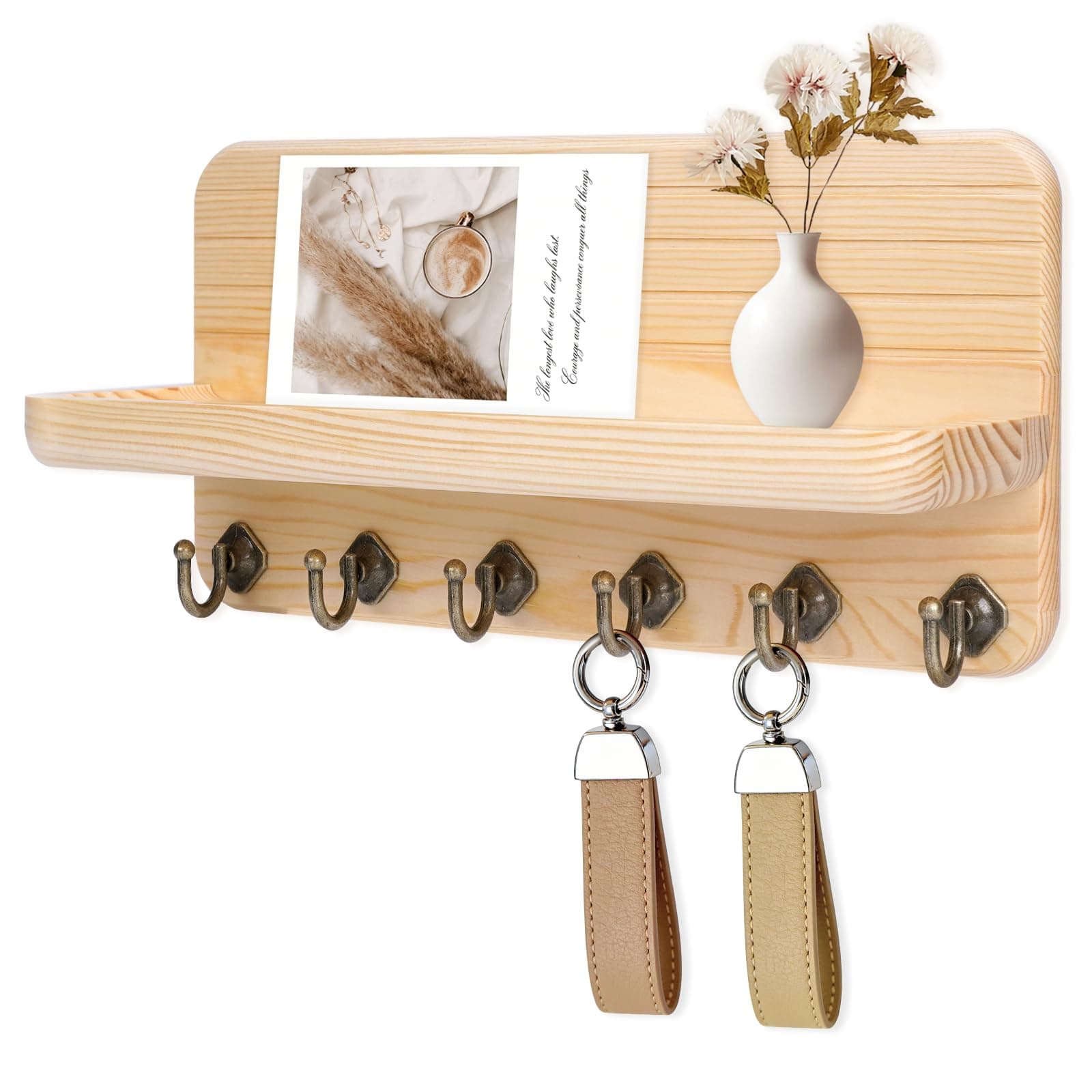
Key Rack Wall Hooks (6-Hook)
$22
Wall-mounted wooden key rack with 6 metal hooks. 12 inches wide. Pre-drilled mounting holes with hardware included. Walnut or white finish options.
Mount it at shoulder height (about 55-60 inches from the floor) and within three steps of your front door. If you have to detour or bend down, you won't use it, and the keys end up on the kitchen counter like always.
Label the hooks with tiny adhesive labels or a P-touch if you live with other people. One hook per person's keys, one for spare, one for the dog leash. Designated hooks mean nobody "takes the good spot" and the system doesn't collapse.
Best Wall-Mounted Pick: Mail Sorter with Slots
A 3-slot wall mail sorter ($29) solves the biggest drop zone failure point: mail. Bills, to-reads, and to-shreds get sorted at the moment of arrival instead of piling on the counter for three weeks.
Mail is the thing that breaks almost every drop zone system. If you don't have a sorting spot that takes zero effort, the mail will pile flat on every available surface until you finally binge-sort it on a Sunday. A three-slot sorter breaks the pile into manageable categories.
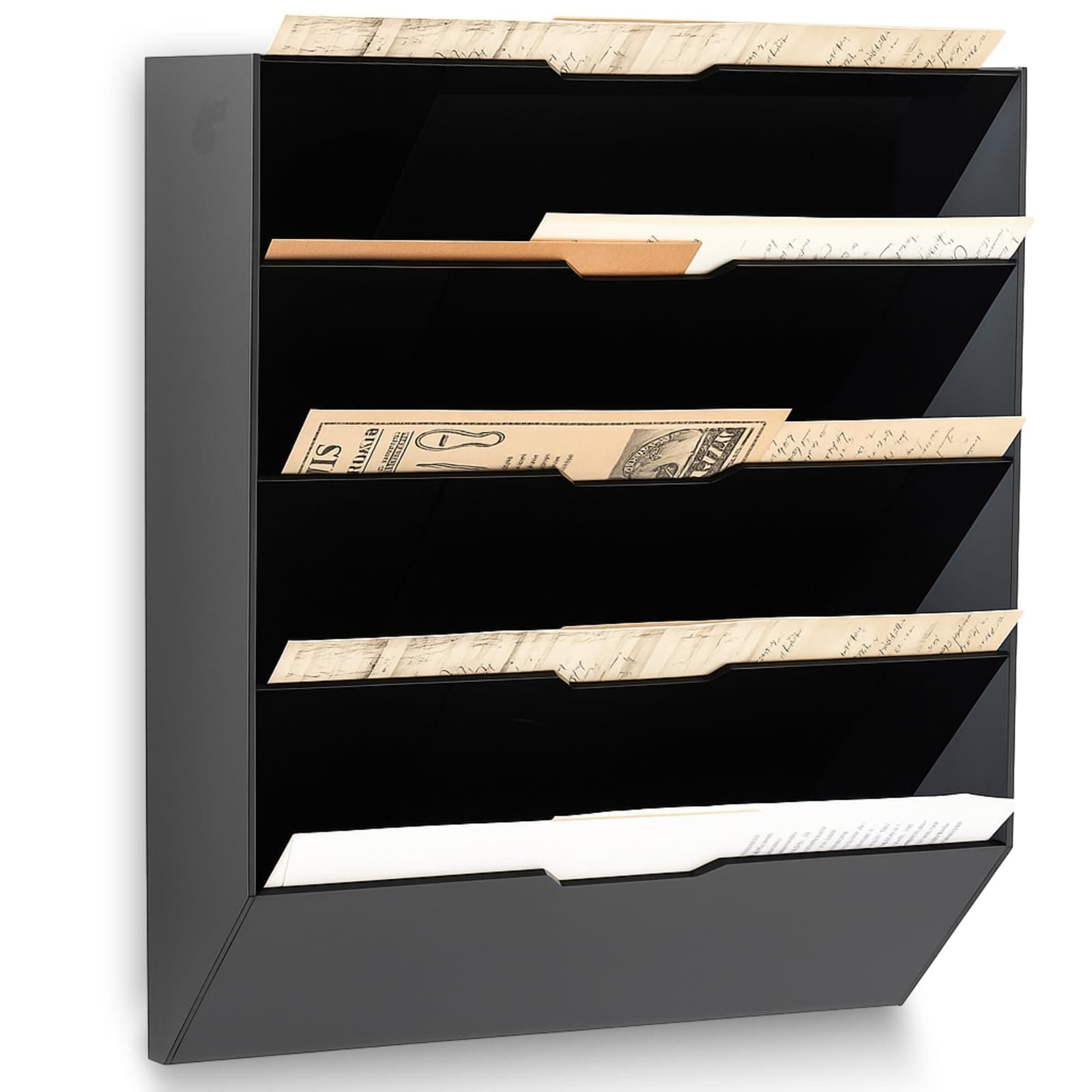
Wall Mail Sorter (3-Pocket)
$29
Wall-mounted 3-pocket mail sorter with chalkboard labels. Metal frame with canvas pockets. 14 inches wide. Holds legal-size envelopes. Hardware included.
Use the three slots as: Action (bills, RSVPs, things needing a reply), Reference (things to file or read later), and Shred (credit offers, junk with personal info). Three categories, no more. Anything with four or more categories inevitably gets ignored.
Empty the Action slot every Sunday. Empty the Shred slot once a month. Don't over-engineer it. A two-minute weekly scan is the maintenance.
Most Underrated: Entryway Console Table
A narrow entryway console table is the piece most beginner drop zones skip and then regret. It creates a landing surface for the bag, phone, and keys you're holding while you take your shoes off. Without it, everything lands on the floor.
Floors are hostile to drop zones because nothing stays standing up. A console table gives everything a horizontal home at waist height, which is where the "set it down for a second" impulse naturally wants to land.
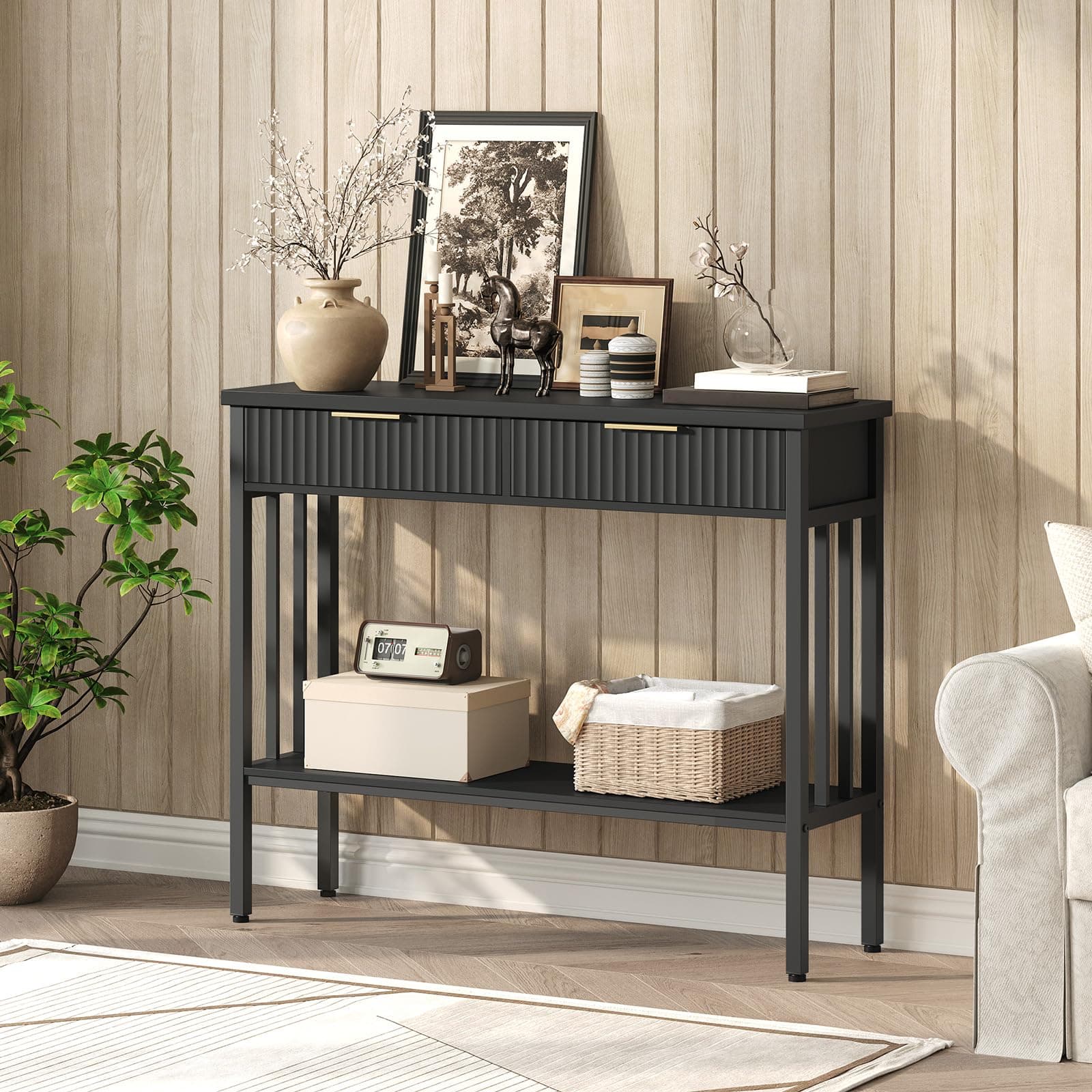
Narrow Entryway Console Table
$109
Narrow console table with two lower shelves. 42 inches wide by 12 inches deep. Slim profile works in tight hallways. Walnut or white finishes. Assembly required (30 min).
12-inch depth is the sweet spot for narrow entries. Anything deeper crowds walkways. Anything shallower doesn't give you enough surface for a purse and a laptop bag side by side.
Use the console top for daily drops (wallet, sunglasses, phone), the lower shelf for bins (see next product), and the floor underneath for shoe trays. Three zones in the vertical stack of one piece of furniture.
Best Budget Pick: Labeled Fabric Storage Bins
Two or three labeled fabric bins on the console's lower shelf or a small bench handle the bigger drop zone overflow: gloves, hats, dog gear, extra bags. Label them clearly and the system stays running even when you're exhausted.
Labels are non-negotiable. Unlabeled bins become mystery bins within two weeks. Labeled bins stay sorted for years because you (and anyone else in the house) know exactly what goes where at a glance.
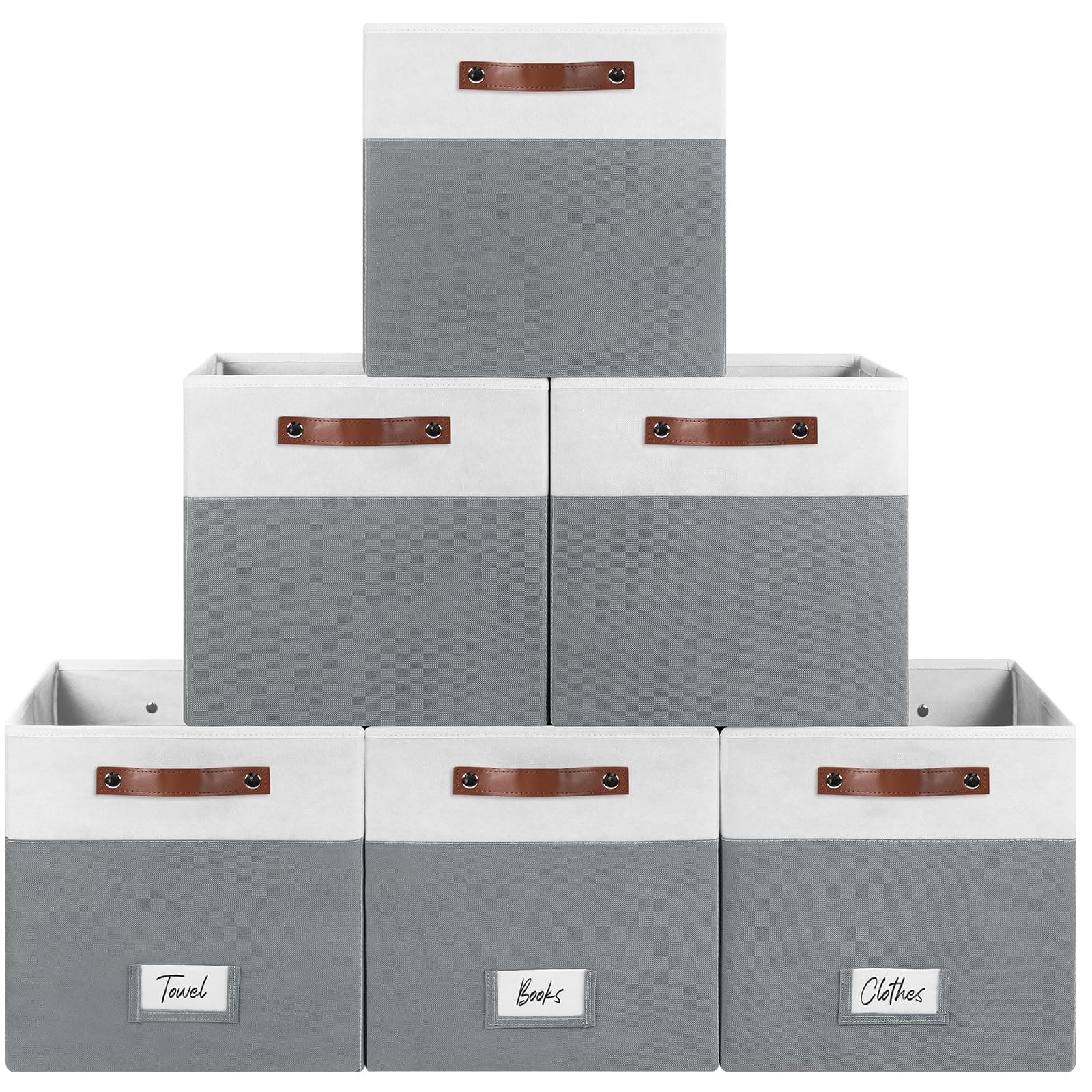
Fabric Storage Bins with Labels
$34
Set of 3 foldable fabric storage bins with chalkboard-style label frames. 13 x 15 x 13 inches. Reinforced handles. Beige canvas finish. Washable.
Label categories by season or by user, not by item type. "Winter Accessories" is more useful than "Gloves." "Kids Bags" beats "Backpacks." Broader categories get used more consistently than narrow ones.
Audit the bins once per season. Anything you haven't touched in three months doesn't belong in the drop zone, it belongs in a closet.
Best Tech Pick: Charging Station
A small bamboo charging station with cable management ($38) solves the phone-on-kitchen-counter habit. Phone lands on the charger at the front door, you stop losing it in the house, and it's charged when you leave in the morning.
This one is a behavioral change as much as an organizational one. If your phone has a designated charging home right at the entry, you'll use it. If it doesn't, the phone will always end up charging next to your bed (or not charging at all).
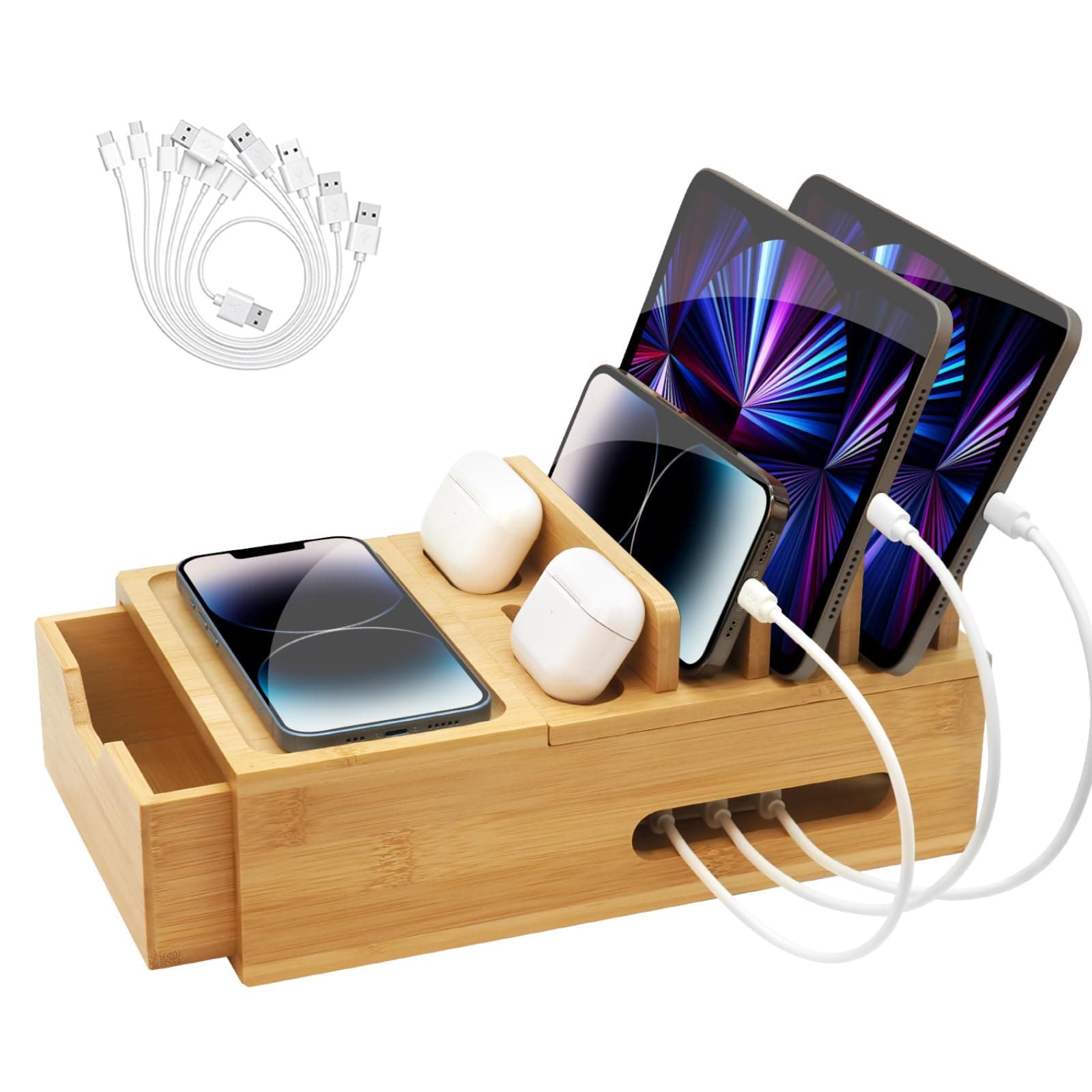
Bamboo Charging Station Organizer
$38
Bamboo charging station with 4-port USB hub. Dividers hold phones, tablets, and smart watches upright. Built-in cable management. 10 x 6 inches. Plug-and-play, no assembly.
Place it on the console table, plug the USB hub into a wall outlet, thread the cables through the dividers. Works with iPhone, Android, iPad, and Apple Watch side-by-side. Family of four uses the same station without cable tangles.
The cable management matters more than the charging itself. Nothing kills a clean drop zone faster than a tangle of cables. Bamboo stations hide them inside the unit.
Best Overlooked Piece: Shoe Tray
A boot tray or shoe tray under the console or beside the door stops the wet-shoes-on-the-hardwood disaster. It's the unglamorous piece nobody Pinterest-boards but it's the difference between a drop zone that stays clean and one that doesn't.
Shoes bring in everything from the outside world: rain, mud, snow salt, grass clippings. Without a designated tray, all of that ends up on your floors. With one, everything is contained to a wipeable rubber or metal tray.
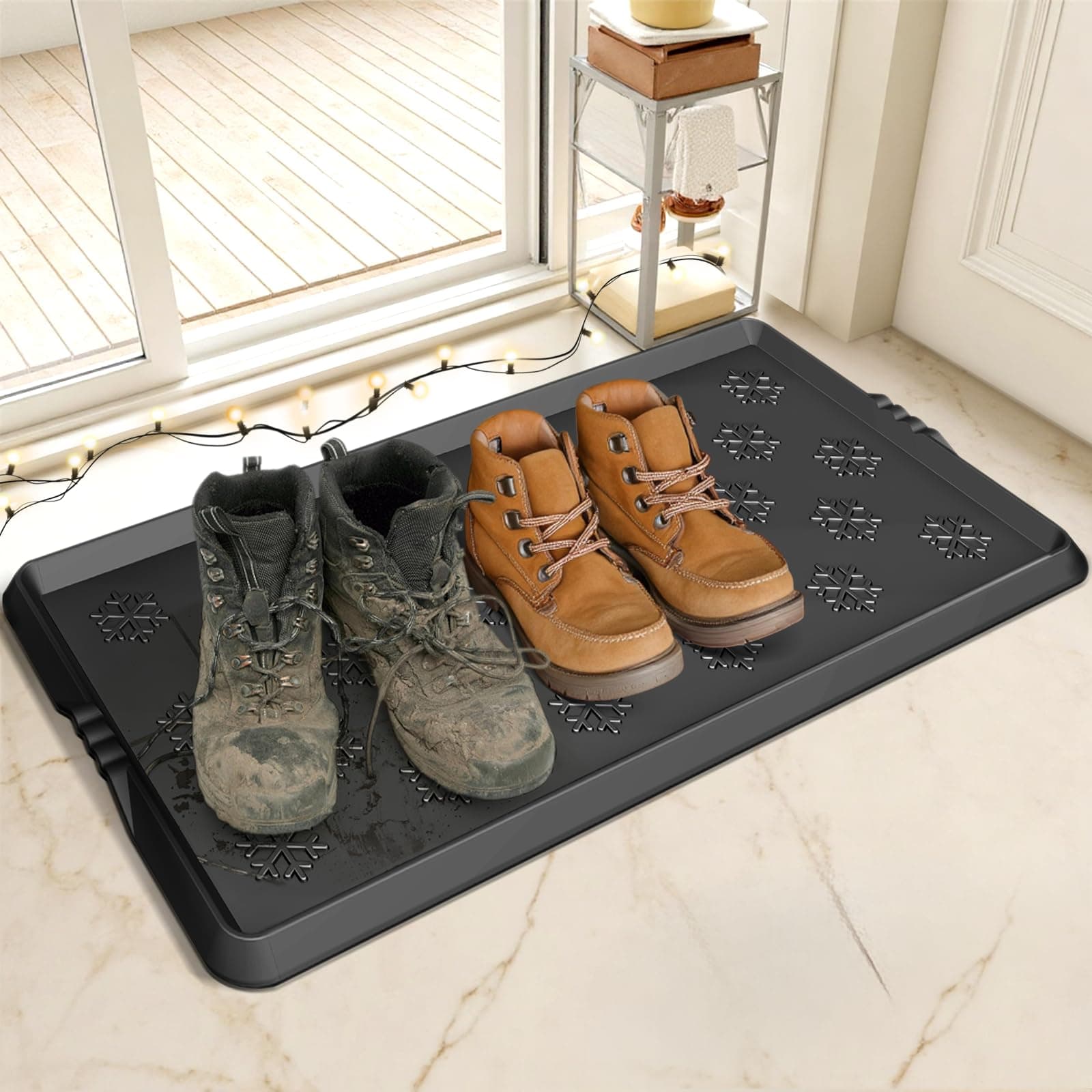
Shoe Tray (Entryway)
$26
Heavy-duty rubber shoe tray with raised edges. 30 x 15 inches. Holds 3-4 pairs of adult shoes. Traps water, mud, and salt. Wipe clean with damp cloth.
Pick a tray with raised edges (at least half an inch) to actually contain water. Flat mats look pretty but let snowmelt run right off onto the floor. Raised edges are functional, not decorative.
Size the tray to hold 3-4 pairs of daily shoes, not the entire family shoe collection. A giant tray encourages shoe hoarding by the door. A right-sized tray forces you to put rarely-worn pairs back in the closet.
What to Look For in a Drop Zone Setup
The drop zones that last years (instead of collapsing in weeks) all share the same patterns.
One spot, within three steps of the door. If your keys have to travel more than three steps, they'll end up on the kitchen counter. Position every piece on the direct walking path from door to the rest of the house.
Visible storage beats hidden storage. Baskets with lids look cleaner but nobody opens them. Open hooks, uncovered bins, and visible trays get used because the friction is zero. Save lids for long-term storage in closets.
Labels, every time. Shared drop zones (families, roommates) fall apart without labels because every person has a different mental model. A label ends the argument.
Fewer categories than you think. Three bins are almost always better than six. The more categories you add, the more decision fatigue you create, and people abandon systems that require thinking.
Thirty-second reset rule. Can you fully tidy your drop zone in thirty seconds at the end of the day? If yes, it'll stay clean. If no, it won't. Systems that demand more than thirty seconds of daily effort get skipped and collapse within a month.
Wall-mounted beats countertop. Anything on the floor gets kicked. Anything on a counter gets piled on. Anything mounted to the wall stays exactly where you put it. Mount what you can.
Budget matters less than placement. A $15 hook in the right spot beats a $150 entryway organizer in the wrong spot. Don't spend big before you've figured out the pathway. Start with the foundation pieces cheap and upgrade once the habits stick.
The Setup Order for Beginners
If you're starting from scratch, install in this exact order:
- Wall-mounted key rack, at shoulder height, within three steps of the door
- Shoe tray, on the floor near the door, right-sized for daily shoes
- Small console table or narrow shelf, against the nearest wall
- Charging station, on the console
- Mail sorter, mounted on the wall above the console
- Labeled fabric bins on the lower shelf, three max
The first two pieces handle 80% of the daily chaos. The console and charger handle phones, wallets, sunglasses. Mail sorter and bins are for household-wide sorting. Add in that order so you don't over-build before you know your actual patterns.
Frequently Asked Questions
What's the most important piece of a drop zone?
A wall-mounted key rack installed within three steps of the front door. It's the foundation because keys are the single thing you interact with every single time you enter or leave the house. Get this right first, then layer other pieces around it.
Do I need a bench in my drop zone?
Only if you take off shoes by the door daily. A bench is a shoe-removal aid, not a drop zone essential. If you kick off shoes standing up or sit in a chair elsewhere, skip the bench. A shoe tray alone handles the problem.
How many bins should I have in my drop zone?
Three is the maximum for most households. Label them broadly (Winter, Kids, Spare Bags) rather than narrowly (Hats, Gloves, Scarves). Broader categories keep the system running with less effort.
What's the biggest mistake in a beginner drop zone?
Over-designing it. Chalkboard calendars, pegboard systems, and elaborate hook arrangements look great in photos but almost never survive contact with real family life. Start with three foundation pieces (key rack, shoe tray, small table) and only add complexity once the basics stick.
How do I keep the drop zone from becoming a dumping ground?
Apply the thirty-second reset rule every evening. Anything that doesn't belong in the drop zone goes back to its real home before you sit down for dinner. Thirty seconds, not three minutes. If the reset starts taking longer than that, you've added too many categories.
Found something you love? Pin this for later so you don't lose it!
Affiliate Disclosure
This post contains affiliate links. Haven & Home may earn a commission on purchases made through these links, at no extra cost to you. We only recommend products we genuinely love.
You Might Also Love
 Organization
The Best Toy Storage Bins That Don't Look Like a Daycare
Toy storage in the living room does not have to ruin the aesthetic. These bins are functional enough for real use and nice enough to leave out.
 Organization
4 Under-$25 Swaps That Turn a Dump Drawer Into a Functional One
Under $25 each and your junk drawer finally closes. Four small swaps — bamboo organizer, clear dividers, pen caddy, and cushioned liner — that fix the chaos.
 Organization
How to Stop Tripping Over Shoes Without Buying More Furniture
Shoe piles at the door are a solved problem — and none of the solutions require a new bench or cabinet. Six options that work in real entryways.