

The $24 Marble Coaster Set I've Bought for Three Kitchens
I bought my first set of marble coasters on a whim three years ago. I was about to host my then-boyfriend's parents for the first time and panicked about water rings on the rented dining table. Twenty-four dollars on Amazon, two-day shipping, six round slabs of white-and-grey veined marble in a little wooden holder. They sat on the table that night, the parents went home, and the coasters stayed exactly where I'd put them.
Three apartments and one house later, I've bought the same set twice more. They're the only kitchen accessory that has survived every move, every roommate change, every aesthetic phase, and every "I'm getting rid of half my stuff this weekend" cleanout. Once you have something on your counter that genuinely looks like it belongs there, you start noticing every other thing that doesn't. Here's what got upgraded after them.
The Coasters Themselves
These are the ones I keep going back to. Real marble (not stone-look resin), each piece is about four inches across, and they come with a small acacia wood holder that sits flat on a shelf or counter. The veining is different on every single coaster which is part of why they look like they cost three times this much.
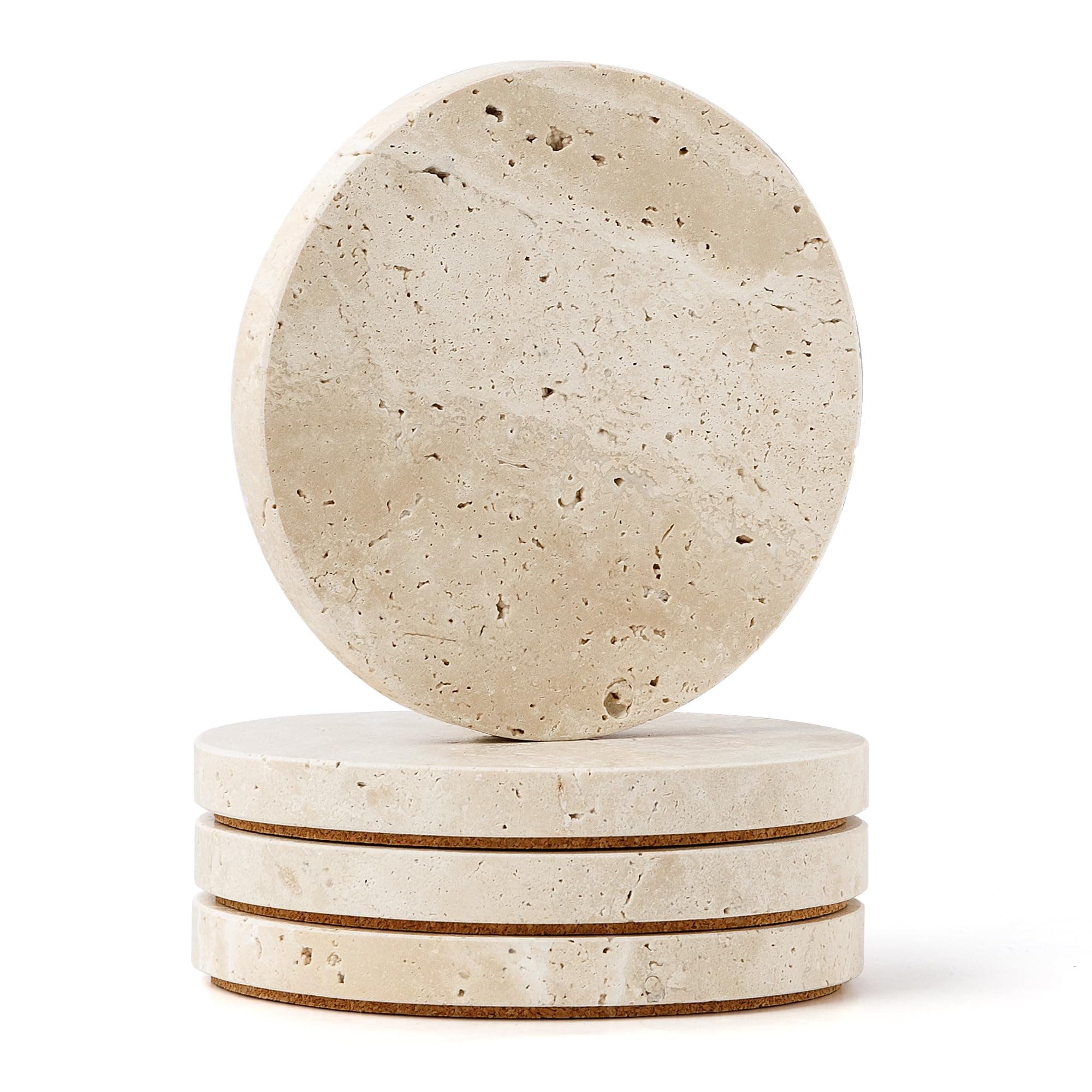
Marble Coasters Set of 6 with Wooden Holder
$24
Set of 6 white marble coasters with natural grey veining. Each 4 inches across with cork-lined backs. Includes acacia wood holder. Heat and water resistant.
The cork backing matters more than I realized. It keeps them from scratching wood furniture and stops them from sliding around on a glass coffee table. They're heat resistant enough that I've put a fresh-from-the-stove mug on one without thinking, and they wipe clean with a damp cloth. The marble does pick up the occasional water mark over time, but a tiny bit of olive oil polished in with a paper towel brings it right back.
The Wooden Salt Cellar That Came Next
Once the coasters were on the table, I noticed how cheap my Morton box looked next to them. So I bought a small wooden salt cellar with a magnetic swivel lid. It lives next to the stove now and gets used three times a day. The wood develops a beautiful patina from the salt, the same way a wooden spoon does over years.
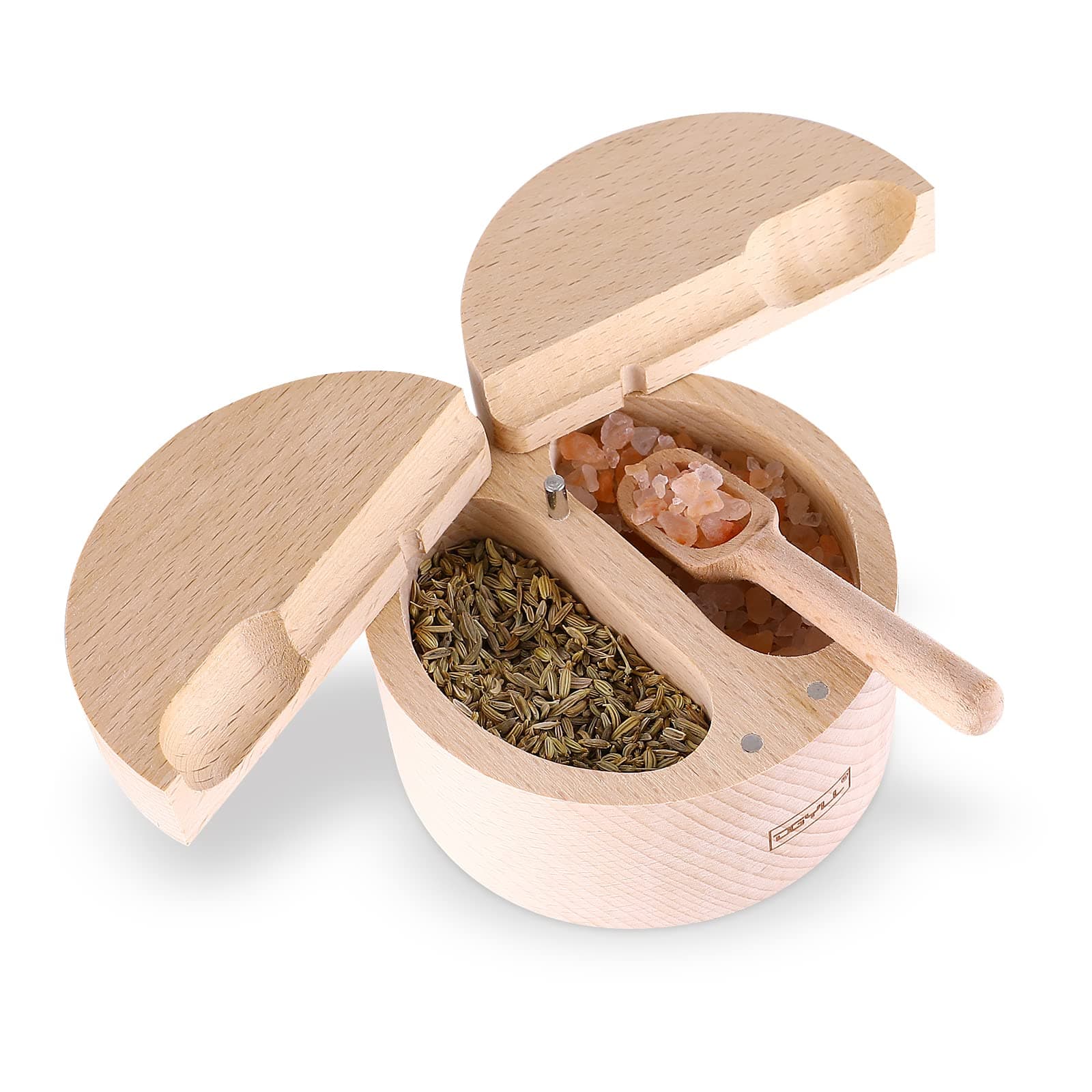
Wooden Salt Cellar with Magnetic Swivel Lid
$22
Acacia wood salt box with magnetic swivel lid. Holds 6 oz of salt. 4 inches across. Hand-wash only. Develops natural patina with use.
The swivel lid is the part that actually matters. A regular flip lid gets opened with one hand greasy from cooking and falls into the pan. The magnetic swivel stays put with a half-turn, and the lid is wide enough to scoop a generous pinch without fishing around in a tiny opening. Refill it with whatever salt you like, kosher, flaky Maldon, fancy pink stuff from the bulk bin. The cellar makes any of them look intentional.
The Acacia Cutting Board I Use Daily
I had a plastic cutting board for a decade. I still have it, technically, for raw meat. But the round acacia board I bought a year ago is the one that's actually on the counter every single day. It doubles as a serving board when I'm cutting cheese for two friends who came over without warning, and it picks up the wood tones of the salt cellar so the counter looks like it was styled instead of accumulated.
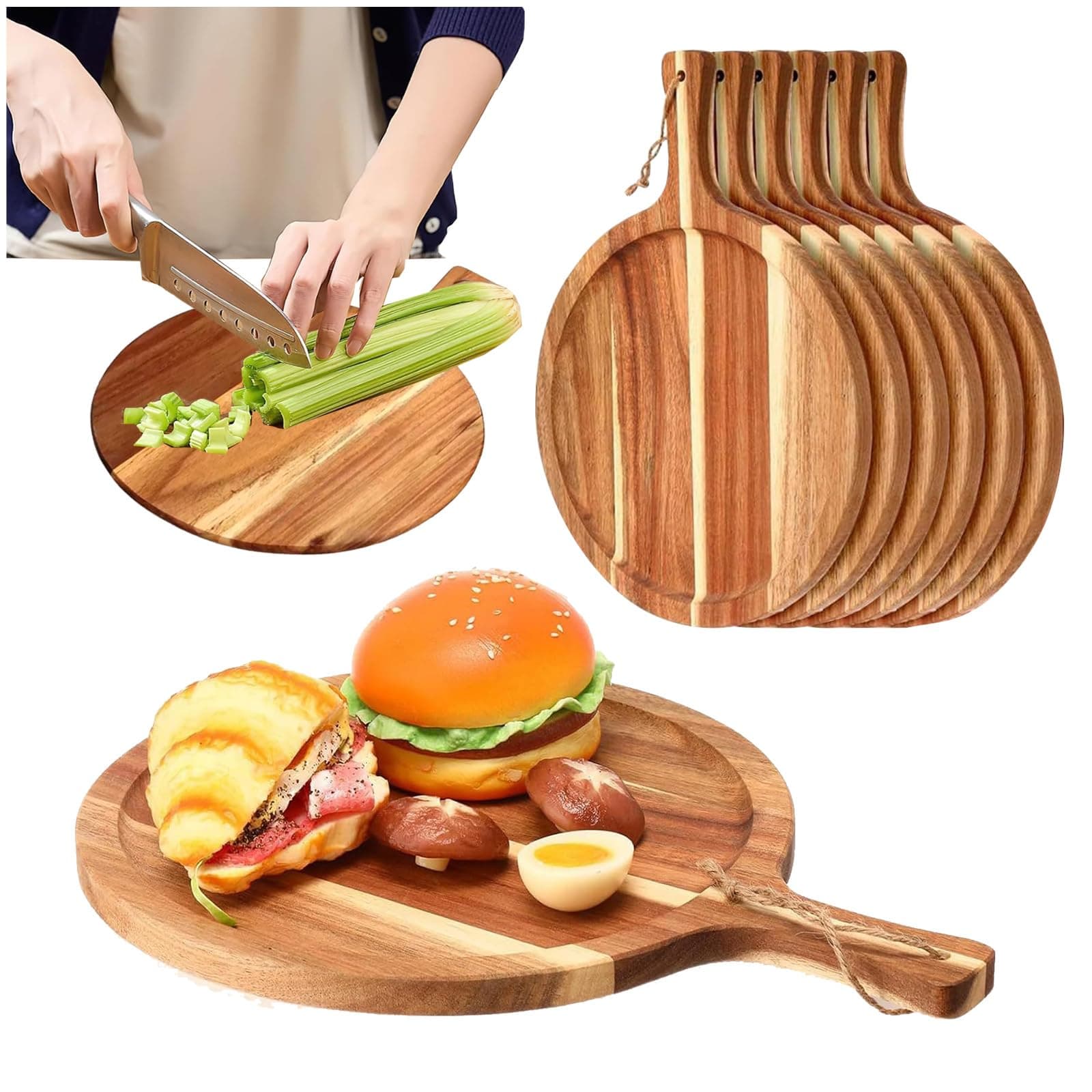
Round Acacia Wood Cutting and Serving Board
$32
14-inch round acacia wood cutting board with carved handle. Reversible for cutting and serving. Hand-wash and oil monthly. Naturally antimicrobial wood.
A note on care, because everyone asks. Once a month, rub a tablespoon of food-grade mineral oil into both sides with a paper towel and let it sit overnight. That's it. The wood stays sealed, doesn't crack, and the color deepens over time. If you're someone who runs everything through the dishwasher, this isn't your board. For everyone else, the small ritual is part of why I like having it around.
The Linen Tea Towels That Replaced the Microfiber Pile
The third snowball moment was tea towels. I had a drawer full of microfiber, the kind from the dollar store that shed lint on every glass. The marble and wood on the counter made them look genuinely embarrassing. So I ordered a set of four linen tea towels in muted oat, sage, and natural stripe. They get more absorbent every wash and they hang on the oven handle without looking like a rag.
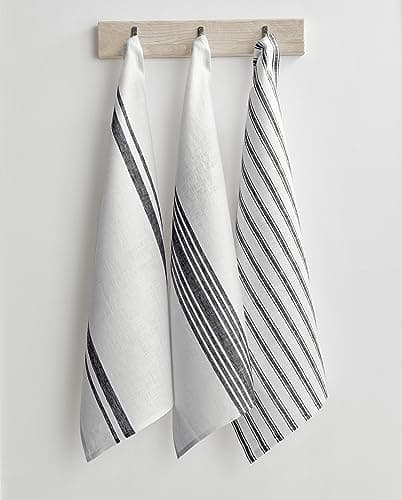
Linen Tea Towels Set of 4
$26
100 percent stonewashed linen tea towels. Set of 4 in oat, sage, white, and natural stripe. 18 by 28 inches. Machine washable, naturally absorbent.
Linen feels stiff out of the dryer the first time. Don't return them. By the third wash they break in and become the most useful textile in the kitchen, drying glasses without streaks, polishing the marble coasters when they need it, doubling as a bread basket liner when I bake. They don't shed, they don't pill, and they pack flat so I keep two extra sets in the drawer.
The Olive Wood Spoon Set That Lives in the Crock
The same week the linen towels arrived I caught myself staring at the metal slotted spoon I'd had since college. It clanged, it stained, and it looked wrong sitting next to everything else. A four-piece olive wood spoon set replaced the entire metal collection in one Tuesday afternoon. They live in a ceramic crock by the stove and they're the only kitchen tools I've genuinely enjoyed reaching for.
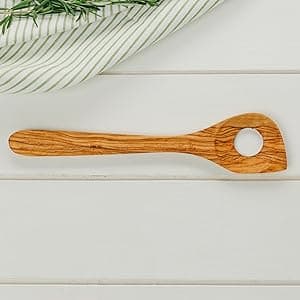
Olive Wood Cooking Spoon Set of 4
$29
Set of 4 hand-carved olive wood cooking spoons. Includes slotted spoon, regular spoon, spatula, and spurtle. 12 inches long. Hand-wash and oil monthly.
Olive wood is denser than acacia, which means the spoons don't warp, don't crack, and don't pick up garlic smell the way bamboo does. Each spoon's grain is a little different so the four of them look like a curated set instead of a matching factory pack. I oil mine the same day as the cutting board, once a month, and they look better at year three than they did at year one.
What I'd Buy First If I Were Starting Over: The Coasters
Here's the unsexy truth I learned three kitchens in. You can't fake a styled counter by buying one big-ticket thing. You have to start with one piece that looks intentional, then let everything else rise to meet it. The $24 marble coasters are the easiest place to start because they live on a surface you see fifty times a day, they don't require a renovation or a trip to the hardware store, and they immediately make the next thing you put down (a coffee mug, a glass of wine, an oat-colored linen napkin) look better by association.
If I were doing it all over from scratch, I'd buy the coasters first, the salt cellar second, and let the rest follow naturally over the next few months. The total spend across these five pieces is about $133. That's less than one nice cookbook, less than a single pan from the fancy store, and the whole counter feels different in a way you can't unsee.
Found something you love? Pin this for later so you don't lose it!
Affiliate Disclosure
This post contains affiliate links. Haven & Home may earn a commission on purchases made through these links, at no extra cost to you. We only recommend products we genuinely love.
You Might Also Love
 Kitchen
Why Linen Roman Shades Are Taking Over Kitchen Windows This Spring
Scroll any kitchen reno hashtag right now and you'll see linen roman shades replacing every plastic blind in sight. Here's why and what to buy.
 Kitchen
Why Copper Kitchen Accents Are Taking Over Countertops
Copper kitchen accents are everywhere right now — and for good reason. Here's how to style them across your countertop, sink, stovetop, and open shelves.
 Kitchen
8 Spring Baking Tools Under $30 That Make You Feel Like a Real Baker
Most amateur bakers are one or two tools away from results that look and taste professional. Here are 8 spring baking upgrades all under $30.